Point Cloud

Tutorials that focus on 3D Point Cloud Processing.

This comprehensive collection of tutorials covers everything you need to know about processing 3D point clouds, including algorithms, tools, and best practices. Whether you’re a beginner or an expert, these open tutorials will help you master the art of 3D point cloud processing and take your skills to the next level. Check out our tutorials now and start exploring the world of 3D point cloud processing!

3D point cloud workflow

A Quick Dive into Modern Point Cloud Workflow

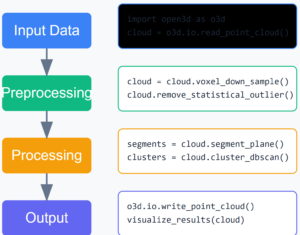
Designing a point cloud workflow is a powerful first-hand approach in 3D data projects. This article explores how processing massive point clouds efficiently isn’t about having more computing power. It’s about being more innovative with the resources you have. After analyzing hundreds of real-world projects, let me share identified patterns that consistently deliver better results […]

A Quick Dive into Modern Point Cloud Workflow Read More »
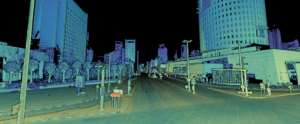
3D Point Cloud of a City

How to Quickly Visualize Massive Point Clouds with a No-Code Framework

The average LiDAR scan contains 250+ million points. Visualizing and sharing this data efficiently is a significant challenge for many professionals. This tutorial provides a no-code solution to visualize and manage massive point clouds early in the workflow. Introduction to Massive Point Cloud Data Processing Visualizing massive point clouds used to be a real headache.

How to Quickly Visualize Massive Point Clouds with a No-Code Framework Read More »

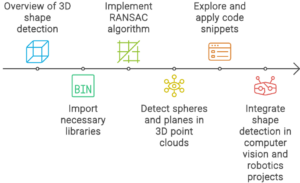
3D Shape Detection with RANSAC and Python (Sphere and Plane)

This tutorial will walk you through the process of detecting spheres and planes in 3D point clouds using RANSAC and Python. This is because 3D shape detection is a crucial task in computer vision and robotics, enabling machines to understand and interact with their environment. Specifically, RANSAC is widely used for robust model fitting in

3D Shape Detection with RANSAC and Python (Sphere and Plane) Read More »

Aerial LiDAR Point Cloud Feature Extraction Tutorial

Point Cloud Feature Extraction: Complete Guide

This tutorial targets 3D Point Cloud Feature Extraction for developing an interactive Python Segmentation App. The goal is to develop an end-to-end system that can abstract complex point clouds with pertinent features. These features are then used by a thresholding mechanism to extract parts of the 3D Point Cloud. Point Cloud Feature Extraction: Tutorial Brief

Point Cloud Feature Extraction: Complete Guide Read More »

3D Point Cloud Vectorization

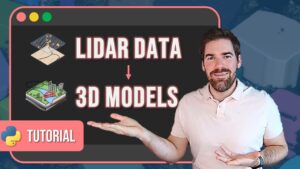
Vectorization of 3D Point Cloud for LiDAR City Models

3D Point Cloud Vectorization for LiDAR City Models This hands-on approach is standalone and covers the process of LiDAR Vectorization. We then focus on City Model Automatic Generation (LoD 0) in 5 main phases. We are going to code a solution with Python that takes a point cloud (.laz), and returns instantiated vectorized houses with

Vectorization of 3D Point Cloud for LiDAR City Models Read More »

3D Shape Detection for Indoor Point Clouds

3D Shape Detection for Indoor Modelling

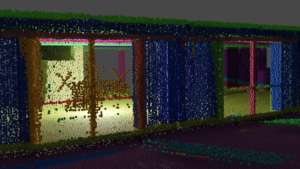
A 10-step Python Guide to Automate 3D Shape Detection, Segmentation, Clustering, and Voxelization for Space Occupancy 3D Modeling of Indoor Point Cloud Datasets. If you have experience with point clouds or data analysis, you know how crucial it is to spot patterns. Recognizing data points with similar patterns, or “objects,” is important to gain more

3D Shape Detection for Indoor Modelling Read More »

3D Deep Learning with Python by Florent Poux

3D Deep Learning with Python: Point Cloud Data Preparation

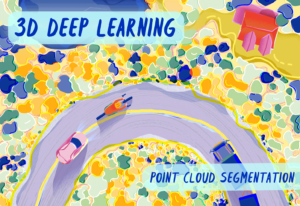
3D Deep Learning Tutorial: Overview 🤖 This article delves into the fascinating world of 3D deep learning and provides a comprehensive tutorial on PointNet data preparation using 3D Python. With the rapid advancement of 3D technologies, deep learning algorithms have become crucial for extracting meaningful insights from volumetric data. This tutorial will give you practical

3D Deep Learning with Python: Point Cloud Data Preparation Read More »

Scroll to Top