
Orchestrate Agents That Reason in 3D
Move beyond chatbots. Build AI agents that plan, act, and reason about point clouds, scenes, and spatial constraints. 5 modules. Real LangChain code. Production patterns I use for Fortune 500 R&D.
See the agent stack in action
A walkthrough of the course, the orchestration layer, and the HITL deployment pattern.
Points reachable by your agent tools. The stack is built for digital twin scale.
Students trained worldwide across 80 countries.
Production experience distilled into structured, repeatable workflows.
Your agents can chat. They can’t act on 3D.
You’ve wired LangChain to GPT-4 or Claude. You’ve built a chatbot that answers questions about a text database. That’s a good first step. But the moment a user says “find every defect in this industrial scan and plan a repair sequence”, your agent has no hands, no eyes, no spatial grounding. It’s a pure text chatbot in a 3D world.
The gap isn’t prompt engineering. It’s tool design and orchestration. An agent becomes spatial when it can call a segmentation function, query a scene graph, run a transformation, and stream the result back to a human for approval. That’s the system layer I teach in this course.
In 2026, every R&D roadmap in AEC, robotics, and automotive has “deploy spatial AI agents” on it. Most of those projects will stall at the tool layer, because the engineers building them haven’t separated planning from execution, haven’t designed safe HITL checkpoints, and haven’t stress-tested agent failure modes on real data. That’s the exact gap this course closes.
What you’ll build
A production-grade multi-agent stack for 3D. Orchestration, tools, memory, and human-in-the-loop approval.
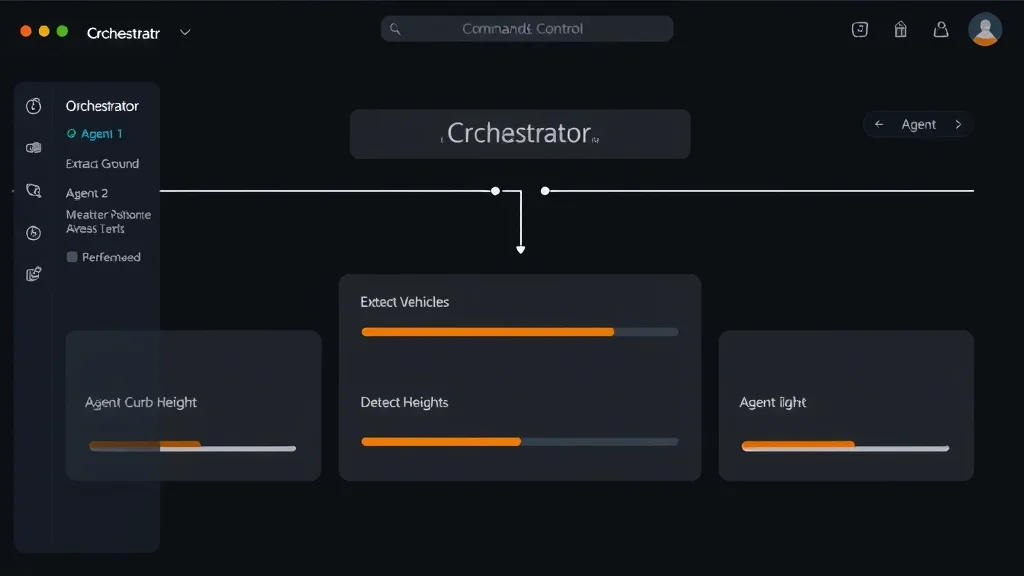
Multi-agent orchestration engine
A coordinator agent plus specialist sub-agents (segmentation, classification, transformation). Each one a custom LangChain agent, each one testable in isolation.
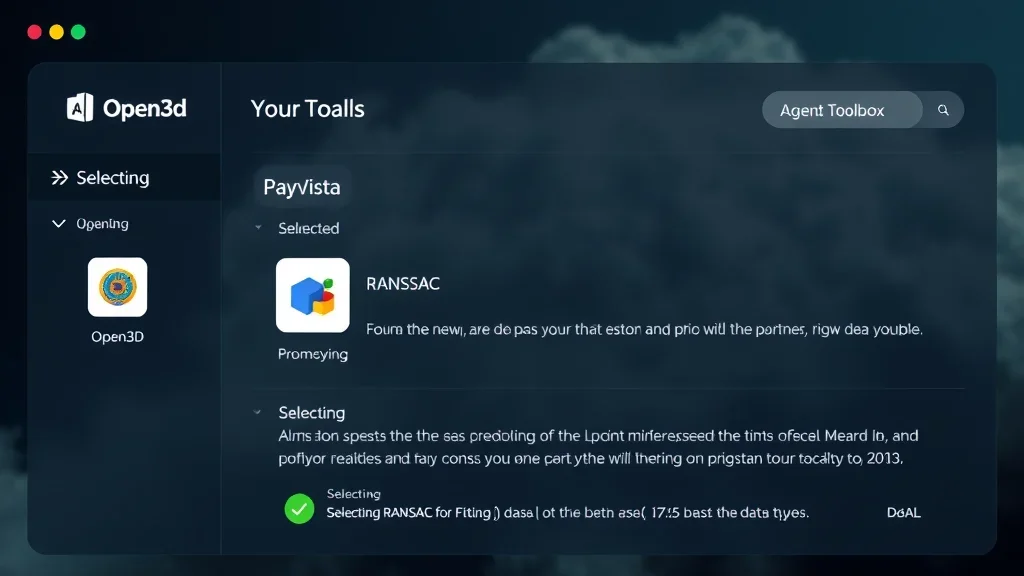
Custom 3D tool library
Tools your agent can actually call. Load a point cloud, run RANSAC, query a knowledge graph, transform coordinates, render a preview. Every tool production-hardened.
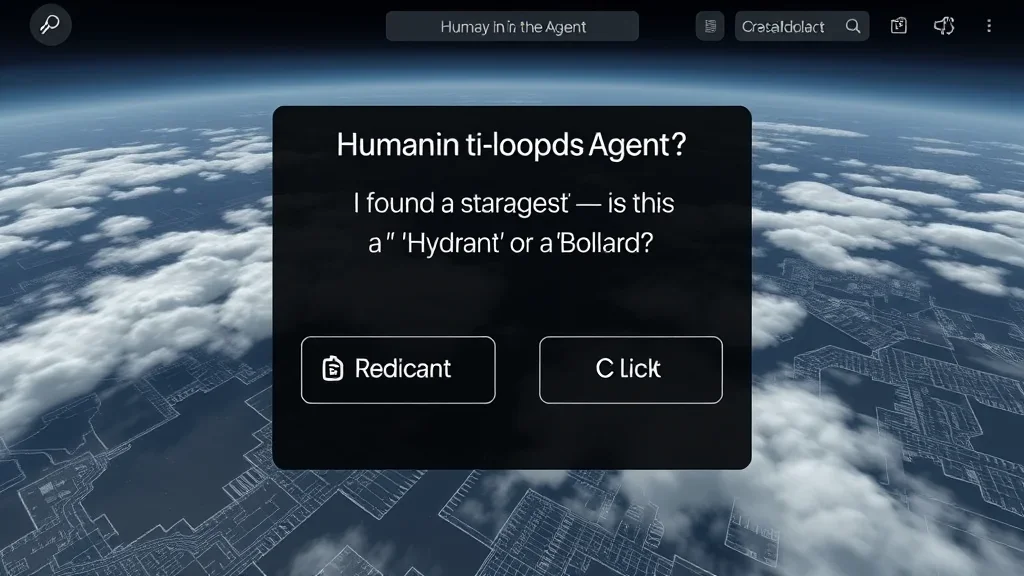
HITL approval workflow
Every destructive operation goes through a Human-in-the-Loop gate. Streamlit interface, diff previews, approve/reject buttons. Never let an agent nuke production data.
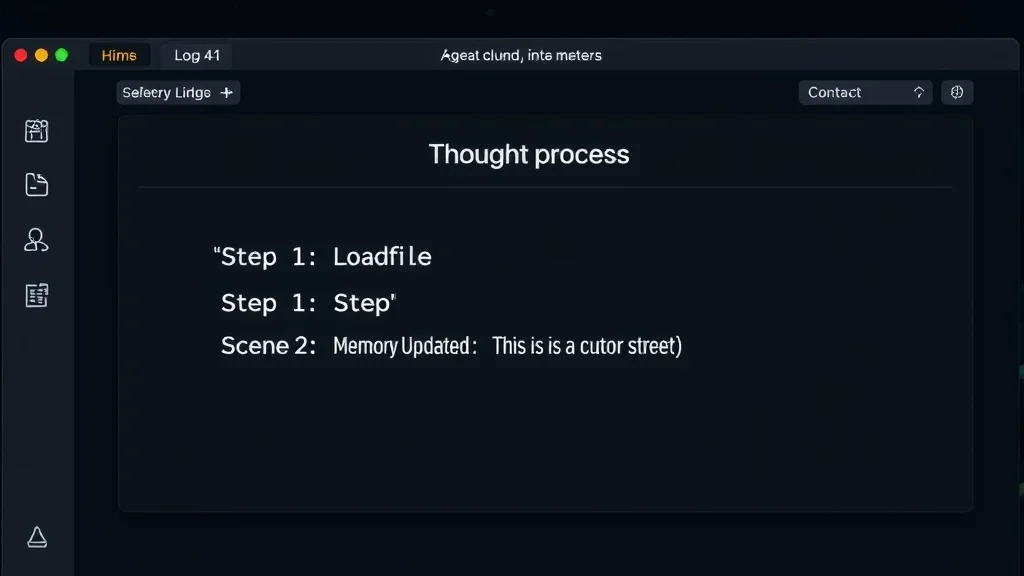
Agent state and memory
A proper todo list, a short-term state, and a long-term memory store. Your agent survives restarts and keeps track of multi-step plans that span long-running operations.
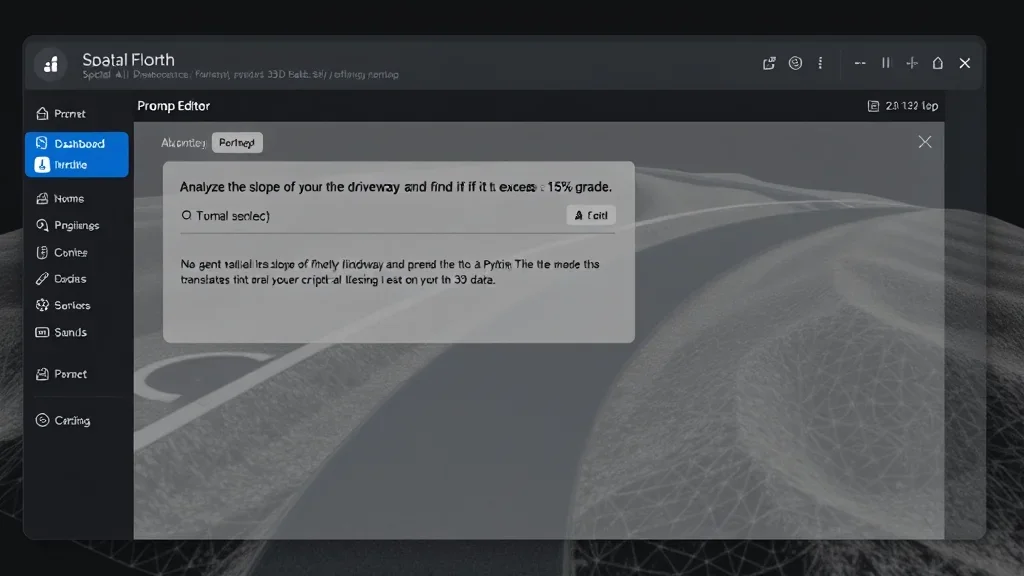
Prompt engineering for 3D
Prompt patterns that actually work on spatial tasks. System prompts with tool schemas, few-shot examples anchored in real data, and evaluation loops that catch silent regressions.
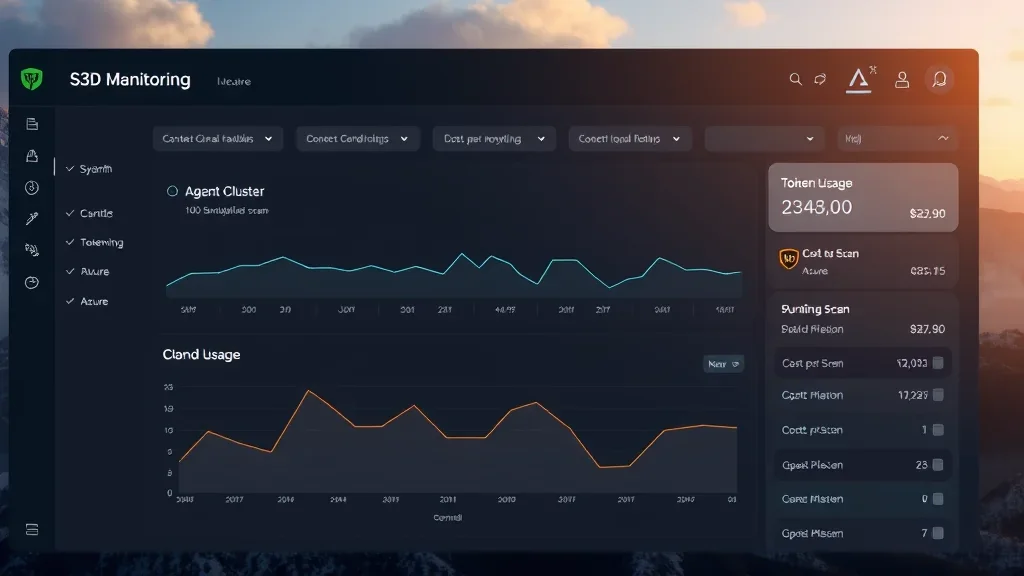
Cloud deployment
From local script to hosted Streamlit or FastAPI service. Token budgeting, rate limiting, observability, and the operational patterns that make an agent survive its first 1,000 real users.
I designed this course for the exact audience I keep advising in Fortune 500 R&D labs: engineering leads who have to ship a spatial agent in the next quarter and need the production playbook, not another tutorial on chat interfaces. Every pattern here comes from projects with real budgets, real deadlines, and real failure modes.
How this course works
Built for senior engineers and R&D leads. Dense, opinionated, and production-first.
100% asynchronous
Access every module 24/7 on the LMS. No live sessions required. Built for busy schedules.
Code-along projects
Every module ships with complete Python source code and a working agent repo. Clone, run, modify, ship.
Progress tracking
Built-in progress dashboard. Track your completion across all 5 modules, mark milestones, monitor your learning velocity.
R&D-grade patterns
This isn’t a beginner agent course. I assume you’ve shipped production software before. I skip the basics and go straight to the decisions that matter at scale.
Lifetime access
You keep access forever. Every future update, every new orchestration pattern, every new model. If anything ever happens to the platform, I’ll send you the full offline version too.
Model-agnostic design
Patterns that work with OpenAI, Anthropic, or open-weight models. When the hot model of next year lands, you swap providers in one config file and keep every tool, chain, and workflow you built.
Every serious AI team is moving from prompts to agents. The ones who succeed are the ones who treat orchestration as a software engineering problem, not a prompt engineering one. That means tool design, state management, failure handling, and HITL gates. That’s what this course teaches, end to end.
The Curriculum
5 modules. From LangChain fundamentals to a deployed multi-agent system with HITL approval.
Prerequisites
This is an advanced course. It expects real software experience and at least a passing familiarity with 3D data.
- Python (advanced): you’ve shipped production Python, you know async, typing, and how to structure a non-trivial codebase
- LLM familiarity: you’ve called an OpenAI or Anthropic API at least once. You don’t need deep LangChain experience, I build that up from scratch
- 3D basics: you’ve loaded a point cloud in Python before. Nothing fancy needed, but the course assumes you’ve done it
- Hardware: any modern laptop. No GPU required. API credits for OpenAI or Anthropic (budget around 10 to 20 EUR for the full course)
If you’re brand new to 3D, take Point Cloud Intelligence first. If you’re brand new to LLMs, that’s fine, I cover the LangChain layer from zero.
Set up the agent stack. LangChain fundamentals, model providers, chains, and the shift from a single-prompt chatbot to a tool-using agent.
Build the tools your agent can call. A file system middleware, a point cloud loader, a geometry transform, a scene graph query. Each one a proper Python tool with a schema.
Give your agent a memory. Agent state, a proper todo list, streaming responses, and verbosity levels you can dial up or down depending on audience.
The approval layer. HITL gates on every destructive operation, diff previews, rollback strategies. This is what turns an experimental agent into something an organization can actually trust.
A coordinator plus specialist sub-agents. Deploy to Streamlit Cloud. Token budgeting, observability, and the operational concerns that matter once real users touch the system.

Your instructor
Dr. Florent Poux
I’ve spent 12+ years in 3D geospatial: from field surveys with total stations to building AI systems for Fortune 500 companies. I published the O’Reilly book on 3D Data Science with Python. I’ve advised startups valued at over 15M EUR. I’ve held a professorship, taught at university, and led R&D for some of the largest organizations in the space.
I don’t teach syntax. I teach judgment. Every module is built around real decisions I’ve faced in production. Which neural renderer fits an industrial inspection job. How to architect a semantic pipeline that doesn’t choke on 500M points. When to use algorithmic methods and when to switch to deep learning.
What students say
R&D engineers, ML leads, and technical directors from 80 countries.
“The scene graph module opened up possibilities I hadn’t considered. We built a spatial reasoning engine for our autonomous robot using exactly the architecture from Module 2.”

“I’ve taken other 3D courses. This is the only one where I actually deployed something. The web app module turned into a client demo that won us a contract.”
“As a PhD student in remote sensing, I needed production skills to complement my research. This course filled exactly that gap. My advisor was impressed with the pipeline I built.”
“I went through three Udemy courses before this one. Night and day. Florent teaches like someone who has shipped 3D products, not someone who read about them.”
“I built a spatial agent that walks our scan-to-BIM pipeline end to end. The tool-calling chapter clicked in a way no LLM tutorial ever did for me.”
“Florent treats agents as engineering, not magic. The evaluation harness alone changed how my team measures whether an agent is actually useful.”
Get lifetime access
One payment. Every module, every update, every orchestration pattern.
Spatial Agent Orchestration
Complete agent curriculum + source code + lifetime updates
- 5 advanced modules (15+ hours)i
- Complete Python source code
- LangChain agent templates
- HITL approval workflows
- Streamlit Cloud deployment
- Lifetime access + all future updatesi
- 90-day results guaranteei
Zero-risk guarantee: Apply the course material. If you don’t see real results within 90 days, I’ll refund you in full. No forms, no questions.
The complete ecosystem
3D AI Architect Program
The complete spatial AI curriculum, delivered in 3 tiers. Pick the depth that matches where you are — Foundations to get moving, Professional for the full OS stack, Ultimate for live access and priority support.
- 3D AI Acceleratori: 17 episodes in 6 acts
- 3D Course Libraryi: every standalone course I publish
- All 4 OS courses (Professional & Ultimate tiers)
- Neurones 3D software access
- Monthly drop-in sessions with Dr. Poux (Ultimate)
- Spatial AI job and market intel
- Priority support + services access (Ultimate)
- 300+ hours of content
What you’re getting access to
Everything I’ve built over 12+ years, from land surveying in the field to advising 15M EUR startups, compressed into one curriculum you can start today. Delivered by the first QUALIOPI-certified 3D geospatial academy.
Every pipeline was battle-tested on Fortune 500 projects processing billions of points. You’re getting the real playbook, not theory.
Methods validated by peer-reviewed publications, the ISPRS scientific community, and 1,500+ academic citations. Not guesswork.
Built by someone who surveyed in the field, defended a PhD, advised funded startups, and shipped products to Fortune 500 clients.
I share more free content than most people put behind a paywall. That’s intentional. I want you to know exactly what you’re getting before you invest. This course is the concentrated, structured version of everything I know. No fluff. No filler. Just the production path.
Find the right path for you
From single courses to the complete ecosystem.
| Feature | Standalone Course | Spatial Agent Orchestration | Course Library | 3D AI Architecti | Enterprise |
|---|---|---|---|---|---|
| Courses included | 1 topic | 5 modules | Full catalogi | 3 OS courses + Library (tiered) | Custom |
| Hours of content | 2-8h | 15+ hours | 150+ hours | 300+ hours (tiered) | Custom |
| Production source code | ✓ | ✓ | ✓ | ✓ | ✓ |
| Lifetime access | ✓ | ✓ | – | ✓ | ✓ |
| 3D AI Accelerator Tracki | – | – | – | ✓ | ✓ |
| Neurones 3D softwarei | – | – | – | ✓ | ✓ |
| Spatial AI job & market inteli | – | – | – | ✓ | ✓ |
| Monthly drop-in sessionsi | – | – | – | ✓ | ✓ |
| Priority support + services accessi | – | – | – | ✓ tiered | ✓ |
| Custom onboardingi | – | – | – | – | ✓ |
| Team licensing | – | – | – | – | ✓ |
| Price | €97 – €497 | €397 | €297 / 3 months | Starts at €1,999 | On request |
Straight answers
Is this a beginner course on AI agents?
No. This course is built for engineers who already ship production software and want to go from prompts to agents specifically for 3D work. If you’ve never called an LLM API, the ramp is steep.
Which LLM providers do you cover?
OpenAI and Anthropic are the defaults. I also show how to swap in a local model via Ollama. The course is designed so you can change providers without rewriting your tools.
Do I need deep LangChain experience?
No. I build the LangChain layer from scratch in Module 1. What you do need is solid Python and the willingness to read a framework’s docs when I point you there.
How much will the API calls cost during the course?
Budget around 10 to 20 EUR for the full course if you use GPT-4o or Claude Sonnet. You can run everything on cheaper models for even less. Local models via Ollama cost nothing but compute.
Does this course cover computer vision or 3D deep learning?
Not directly. This is the orchestration course. I wrap existing 3D tools (segmentation, classification, transformation) as agent tools. If you want the 3D deep learning side, see Segmentor OS or the Neural Networks courses.
Is HITL really necessary or is it overkill?
For any system touching real data, it’s necessary. The moment an agent can delete, overwrite, or push changes to production, you want a human gate. The course shows how to make that gate lightweight enough that users actually keep it on.
What’s the refund policy?
90 days. Ship something real. If you don’t see results, email me for a full refund. No questions.
How does this fit with the Spatial OS?
This is the agent module from the Spatial OS, sold on its own. If you decide later you want the full stack (data foundations, scene graphs, neural rendering, production deployment), I credit the standalone price toward the OS.
Do you offer team licensing for R&D groups?
Yes. For teams of 3+ or enterprise licensing, contact me at howto@learngeodata.eu. I offer volume discounts and tailored onboarding.
Not sure if this course fits?
If you have specific questions about how the curriculum applies to your role, your team’s needs, or your technical background, I’m happy to help you figure it out before you commit.
Book a 15-min call