
A Human-in-the-Loop 3D Engine
Ship a Human-in-the-Loop 3D engine that ingests point clouds, runs your AI, and lets a human approve, correct, or reject every prediction. 5 modules. Real code. Real annotation workflows.
See the HITL engine in action
A walkthrough of the course, the review interface, and the deployed annotation workflow.
Objects labelled per week by teams running this engine on real BIM datasets.
Students trained worldwide across 80 countries.
Production experience distilled into structured, repeatable workflows.
Your AI is fast. Your reviewers are stuck.
Your model predictions arrive in seconds. Great. Now a subject matter expert has to open CloudCompare, spin the cloud by hand, scrub through 10 million points, and mark the ones the model got wrong. A three-second inference becomes a three-hour manual review. Your AI team celebrated; your annotation team burned out.
The bottleneck isn’t the model. It’s the review loop. Without a proper Human-in-the-Loop engine, every correction lives in a spreadsheet, every approval is tribal knowledge, and no one can measure whether the next model checkpoint is actually better than the last one.
AI predictions are cheap. Review infrastructure is expensive. Most teams ship a model and then accidentally invent an annotation tool around it, one hacky notebook at a time. This course shows you the engineered version. A proper ingestion pipeline, a review UI built for speed, an approval ledger, and feedback loops your model can learn from. The team that owns the review loop owns the model.
What you’ll build
A production HITL engine your annotators and AI team can both love. No more hacky notebooks.
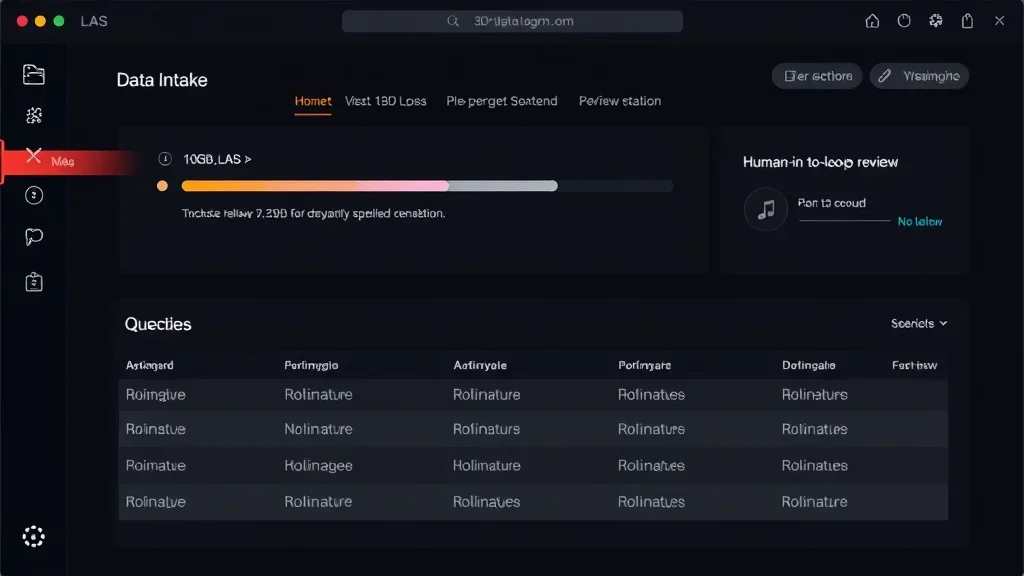
Ingestion pipeline
Stream raw LAS, E57, PLY scans into your engine. Chunked loading, metadata indexing, and a task queue that assigns work to reviewers without a single spreadsheet.
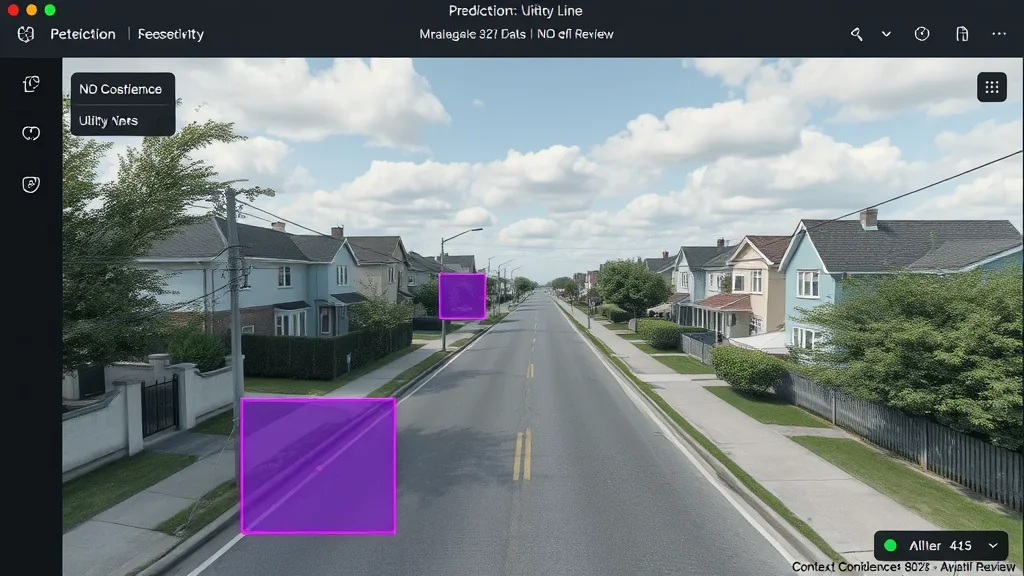
Model inference layer
Plug in any PointNet, RandLA-Net, or custom segmentation model. The engine batches tiles, runs inference, and stages predictions for human review.
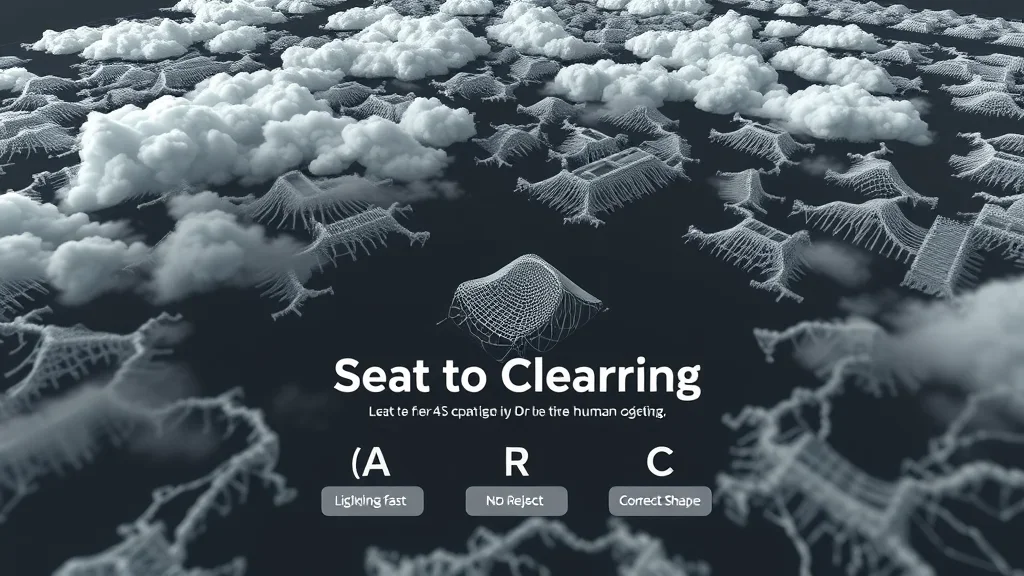
Review UI
A fast, keyboard-driven interface for reviewers. Accept, reject, or correct predictions on a per-object basis. Every action logged to an approval ledger your audit team will thank you for.
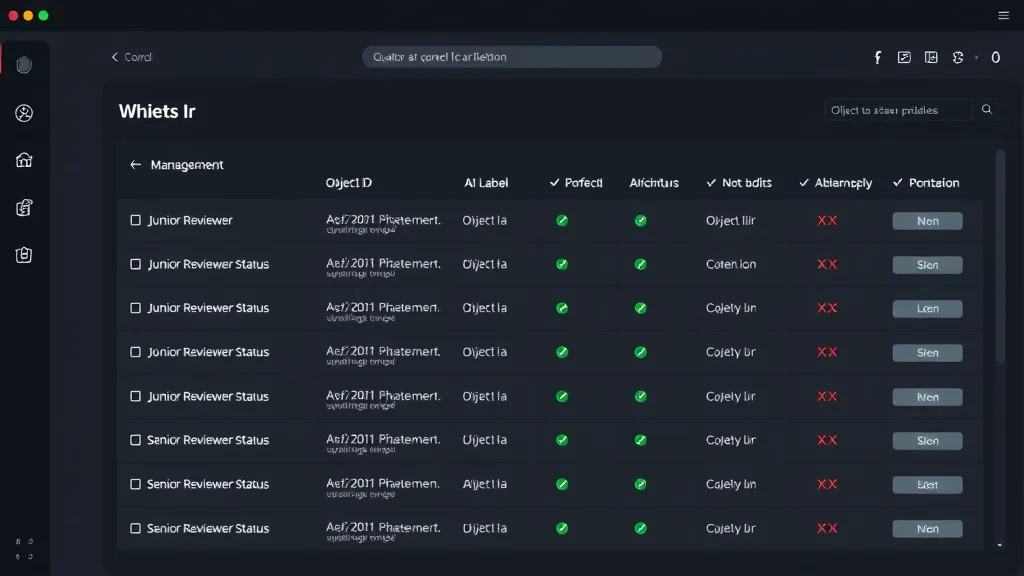
Approval workflows
Multi-stage review: a junior reviewer screens, a senior reviewer approves. Dispute resolution, escalation paths, and all the process glue that turns individual work into a reliable pipeline.
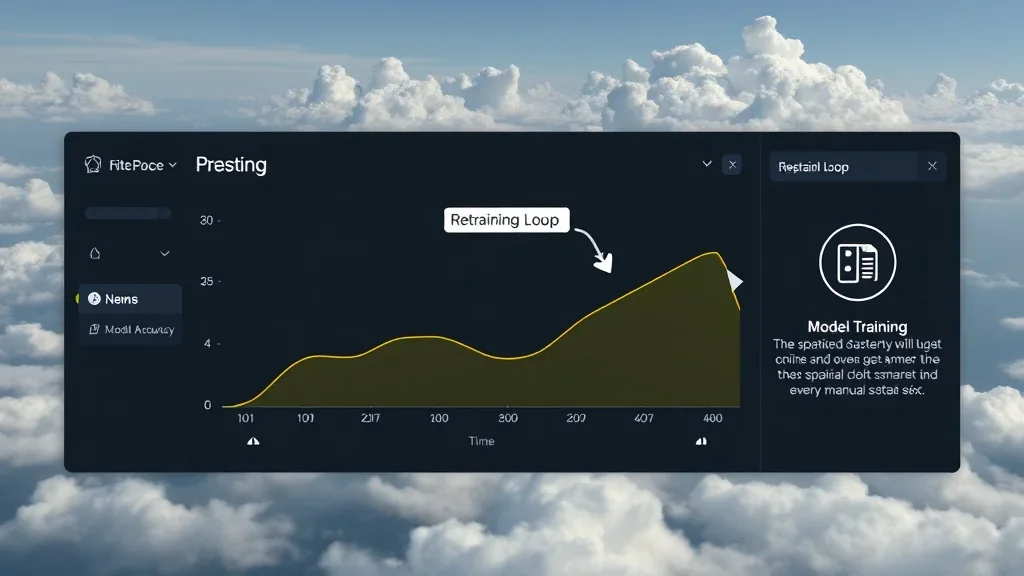
Feedback to model
Turn every human correction into a training signal. Active learning loops that surface the hardest cases first and keep your model improving.
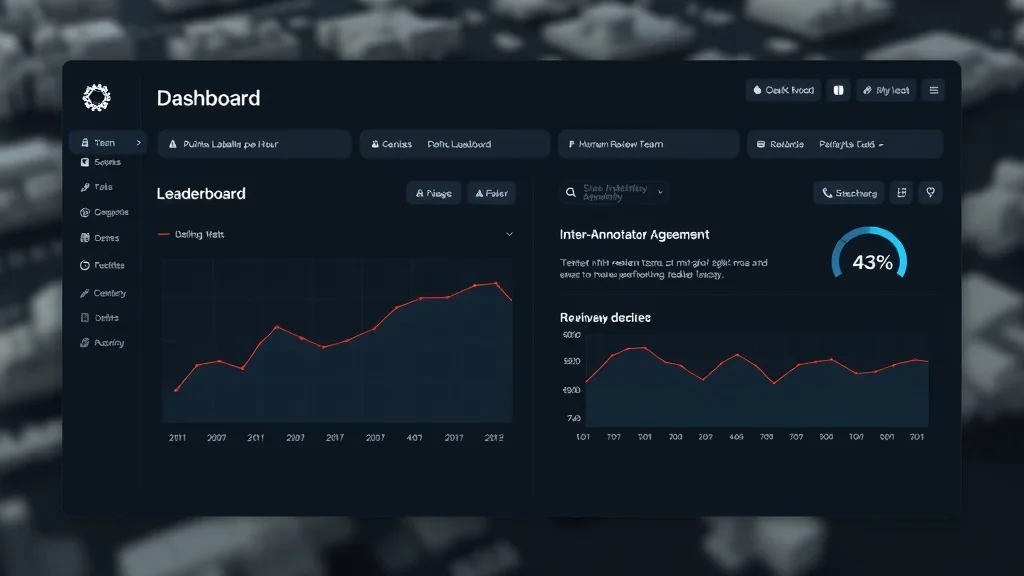
Metrics and auditing
Per-reviewer accuracy, per-class confusion matrices, time-to-review, model drift alerts. The dashboard that turns your annotation team from a cost center into a data quality function.
I built this course because I’ve sat in too many rooms where an AI team demoed a new model to a stakeholder, and the stakeholder asked the only question that mattered: how do we know it’s right? The answer is HITL. Not as an afterthought. As the engineered spine of your 3D AI product. This course is the five-module playbook.
How this course works
Built for ML engineers and data leads who ship production 3D AI.
100% asynchronous
Access every module 24/7 on the LMS. No live sessions. Build on your own schedule.
Full engine repo
The course ships with the complete engine codebase. Clone it, deploy it, adapt it to your own data. It’s not a reference implementation, it’s the real thing.
Progress tracking
Built-in progress dashboard. Track your completion across all 5 modules, mark milestones, monitor your learning velocity.
Real annotation datasets
Industrial facilities, urban scans, heritage buildings. I’ve chosen datasets where the HITL pain is real, so you can feel the difference the engine makes.
Lifetime access
You keep access forever. Every future update, every new reviewer feature, every integration I add. If anything ever happens to the platform, I’ll send you the full offline version too.
Model-agnostic
The engine doesn’t care which model you plug in. PointNet, RandLA-Net, Mask3D, or something custom. Swap models without touching the review UI.
Every serious 3D AI team I’ve advised hits the same wall: the model is good, but the humans can’t keep up. HITL is the last mile that turns a demo into a product. Master it and you become the person who ships, while your peers are still iterating on model architecture.
The Curriculum
5 modules. From ingestion to a deployed HITL engine with metrics and feedback loops.
Prerequisites
This course is for engineers already comfortable with point clouds and basic ML. If you’re new to 3D, start with Point Cloud Intelligence first.
- Python (mid to advanced): classes, file I/O, NumPy, and comfort with packaging a small app
- Point cloud basics: you’ve loaded a LAS or E57 file, you’ve run a segmentation algorithm. You don’t need to train a model, but you should know what one looks like
- Web basics: you don’t need to be a frontend engineer. I use Streamlit and a light dash of Three.js, both kept as simple as possible
- Hardware: 16 GB RAM. A GPU helps only if you run inference locally inside the course datasets
No annotation tool experience required. I show you why every commercial one frustrates real teams, and how to build something better.
Build the ingestion pipeline. LAS, E57, PLY streaming, tile indexing, and a task queue that assigns work without manual coordination.
Wire any segmentation model into the engine. Batch inference across tiles, prediction staging, confidence scores, and the model abstraction that keeps the rest of the engine model-agnostic.
A fast keyboard-driven review UI. Three.js visualization, per-object accept/reject, free-form corrections, and undo/redo that your annotators will appreciate.
Multi-stage review. Junior screens, senior approves. Dispute resolution, escalation paths, and the approval ledger that makes the system auditable.
Turn corrections into training data. Active learning loops, model retraining triggers, dashboards, and full deployment to your infrastructure.

Your instructor
Dr. Florent Poux
I’ve spent 12+ years in 3D geospatial: from field surveys with total stations to building AI systems for Fortune 500 companies. I published the O’Reilly book on 3D Data Science with Python. I’ve advised startups valued at over 15M EUR. I’ve held a professorship, taught at university, and led R&D for some of the largest organizations in the space.
I don’t teach syntax. I teach judgment. Every module is built around real decisions I’ve faced in production. Which neural renderer fits an industrial inspection job. How to architect a semantic pipeline that doesn’t choke on 500M points. When to use algorithmic methods and when to switch to deep learning.
What students say
ML engineers, annotation leads, and AEC technology teams from 80 countries.
“We used the HITL annotation engine to label 50K objects in our BIM dataset. It cut our annotation time by 70%. Real production value from day one.”

“I went from copy-pasting Open3D tutorials to building a full classification pipeline for our digital twin project. The production mindset changes everything.”
“The scan-to-BIM pipeline turned a three-week manual modelling job into a two-day automated workflow. We closed three new heritage contracts the same quarter.”
“The photogrammetry-to-splat pipeline module replaced three tools in our stack. We deliver photorealistic scenes to clients in half the time.”
“We integrated the human-in-the-loop annotation engine into our cadastral pipeline. Throughput tripled and disagreements between annotators dropped sharply.”
“The active-learning chapter changed how we sample new training data. Same model accuracy on a quarter of the labelled points.”
Get lifetime access
One payment. Every module, every update, every line of engine code.
HITL 3D Spatial Engine
Complete HITL curriculum + engine source code + lifetime updates
- 5 production modules (12+ hours)i
- Complete Python engine source code
- Three.js review UI
- Approval ledger and metrics
- Active learning feedback loop
- Lifetime access + all future updatesi
- 90-day results guaranteei
Zero-risk guarantee: Apply the course material. If you don’t see real results within 90 days, I’ll refund you in full. No forms, no questions.
The complete ecosystem
3D AI Architect Program
The complete spatial AI curriculum, delivered in 3 tiers. Pick the depth that matches where you are — Foundations to get moving, Professional for the full OS stack, Ultimate for live access and priority support.
- 3D AI Acceleratori: 17 episodes in 6 acts
- 3D Course Libraryi: every standalone course I publish
- All 4 OS courses (Professional & Ultimate tiers)
- Neurones 3D software access
- Monthly drop-in sessions with Dr. Poux (Ultimate)
- Spatial AI job and market intel
- Priority support + services access (Ultimate)
- 300+ hours of content
What you’re getting access to
Everything I’ve built over 12+ years, from land surveying in the field to advising 15M EUR startups, compressed into one curriculum you can start today. Delivered by the first QUALIOPI-certified 3D geospatial academy.
Every pipeline was battle-tested on Fortune 500 projects processing billions of points. You’re getting the real playbook, not theory.
Methods validated by peer-reviewed publications, the ISPRS scientific community, and 1,500+ academic citations. Not guesswork.
Built by someone who surveyed in the field, defended a PhD, advised funded startups, and shipped products to Fortune 500 clients.
I share more free content than most people put behind a paywall. That’s intentional. I want you to know exactly what you’re getting before you invest. This course is the concentrated, structured version of everything I know. No fluff. No filler. Just the production path.
Find the right path for you
From single courses to the complete ecosystem.
| Feature | Standalone Course | HITL 3D Spatial Engine | Course Library | 3D AI Architecti | Enterprise |
|---|---|---|---|---|---|
| Courses included | 1 topic | 5 modules | Full catalogi | 3 OS courses + Library (tiered) | Custom |
| Hours of content | 2-8h | 12+ hours | 150+ hours | 300+ hours (tiered) | Custom |
| Production source code | ✓ | ✓ | ✓ | ✓ | ✓ |
| Lifetime access | ✓ | ✓ | – | ✓ | ✓ |
| 3D AI Accelerator Tracki | – | – | – | ✓ | ✓ |
| Neurones 3D softwarei | – | – | – | ✓ | ✓ |
| Spatial AI job & market inteli | – | – | – | ✓ | ✓ |
| Monthly drop-in sessionsi | – | – | – | ✓ | ✓ |
| Priority support + services accessi | – | – | – | ✓ tiered | ✓ |
| Custom onboardingi | – | – | – | – | ✓ |
| Team licensing | – | – | – | – | ✓ |
| Price | €97 – €497 | €297 | €297 / 3 months | Starts at €1,999 | On request |
Straight answers
Do I need to train my own 3D model?
No. The course treats your model as a plug-in. You can use a pre-trained PointNet or RandLA-Net I provide, or wire in your own. The engine is model-agnostic.
Is this a replacement for tools like Segments.ai or CVAT?
For many teams, yes. This gives you an engine you own and can adapt to domain-specific workflows (BIM, heritage, industrial). Commercial tools are great general-purpose, but they’re hard to specialize. The course teaches you to build exactly the tool you need.
What frameworks do you use?
Python, Streamlit, Three.js, and a light database (SQLite or Postgres, your choice). All open-source. No paid services required to run the engine.
Do I need a GPU?
Only if you run model inference locally during the course. The engine itself is model-agnostic, so you can point it at a hosted inference endpoint and skip the GPU entirely.
How long do I have access?
Lifetime. One payment, permanent access. Every future update included.
What’s the refund policy?
90 days. Deploy the engine on real data. If you don’t see results, email me for a full refund. No questions.
Can I deploy this on-premise for a regulated client?
Yes. The engine has no mandatory cloud dependencies. It runs on your laptop, your server, or your client’s air-gapped environment. I cover the deployment variations in Module 5.
How is this different from the Spatial Agents course?
Agents is about LLM orchestration and planning. HITL is about review infrastructure for per-object 3D predictions. They complement each other: many teams build both. They also share DNA with the Spatial OS.
Do you offer team licensing?
Yes. For teams of 3+ or enterprise licensing, contact me at howto@learngeodata.eu.
Not sure if this course fits?
If you have specific questions about how the curriculum applies to your role, your team’s needs, or your technical background, I’m happy to help you figure it out before you commit.
Book a 15-min call