
Build the Engine That Powers Spatial AI
Go from raw point clouds to a deployed 3D application. 5 production modules. Real Python. No black boxes. Just code you own.
See what you’re building
A walkthrough of the course, the projects, and the production mindset behind it.
Points per pipeline. Designed for city-scale digital twins.
Professionals trained, in 80 countries.
Production experience distilled into structured, repeatable workflows.
You’ve hit the wall.
You can load a point cloud in Python. You’ve called Open3D’s visualization function. Maybe you’ve run a segmentation script from a tutorial. But when someone asks you to build a production pipeline that handles 500 million points, classifies them, and serves the result to a browser, you freeze.
That’s the gap. Not syntax. Not libraries. It’s the architectural judgment to pick the right tool, sequence the right operations, and ship something that works outside a Jupyter notebook.
AI can write Python. But an LLM doesn’t understand the memory constraints of a billion-point LiDAR scan. ChatGPT will give you a script that works on 10,000 points. Deploy it on a city-scale digital twin, and it’ll crash your RAM in four seconds. In the age of AI, syntax is cheap. Architectural intuition is the premium.
What you’ll build
Not exercises. Not toy datasets. These are production systems.
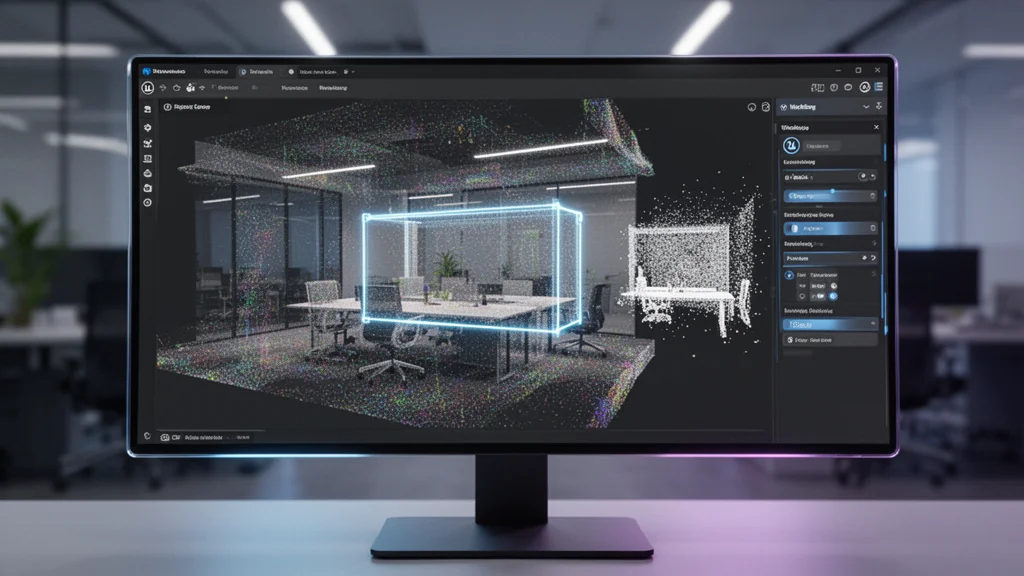
3D data processing engine
Parse, filter, downsample, and structure point clouds at scale. Handle E57, LAS, PLY with proper memory management.
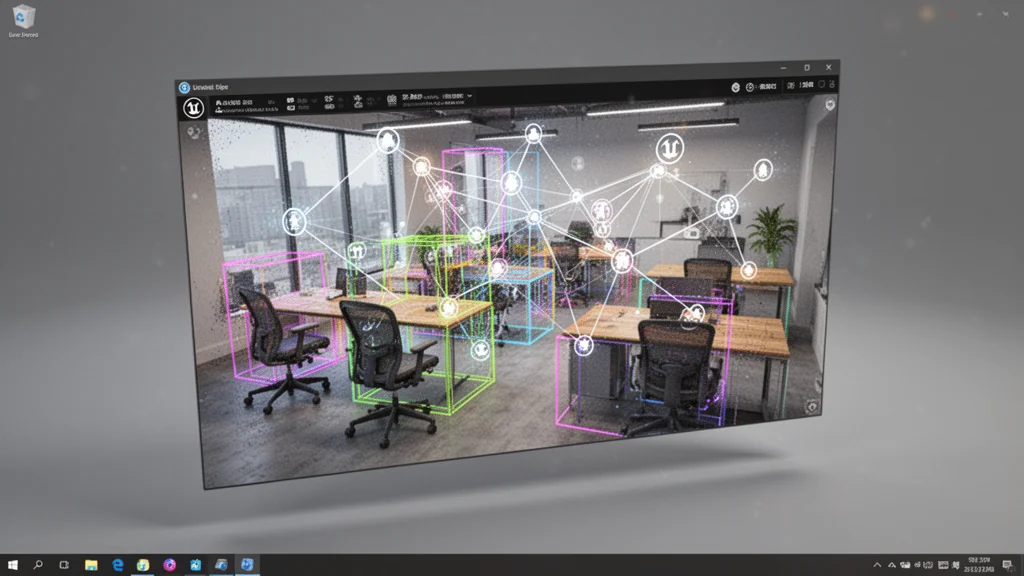
Spatial AI scene graphs
Turn raw point clouds into queryable knowledge graphs. Encode object hierarchies and spatial relationships. The foundation every spatial reasoning system is built on.
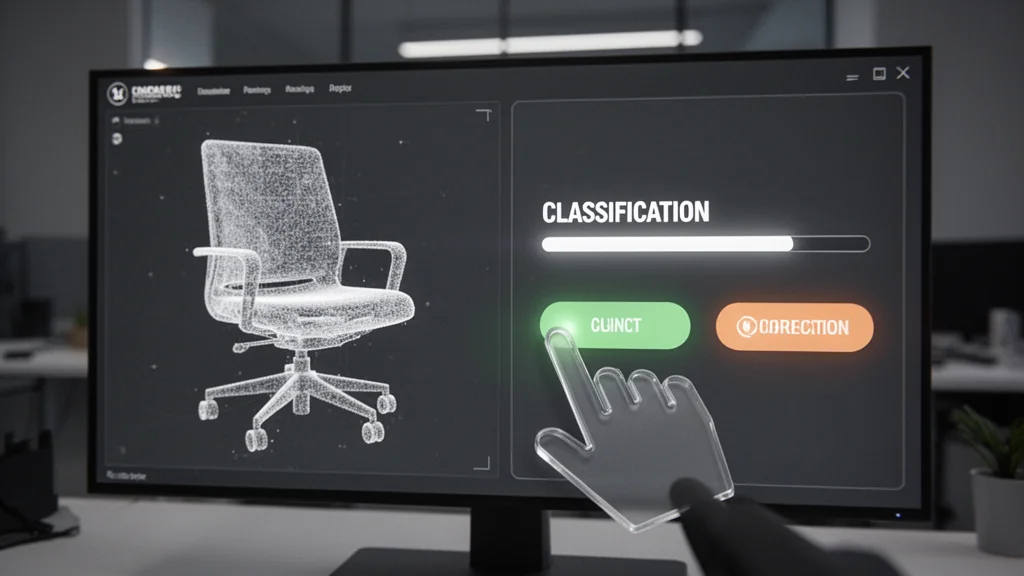
Human-in-the-loop 3D classifier
Build a HITL classification engine. Semi-automated labelling, active learning, and foundation-model-assisted pipelines that scale without armies of annotators.
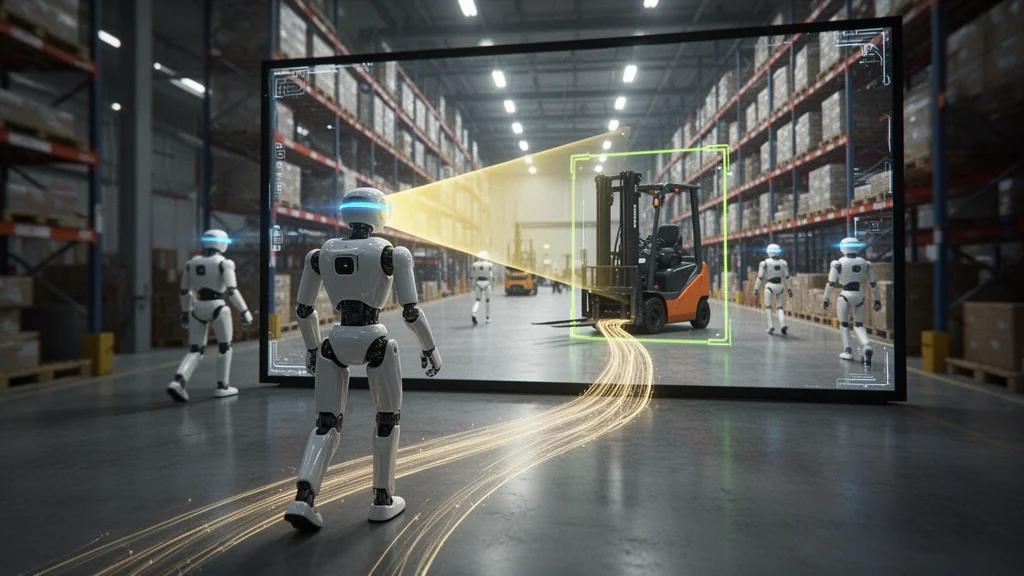
Autonomous 3D AI agents
Design multi-agent systems that reason about 3D space. Orchestrate autonomous classification, detection, and decision-making over spatial data.
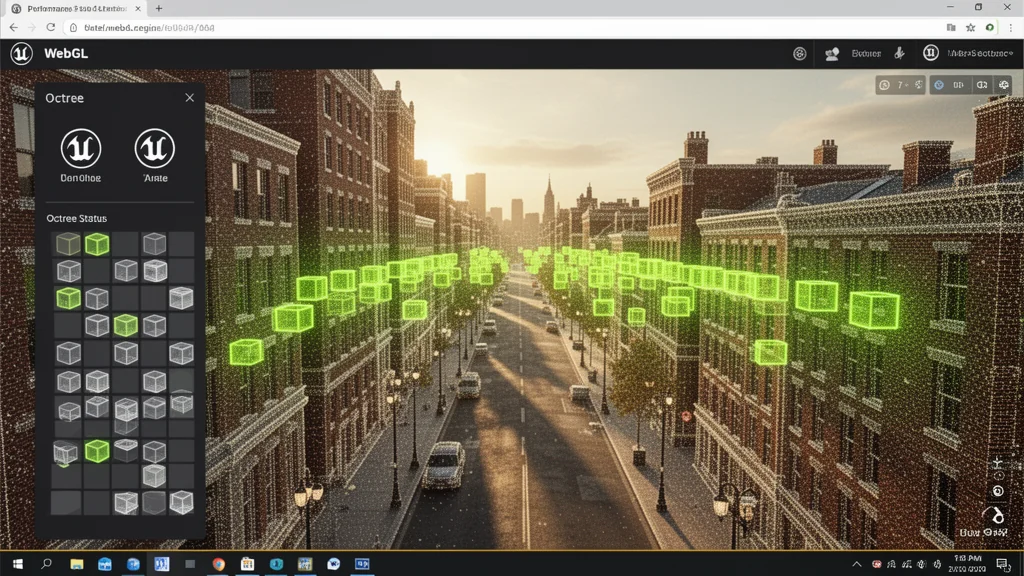
WebGL streaming app
Ship your engine to the browser. Chunked octree streaming, Three.js rendering, and a client-ready web interface.
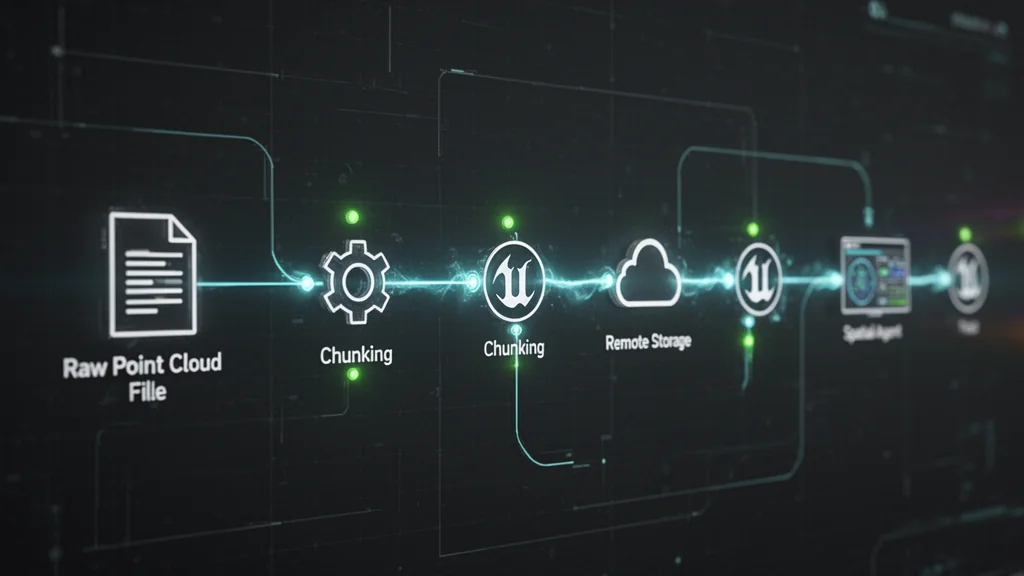
Production deployment
DEV to PROD. PDAL chunking for massive datasets, cloud deployment, and live spatial AI agents in production.
I built this course because I watched too many talented engineers hit the exact same wall. They knew Python. They knew the math. But nobody had taught them how to think in systems, how to architect a pipeline that survives contact with real data at real scale. That’s what I’m transferring here: 12 years of hard-won production decisions.
How this course works
Designed for working professionals. Built for the AI era.
100% asynchronous
Access every module 24/7 on the LMS. No live sessions required. Work at your own pace, on your schedule.
Code-along projects
Every module ships with complete Python source code. Clone the repo, run it, modify it. No copy-pasting from videos.
Progress tracking
Built-in progress dashboard. Track your completion across all 5 modules, mark milestones, monitor your learning velocity.
Production-first pedagogy
No toy datasets. Every exercise uses real-world data at real scale. You build systems that work outside a notebook.
Lifetime access
You keep access forever. Every future module, every code update, every new technique I add to the curriculum. If anything ever happens, I’ll send you the full offline version too.
AI-era architecture
AI writes syntax. This course teaches the judgment AI can’t replicate: what to build, how to scale it, when to switch approaches.
Copilot can autocomplete your for-loop. It can even suggest whether to use RANSAC or deep learning on a noisy industrial scan. But without the right context, AI picks the wrong tool half the time. It can’t know the memory constraints of your specific scanner, the noise profile of your data, or the deployment target for your pipeline. You need to be the one guiding it. That’s the judgment I’m transferring. That’s what makes you the engineer AI amplifies, not the one AI replaces.
The Operating System
5 modules. Each one ships a working system. Together, they form the complete stack.
Prerequisites
This course picks up where tutorials leave off. If you feel below on any point, don’t worry: you’ll get access to a complete ebook covering every prerequisite.
- Python (mid-level): comfortable with classes, file I/O, NumPy, list comprehensions, virtual environments
- Basic linear algebra: vectors, dot products, rotation matrices. I explain the rest as we go
- Hardware: 16 GB RAM minimum (32 GB+ recommended for AI modules). CUDA GPU recommended but not required for most modules
- Software: Windows (natively supported), easily portable to Linux and Mac. All tools are free and open-source. Zero extra cost
No 3D experience required. I build the spatial intuition from the ground up.
Set up your processing environment. Parse raw LiDAR data (LAS, E57, PLY). Build the data structures that every other module depends on.
Turn point clouds into knowledge graphs. Build scene graphs that encode spatial relationships. This is where raw geometry becomes intelligence.
Design AI agents that reason about 3D space. Orchestrate multi-agent workflows for autonomous data processing, classification, and decision-making.
Build a HITL 3D classifier. Active learning, foundation-model-assisted labelling, and semi-automated workflows that scale without armies of annotators.
Ship your spatial engine. PDAL chunking, cloud deployment, Three.js WebGL rendering, and a client-ready web interface streaming 3D data in real time.

Your instructor
Dr. Florent Poux
I’ve spent 15+ years in 3D geospatial: from field surveys with total stations to building AI systems for Fortune 500 companies. I published the O’Reilly book on 3D Data Science with Python. I’ve advised startups valued at over 15M EUR. I’ve held a professorship, taught at university, and led R&D for some of the largest organizations in the space.
I don’t teach syntax. I teach judgment. Every module is built around real decisions I’ve faced in production. Which neural renderer fits an industrial inspection job. How to architect a semantic pipeline that doesn’t choke on 500M points. When to use algorithmic methods and when to switch to deep learning.
What students say
Engineers, researchers, and professionals from 80 countries.
“The scene graph module opened up possibilities I hadn’t considered. We built a spatial reasoning engine for our autonomous robot using exactly the architecture from Module 2.”

“I’ve taken other 3D courses. This is the only one where I actually deployed something. The web app module turned into a client demo that won us a contract.”
“As a PhD student in remote sensing, I needed production skills to complement my research. This course filled exactly that gap. My advisor was impressed with the pipeline I built.”
“I went through three Udemy courses before this one. Night and day. Florent teaches like someone who has shipped 3D products, not someone who read about them.”
Get lifetime access
One payment. Every module, every update, every line of production code.
3D Spatial OS
Full production curriculum + source code + lifetime updates
- 5 production modules (40+ hours)i
- Complete Python source code
- Scene graphs + multi-agent orchestration
- Production deployment + cloud workflows
- Lifetime access + all future updatesi
- 14-day money-back guaranteei
Zero-risk guarantee: Apply the course material. If it is not right for you, write within 14 days of purchase and I refund in full. No forms, no questions.
The complete ecosystem
3D AI Architect Program
The complete spatial AI curriculum, delivered in 3 tiers. Pick the depth that matches where you are: Foundation to get moving, Professional for the full OS stack, Architect for the co-built, one to one route.
- 3D AI Acceleratori: 17 episodes in 6 acts
- 3D Course Libraryi: every standalone course I publish
- All 4 OS courses (Professional and Architect tiers)
- Neurones 3D software access
- Monthly drop-in sessions with Dr. Poux (Architect)
- Spatial AI job and market intel
- Priority support + services access (Architect)
- 300+ hours of content
What you’re getting access to
Everything I’ve built over 15+ years, from land surveying in the field to advising 15M EUR startups, compressed into one curriculum you can start today. Delivered by the first QUALIOPI-certified 3D geospatial academy.
Every pipeline was battle-tested on Fortune 500 projects processing billions of points. You’re getting the real playbook, not theory.
Methods validated by peer-reviewed publications, the ISPRS scientific community, and 1,700+ Google Scholar citations. Not guesswork.
Built by someone who surveyed in the field, defended a PhD, advised funded startups, and shipped products to Fortune 500 clients.
I share more free content than most people put behind a paywall. That’s intentional. I want you to know exactly what you’re getting before you invest. This course is the concentrated, structured version of everything I know. No fluff. No filler. Just the production path.
Find the right path for you
From single courses to the complete ecosystem.
| Feature | Standalone Course | 3D Spatial OS | Course Library | 3D AI Architecti | Enterprise |
|---|---|---|---|---|---|
| Courses included | 1 topic | 5 modules | Full catalogi | 3 OS courses + Library (tiered) | Custom |
| Hours of content | 2-8h | 40+ hours | 150+ hours | 300+ hours (tiered) | Custom |
| Production source code | ✓ | ✓ | ✓ | ✓ | ✓ |
| Lifetime access | ✓ | ✓ | – | ✓ | ✓ |
| 3D AI Accelerator Tracki | – | – | – | ✓ | ✓ |
| Neurones 3D softwarei | – | – | – | ✓ | ✓ |
| Spatial AI job & market inteli | – | – | – | ✓ | ✓ |
| Monthly drop-in sessionsi | – | – | – | ✓ | ✓ |
| Priority support + services accessi | – | – | – | ✓ tiered | ✓ |
| Custom onboardingi | – | – | – | – | ✓ |
| Team licensing | – | – | – | – | ✓ |
| Price | €97 – €1,497 | €1,497 | €297 / 3 months | Starts at €1,997 | On request |
Straight answers
Do I need prior 3D experience?
No. You need solid Python skills (mid-level or above) and basic linear algebra. I build the 3D intuition from the ground up. If you’ve worked with NumPy arrays, you’re ready.
What hardware do I need?
Minimum 16 GB RAM. For the HITL and AI agent modules, 32 GB+ and a CUDA GPU are recommended. Most modules run fine on a modern laptop.
How long do I have access?
Lifetime. One payment, permanent access. That includes every future update I add to the curriculum. No subscriptions, no expiration, no hidden fees.
What’s the refund policy?
14 days. Apply the material, build something real. If you don’t see results, email me and I’ll refund you in full. No hoops, no forms, no questions. I want you to succeed, not to feel trapped.
Is this the same as the standalone courses?
Spatial OS is the complete production path. The standalone courses (Scene Graph Intelligence, Spatial Agent Orchestration, HITL Engine, Facility Management) are individual modules. If you want the full journey from foundations to deployment, this is it.
Can AI replace what this course teaches?
AI can write Python and even suggest approaches. But it doesn’t know the memory constraints of your scanner, the noise profile of your dataset, or whether your client needs a browser app or a batch pipeline. Without that context, AI guesses. This course teaches you to be the one directing AI: the architectural judgment, the system-level thinking, the production decisions that turn suggestions into working products.
Do you offer team or enterprise pricing?
Yes. For teams of 3+ or enterprise licensing, contact me at howto@learngeodata.eu. I offer volume discounts and can tailor onboarding for your team’s domain (AEC, automotive, surveying, research).
How is this different from free YouTube or Medium content?
My free content teaches individual techniques. This course teaches you how to connect them into production systems. Free content gives you pieces. This gives you the complete blueprint, the code, and the judgment to put it all together.
Why does the price increase?
Every time I add a new module, technique, or project to the curriculum, the value goes up, and so does the price. If you lock your price now, you get every future addition at today’s rate. The longer you wait, the more you pay for the same access.
Not sure if this course fits?
If you have specific questions about how the curriculum applies to your role, your team’s needs, or your technical background, I’m happy to help you figure it out before you commit.
Book a 15-min call