
Deep Learning Systems for 3D Segmentation
Build the deep learning stack that turns raw point clouds into classified, queryable 3D scenes. Frugal AI, algorithmic forge, 3D change detection, and a shipped app. 5 modules. Real production code.
See the segmentation stack in action
A walkthrough of the course, the networks, and the production decisions behind every module.
Points per trained model. Built for city-scale LiDAR datasets.
Professionals trained, in 80 countries.
Production experience distilled into structured, repeatable workflows.
Your segmentation pipeline dies past 10 million points.
You have trained a 3D network on a Colab notebook. You have segmented a few sample scenes with RANSAC. Maybe you even got a decent mIoU on a benchmark. Then someone hands you a 300 million point airborne scan with 19 classes, and your pipeline crashes before epoch one.
That is the gap. It is not the network architecture. It is the system architecture: data pipelines that survive real scale, annotation strategies that do not cost six figures, and the judgment to pick unsupervised approaches when labels are too expensive.
3D segmentation sits at the center of every spatial AI product. Autonomous driving. Digital twins. BIM automation. Precision agriculture. If you can reliably classify 3D data at scale, you can build a business. Most engineers stop at running one network on one benchmark. The ones who own the full stack, from data to deployed app, write their own ticket. This OS delivers the full stack.
What you’ll build
Not exercises. Five production systems you ship.
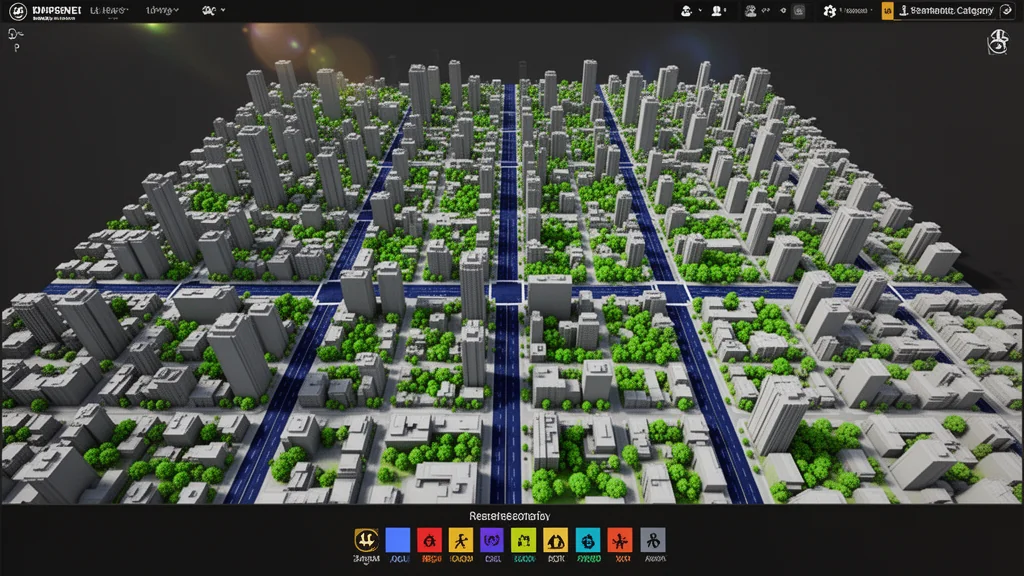
Semantic segmentation engine
Build a frugal AI segmentation stack. Class-balanced training, algorithmic priors, and the judgment to pick the lightest network that actually solves the job.
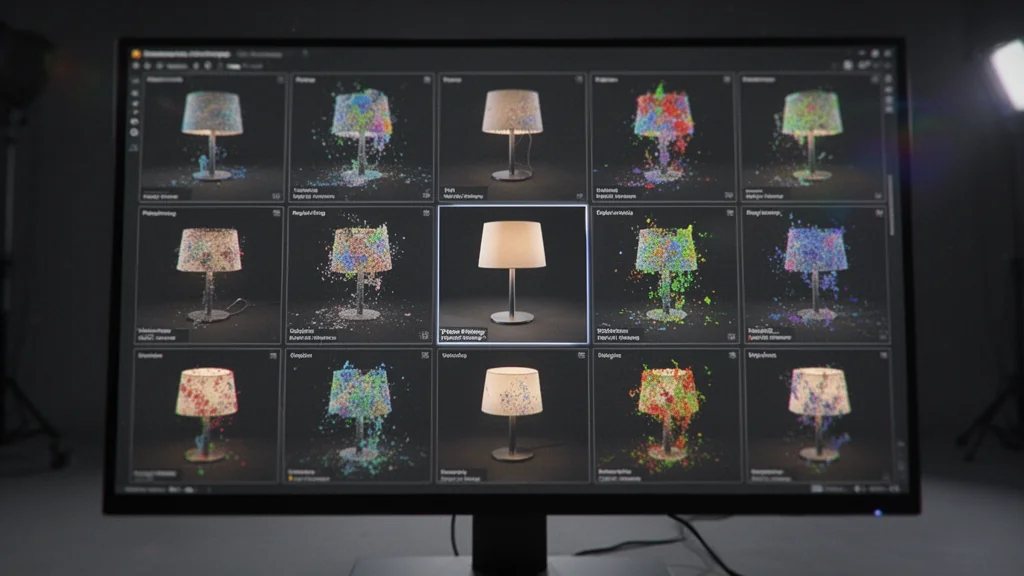
Algorithm forge
Nine algorithmic segmentation methods. Region growing, DBSCAN, Euclidean clustering, marching cubes, PCA+Random Forests. The full toolkit.

Unsupervised segmentation
Skip the labels. SegmentAnything 3D, foundation models, and clustering-based approaches that work when you have no annotated data.

Annotation pipeline
Build a HITL labelling engine. Semi-automated annotation that cuts dataset creation time by 70% on real projects.
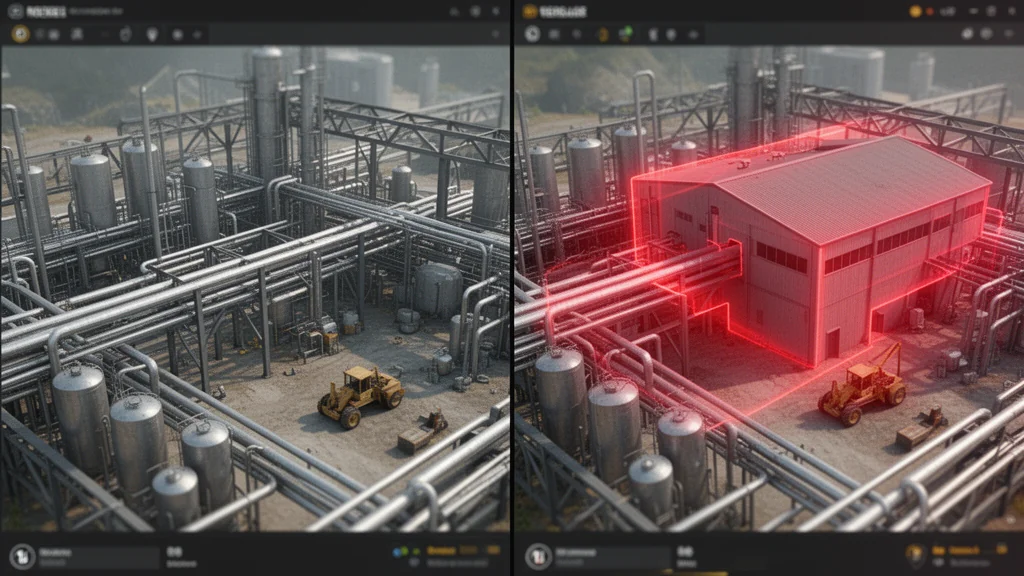
3D change detection
Compare point clouds across time. 3D change detection pipelines for construction monitoring, infrastructure inspection, and digital twin updates.
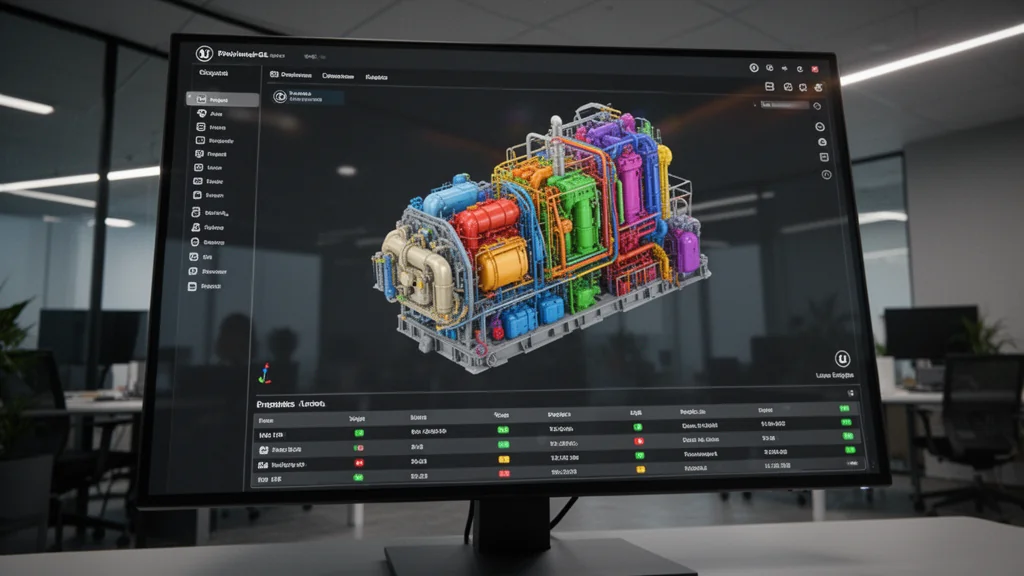
Deployed app
Ship a working segmentation app. WebGL viewer, Python backend, client-ready interface. Not a notebook, a product.
I built this OS because I watched too many talented engineers get stuck at the benchmark stage. They could train a 3D network on a tutorial dataset, but they couldn’t turn that into something a client would pay for. That’s the jump I’m helping you make. Every module in this curriculum comes from real segmentation projects I’ve shipped, debugged, and learned from.
How this course works
Designed for working engineers. Built for the AI era.
100% asynchronous
Access every module 24/7 on the LMS. No live sessions required. Work at your own pace.
Code-along projects
Every module ships with complete Python source code, training scripts, and real datasets. Clone the repo, run it, ship it.
Progress tracking
Built-in progress dashboard. Track completion across all 5 modules, mark milestones, measure learning velocity.
Real datasets
Aerial LiDAR, mobile mapping scans, indoor point clouds. Millions of real points with real noise, real occlusion, real class imbalance.
Lifetime access
You keep access forever. Every future module, every code update, every new technique I add. If anything ever happens, I’ll send you the full offline version.
Algorithmic + deep
This isn’t a pure deep learning course. It’s the complete segmentation stack: classical algorithms, neural networks, foundation models, and the judgment to pick the right tool per job.
Foundation models like SAM shifted the ground under everyone. You can now segment 3D data with zero training samples. But SAM does not know your class taxonomy, your noise profile, or whether a specific object matters to your client. The engineers who combine foundation models with task-specific adaptation and classical fallbacks will define this decade of 3D AI. That is what this OS teaches you.
The Operating System
5 modules. Each one ships a working segmentation system. Together, they form the complete stack.
Prerequisites
This course picks up where deep learning tutorials leave off. If you feel below on any point, the included prerequisite ebook has you covered.
- Python (mid-level): comfortable with classes, NumPy, PyTorch tensors, virtual environments
- Basic linear algebra: vectors, matrices, dot products, matrix multiplication
- Hardware: 16 GB RAM minimum (32 GB+ recommended). CUDA GPU with 8+ GB VRAM strongly recommended
- Software: Windows (natively supported), portable to Linux and Mac. All tools are free and open-source
No prior 3D or deep learning experience required. I build the intuition from the ground up.
Set up your deep learning environment. Master the 3D Python stack. Build your first object detection system on point cloud data.
Train and deploy efficient deep networks for 3D semantic segmentation. Frugal architectures, smart sampling, and algorithmic priors that beat brute force.
Nine algorithmic segmentation methods. Region growing, DBSCAN, Euclidean clustering, RANSAC, PCA + Random Forests, and more.
Segment without labels. SegmentAnything 3D, foundation model integration, and a HITL annotation pipeline that scales.
Package your segmentation engine into a working app. Python backend, WebGL viewer, and a client-ready interface streaming 3D segmentation results.

Your instructor
Dr. Florent Poux
I’ve spent 15+ years in 3D geospatial: from field surveys with total stations to building AI systems for Fortune 500 companies. I published the O’Reilly book on 3D Data Science with Python. I’ve advised startups valued at over 15M EUR. I’ve held a professorship, taught at university, and led R&D for some of the largest organizations in the space.
I don’t teach syntax. I teach judgment. Every module is built around real decisions I’ve faced in production. Which neural renderer fits an industrial inspection job. How to architect a semantic pipeline that doesn’t choke on 500M points. When to use algorithmic methods and when to switch to deep learning.
What students say
Engineers, researchers, and AEC professionals from 80 countries.
“Our team processed 200M points for a highway survey. Before this course, we were stuck at 10M with crashes. The memory management module saved us weeks of work.”

“I’m a surveyor with 20 years of field experience. This gave me the Python and AI skills to modernize our entire workflow. Best investment I’ve made in my career.”
“RANSAC plus DBSCAN on a 120M-point mining dataset, segmented, volumetric change detected, and report ready in one afternoon. That used to take a week.”
“This course is the foundation I wish I had when I started with LiDAR. The feature extraction module alone reshaped how I approach every project.”
“I trained my first production segmenter on industrial scans within a week. The labelling and class-imbalance modules saved me from rebuilding the dataset twice.”
“The region-growing plus learned-feature pipeline cut our manual classification work in half on a 600M-point urban dataset. We finally retired the spreadsheet.”
“What I needed was someone showing me how to evaluate a segmenter, not just train one. The metrics module is the part most courses skip and the part that matters.”
“I came in fluent in Python but lost on 3D. After Module 2 I was reading PointNet++ papers like a normal human. The intuition Florent builds is the missing link.”
“We replaced a brittle classical pipeline with a sparse-conv network thanks to this course. Production accuracy jumped from 78 to 94 percent on the same data.”
“The training loop debugging chapter was worth the price by itself. I now know why my models stop learning instead of guessing at hyperparameters.”
Get lifetime access
One payment. Every module, every update, every line of production code.
3D Segmentor OS
Full segmentation curriculum + source code + real datasets + lifetime updates
- 5 production modules (45+ hours)i
- Complete Python source code + datasets
- Deep learning foundations for 3D segmentation
- 9-method algorithm forge (region growing, DBSCAN, clustering)
- SegmentAnything 3D + foundation models
- Deployed segmentation app (Python + WebGL)
- Lifetime access + all future updatesi
- 14-day money-back guaranteei
Zero-risk guarantee: Apply the course material. If it is not right for you, write within 14 days of purchase and I refund in full. No forms, no questions.
The complete ecosystem
3D AI Architect Program
The complete spatial AI curriculum, delivered in 3 tiers. Pick the depth that matches where you are: Foundation to get moving, Professional for the full OS stack, Architect for the co-built, one to one route.
- 3D AI Acceleratori: 17 episodes in 6 acts
- 3D Course Libraryi: every standalone course I publish
- All 4 OS courses (Professional and Architect tiers)
- Neurones 3D software access
- Monthly drop-in sessions with Dr. Poux (Architect)
- Spatial AI job and market intel
- Priority support + services access (Architect)
- 300+ hours of content
What you’re getting access to
Everything I’ve built over 15+ years, from land surveying in the field to advising 15M EUR startups, compressed into one curriculum you can start today. Delivered by the first QUALIOPI-certified 3D geospatial academy.
Every pipeline was battle-tested on Fortune 500 projects processing billions of points. You’re getting the real playbook, not theory.
Methods validated by peer-reviewed publications, the ISPRS scientific community, and 1,700+ Google Scholar citations. Not guesswork.
Built by someone who surveyed in the field, defended a PhD, advised funded startups, and shipped products to Fortune 500 clients.
I share more free content than most people put behind a paywall. That’s intentional. I want you to know exactly what you’re getting before you invest. This course is the concentrated, structured version of everything I know. No fluff. No filler. Just the production path.
Find the right path for you
From single courses to the complete ecosystem.
| Feature | Standalone Course | 3D Segmentor OS | Course Library | 3D AI Architecti | Enterprise |
|---|---|---|---|---|---|
| Courses included | 1 topic | 5 modules | Full catalogi | 3 OS courses + Library (tiered) | Custom |
| Hours of content | 2-8h | 45+ hours | 150+ hours | 300+ hours (tiered) | Custom |
| Production source code | ✓ | ✓ | ✓ | ✓ | ✓ |
| Lifetime access | ✓ | ✓ | – | ✓ | ✓ |
| 3D AI Accelerator Tracki | – | – | – | ✓ | ✓ |
| Neurones 3D softwarei | – | – | – | ✓ | ✓ |
| Spatial AI job & market inteli | – | – | – | ✓ | ✓ |
| Monthly drop-in sessionsi | – | – | – | ✓ | ✓ |
| Priority support + services accessi | – | – | – | ✓ tiered | ✓ |
| Custom onboardingi | – | – | – | – | ✓ |
| Team licensing | – | – | – | – | ✓ |
| Price | €97 – €1,497 | €1,497 | €297 / 3 months | Starts at €1,997 | On request |
Straight answers
Do I need prior 3D or deep learning experience?
No. You need solid Python skills and basic linear algebra. I build the 3D and deep learning intuition from the ground up. If you have worked with PyTorch tensors at all, you are ready.
What hardware do I need?
Minimum 16 GB RAM. For the deep learning modules, a CUDA GPU with 8+ GB VRAM is strongly recommended. Modules 1 and 3 run on a modern laptop without a GPU.
How long do I have access?
Lifetime. One payment, permanent access. That includes every future module and update. No subscriptions, no expiration, no hidden fees.
What’s the refund policy?
14 days. Apply the material and train a model. If you do not see results, email me and I will refund you in full. No forms, no questions.
Is this the same as the standalone segmentation courses?
Segmentor OS is the complete segmentation path. The standalone courses (Unsupervised Segmentation, Feature Extraction, Large-Scale E57, Change Detection, Spatial Web App) are individual modules carved from this OS. If you want the full stack, this is it. If you only need one specific piece, grab the standalone.
Can AI replace what this course teaches?
AI can run a 3D network on a sample dataset. It cannot decide whether your class taxonomy is right, whether your dataset is too imbalanced, whether you should switch to unsupervised, or how to deploy the model as a client-ready app. That is the judgment I transfer here.
Do you offer team or enterprise pricing?
Yes. For teams of 3+ or enterprise licensing, email me at howto@learngeodata.eu. I offer volume discounts and tailored onboarding.
How is this different from free YouTube tutorials?
Free content teaches individual techniques. This course teaches you to connect them into production systems. Free gives you pieces. This gives you the stack and the judgment to assemble it.
Why does the price increase?
Every time I add a new module or technique, the value goes up and so does the price. Lock your price now and every future addition comes at today’s rate.
Not sure if this course fits?
If you have specific questions about how the curriculum applies to your role, your team’s needs, or your technical background, I’m happy to help you figure it out before you commit.
Book a 15-min call