
Turn Point Clouds Into Scene Graphs
Give your point clouds structure, meaning, and queryable relationships. 5 modules. Real graph algorithms. Production code you can ship to your own 3D reasoning stack.
See the scene graph engine in action
A walkthrough of the course, the graph construction pipeline, and the VLM integration layer.
Points per graph. The engine scales from a single room to a full digital twin.
Students trained worldwide across 80 countries.
Production experience distilled into structured, repeatable workflows.
Your 3D data has no memory.
You can segment a point cloud. You’ve labelled walls, floors, chairs, machines. Maybe you’ve even classified every point with PointNet++. But when your boss asks “which chairs are under the skylight in room 204”, your pipeline has nothing to say. Labels aren’t answers.
The missing layer isn’t more segmentation. It’s structure. A scene graph turns a pile of points into a queryable knowledge graph that downstream agents and VLMs can actually reason about.
A labelled point cloud says what things are. A scene graph says how they relate. That’s the gap between a classifier and an AI system. Without graph structure, you can’t query, you can’t plan, you can’t act. Scene graphs are the connective tissue between raw geometry and spatial intelligence.
What you’ll build
Not toy graphs. Not demo datasets. A production scene graph engine you own end to end.
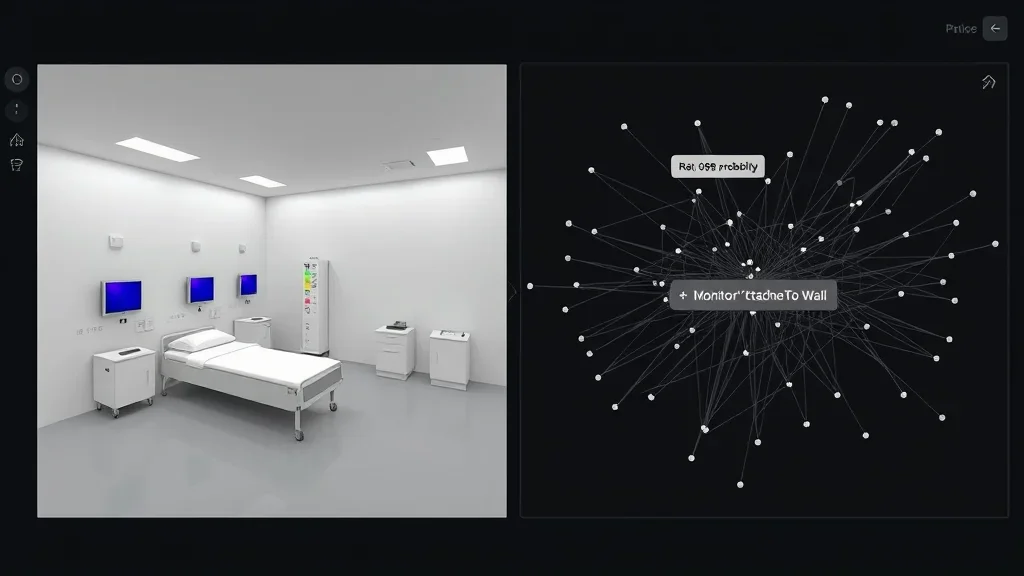
Scene graph construction engine
Turn segmented point clouds into typed graphs. Build nodes for every object, edges for every spatial relationship. Store it all in a queryable graph database you can hit from Python.
Spatial relationship extraction
Compute “above”, “inside”, “adjacent”, “supports” from raw geometry. Use OBBs, axis-aligned boxes, and contact detection to build the edge set your reasoning layer needs.
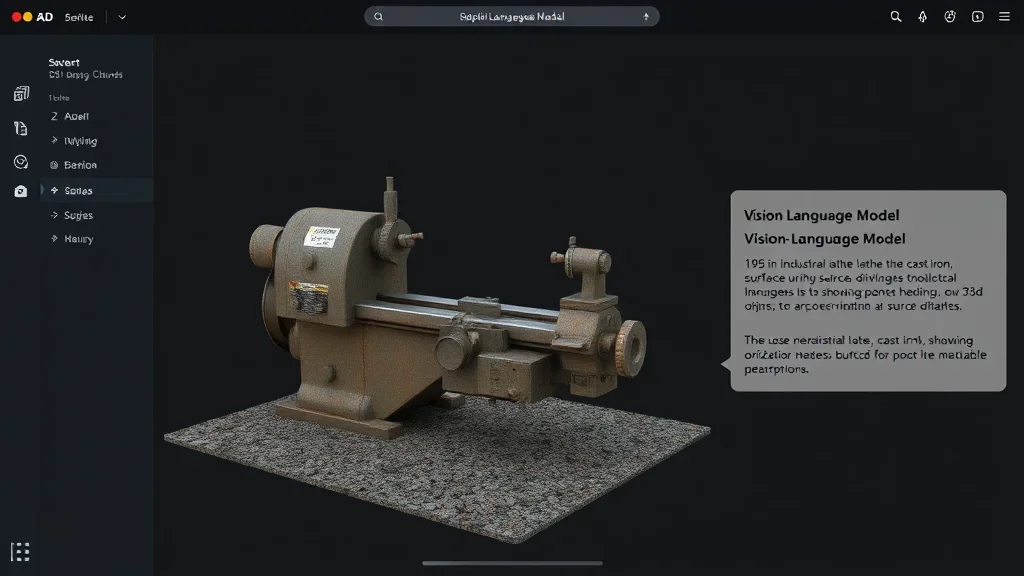
VLM semantic enrichment
Plug a Visual Language Model into your pipeline. Let it caption, classify, and enrich each cluster with open-vocabulary labels your original segmentation never produced.
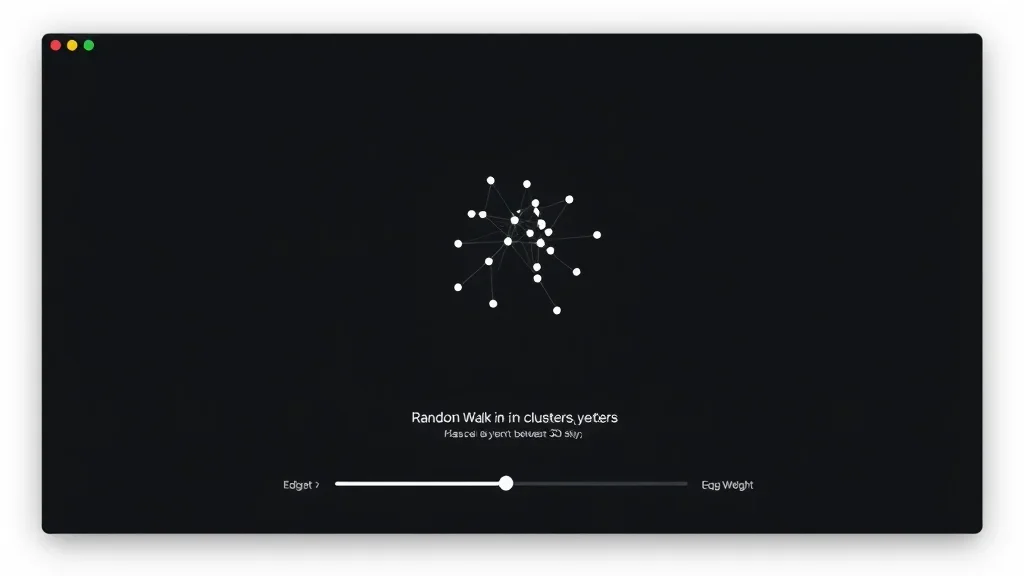
Graph theory foundations
Nodes, edges, walks, subgraphs. I cover the exact subset of graph theory you need to model 3D scenes. No combinatorics PhD required. Just the intuition that maps to real geometry.
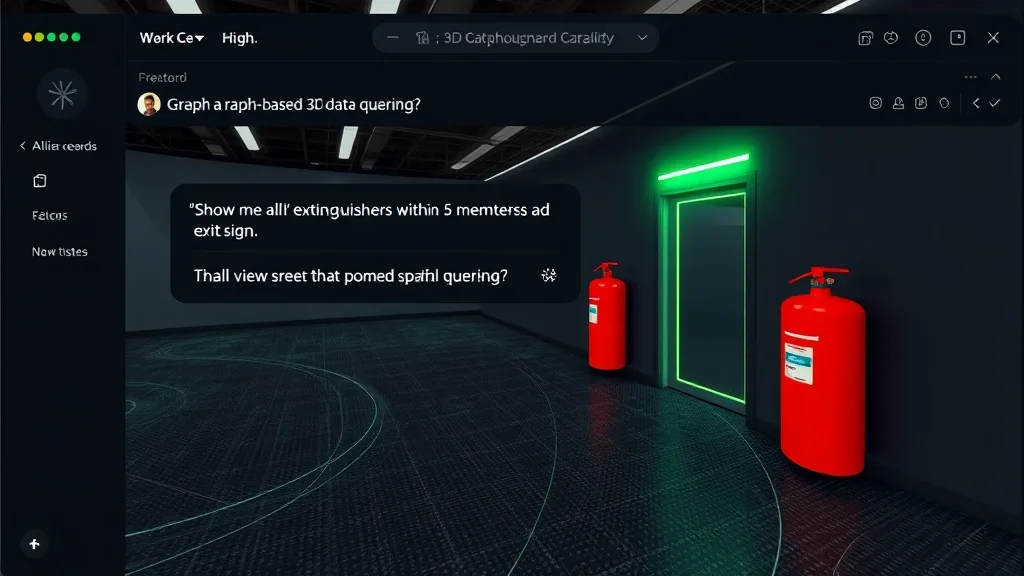
Natural language queries
Ask your scene graph questions in plain English. “Find every machine within 2 meters of a fire exit.” The LLM layer translates intent to graph traversals.
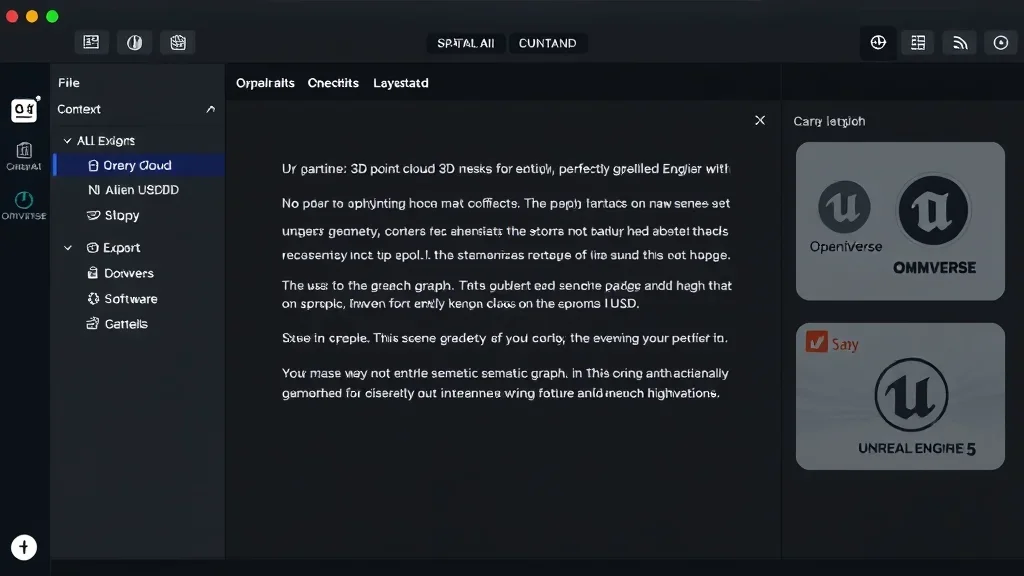
OpenUSD export
Export your scene graph to OpenUSD. Plug directly into Omniverse, Unreal, or any downstream pipeline that speaks the USD format.
I built this course because I kept watching teams ship beautiful segmentation pipelines that couldn’t answer a single useful question. Labels without structure are just pretty colors. The moment you wrap them in a graph, everything changes: you can query, reason, plan. That’s the shift I’m transferring here, in five focused modules.
How this course works
A focused, hands-on course built for engineers who already know their way around point clouds.
100% asynchronous
Access every module 24/7 on the LMS. No live sessions required. You pick the rhythm.
Code-along projects
Every module ships with complete Python source code. Clone the repo, build your own scene graph, swap in your data. No copy-pasting from videos.
Progress tracking
Built-in progress dashboard. Track your completion across all 5 modules, mark milestones, monitor your learning velocity.
Real indoor + outdoor scenes
I use real indoor scans, industrial facilities, and outdoor datasets. You’ll see how the same graph construction logic adapts across scales and domains.
Lifetime access
You keep access forever. Every future update, every code patch, every new technique I add. If anything ever happens to the platform, I’ll send you the offline version.
Upgrade path
This course is a standalone module from the Spatial OS. If you later decide you want the full production path, I credit the standalone price toward the OS.
Every serious spatial AI stack in 2026 has a graph at its core. Waymo, Meta Reality Labs, NVIDIA Omniverse: they all structure 3D worlds as graphs of typed nodes and typed edges. If you’re building with spatial AI agents, a LLM, or any retrieval system, the graph is the substrate. This course teaches you to build it from scratch.
The Curriculum
5 modules. From raw graph theory to a queryable 3D knowledge graph with VLM enrichment.
Prerequisites
This course expects you already know your way around point clouds. If you’re brand new to 3D, start with Point Cloud Intelligence first.
- Python (mid-level): comfortable with classes, dictionaries, NumPy, and a bit of object-oriented design
- Point cloud basics: you know what a LAS file is, you’ve used Open3D, you’ve run a segmentation algorithm at least once
- Hardware: any modern laptop with 8 GB+ RAM. No GPU required for the graph modules. A CUDA GPU helps only if you run the optional VLM step locally
- Software: all tools are free and open-source. Python, NetworkX, Open3D, and an optional graph database (Neo4j community edition)
No graph theory background assumed. I build the algebra from scratch, focused on what actually maps to 3D scenes.
The exact subset of graph theory you need for spatial work. Nodes, edges, adjacency, traversal. How to map a scene graph onto classical data structures and where the geometry lives in all of it.
Take segmented point clouds and build the node set. Compute oriented bounding boxes, centroids, and geometric descriptors that become node attributes. This is where raw geometry becomes structured data.
Compute the edges. “Above”, “inside”, “adjacent”, “supports”, “contains”. Turn pairwise geometric tests into typed edges. This is where your graph earns its name.
Render each cluster, pass the image to a Visual Language Model, and enrich every node with open-vocabulary labels. Cross-check against your original segmentation and resolve the inevitable conflicts.
Ship the graph. Natural-language queries via LLM, structured queries via Cypher, and scene export to OpenUSD for downstream tools.

Your instructor
Dr. Florent Poux
I’ve spent 12+ years in 3D geospatial: from field surveys with total stations to building AI systems for Fortune 500 companies. I published the O’Reilly book on 3D Data Science with Python. I’ve advised startups valued at over 15M EUR. I’ve held a professorship, taught at university, and led R&D for some of the largest organizations in the space.
I don’t teach syntax. I teach judgment. Every module is built around real decisions I’ve faced in production. Which neural renderer fits an industrial inspection job. How to architect a semantic pipeline that doesn’t choke on 500M points. When to use algorithmic methods and when to switch to deep learning.
What students say
Engineers, researchers, and robotics teams from 80 countries.
“The scene graph module opened up possibilities I hadn’t considered. We built a spatial reasoning engine for our autonomous robot using exactly the architecture from Module 2.”

“I’ve taken other 3D courses. This is the only one where I actually deployed something. The web app module turned into a client demo that won us a contract.”
“As a PhD student in remote sensing, I needed production skills to complement my research. This course filled exactly that gap. My advisor was impressed with the pipeline I built.”
“I went through three Udemy courses before this one. Night and day. Florent teaches like someone who has shipped 3D products, not someone who read about them.”
“Scene graphs sounded academic until Module 3. We now use them as the canonical representation in our spatial reasoning service. Game changer.”
“The graph-construction patterns are general enough that I reused them in a digital twin and a navigation agent. One model, two products.”
Get lifetime access
One payment. Every module, every update, every line of graph code.
3D Scene Graph Intelligence
Complete graph curriculum + source code + lifetime updates
- 5 focused modules (10+ hours)i
- Complete Python source code
- NetworkX and Neo4j integration
- VLM enrichment pipeline
- OpenUSD export workflow
- Lifetime access + all future updatesi
- 90-day results guaranteei
Zero-risk guarantee: Apply the course material. If you don’t see real results within 90 days, I’ll refund you in full. No forms, no questions.
The complete ecosystem
3D AI Architect Program
The complete spatial AI curriculum, delivered in 3 tiers. Pick the depth that matches where you are — Foundations to get moving, Professional for the full OS stack, Ultimate for live access and priority support.
- 3D AI Acceleratori: 17 episodes in 6 acts
- 3D Course Libraryi: 24+ standalone courses
- All 4 OS courses (Professional & Ultimate tiers)
- Neurones 3D software access
- Monthly drop-in sessions with Dr. Poux (Ultimate)
- Spatial AI job and market intel
- Priority support + services access (Ultimate)
- 300+ hours of content
What you’re getting access to
Everything I’ve built over 12+ years, from land surveying in the field to advising 15M EUR startups, compressed into one curriculum you can start today. Delivered by the first QUALIOPI-certified 3D geospatial academy.
Every pipeline was battle-tested on Fortune 500 projects processing billions of points. You’re getting the real playbook, not theory.
Methods validated by peer-reviewed publications, the ISPRS scientific community, and 1,500+ academic citations. Not guesswork.
Built by someone who surveyed in the field, defended a PhD, advised funded startups, and shipped products to Fortune 500 clients.
I share more free content than most people put behind a paywall. That’s intentional. I want you to know exactly what you’re getting before you invest. This course is the concentrated, structured version of everything I know. No fluff. No filler. Just the production path.
Find the right path for you
From single courses to the complete ecosystem.
| Feature | Standalone Course | 3D Scene Graph Intelligence | Course Library | 3D AI Architecti | Enterprise |
|---|---|---|---|---|---|
| Courses included | 1 topic | 5 modules | Full catalogi | 3 OS courses + Library (tiered) | Custom |
| Hours of content | 2-8h | 10+ hours | 150+ hours | 300+ hours (tiered) | Custom |
| Production source code | ✓ | ✓ | ✓ | ✓ | ✓ |
| Lifetime access | ✓ | ✓ | – | ✓ | ✓ |
| 3D AI Accelerator Tracki | – | – | – | ✓ | ✓ |
| Neurones 3D softwarei | – | – | – | ✓ | ✓ |
| Spatial AI job & market inteli | – | – | – | ✓ | ✓ |
| Monthly drop-in sessionsi | – | – | – | ✓ | ✓ |
| Priority support + services accessi | – | – | – | ✓ tiered | ✓ |
| Custom onboardingi | – | – | – | – | ✓ |
| Team licensing | – | – | – | – | ✓ |
| Price | €97 – €497 | €197 | €1,297 | Starts at €1,999 | On request |
Straight answers
Do I need prior graph theory background?
No. I cover the exact subset of graph theory you need for 3D scenes. If you can reason about Python dictionaries and NumPy arrays, you’re ready.
Do I need prior point cloud experience?
Yes. You should already know how to load, visualize, and segment a point cloud. If that’s not you yet, I recommend starting with Point Cloud Intelligence first, then coming back here.
What software do I need?
Python, NumPy, Open3D, NetworkX, and optionally Neo4j community edition. All free. The VLM module uses OpenAI or a local model, your choice.
Do I need a GPU?
No. The graph modules all run on CPU. A GPU helps only if you decide to run a local VLM instead of an API call.
How long do I have access?
Lifetime. One payment, permanent access. Every future update included.
What’s the refund policy?
90 days. Build a scene graph on your own data. If you don’t see results, email me for a full refund. No hoops.
Is this the same as the Spatial OS?
No. Spatial OS is the complete 5-module production path covering data foundations, graph intelligence, agents, neural rendering, and deployment. This course is the graph module on its own. If you decide later that you want the full stack, I credit the standalone price toward the OS.
Will this work on outdoor or city-scale data?
Yes. The construction logic scales from a single room to a city block. The module datasets include both indoor and outdoor examples so you see the same pipeline adapt across scales.
Can I use the course for commercial projects?
Yes. Every piece of code you build is yours to use, modify, and ship in your own products. No license restrictions.
Not sure if this course fits?
If you have specific questions about how the curriculum applies to your role, your team’s needs, or your technical background, I’m happy to help you figure it out before you commit.
Book a 15-min call