
From Photos to Photorealistic Digital Twins
Turn raw images into production-grade 3D reconstructions. Photogrammetry, Gaussian Splatting, mesh pipelines, and deployed digital twins. 5 modules. Real code. No shortcuts.
See what you’re reconstructing
A walkthrough of the course, the reconstruction pipelines, and the production workflows.
Points per reconstruction. Designed for BIM-scale projects.
Professionals trained, in 80 countries.
Production experience distilled into structured, repeatable workflows.
Your reconstructions don’t survive production.
You can run photogrammetry in Metashape or Reality Capture. You get a nice point cloud, maybe a mesh. But when the client asks for a metric-accurate digital twin of a 50,000 m2 facility, your pipeline breaks. Memory overflows. Textures are blurry. The mesh has holes everywhere.
The gap is not the software. It is the reconstruction judgment: which capture strategy fits the job, how to process at scale without crashing, when to use classical SfM and when to switch to neural rendering.
Gaussian Splatting changed the game. You can now render photorealistic 3D scenes in real time from a set of photos. But most engineers are still stuck with traditional mesh pipelines that take hours to process and produce mediocre results. The engineers who master both classical and neural reconstruction will own the next decade of 3D. This course teaches you both.
What you’ll reconstruct
Not toy scenes. Not demo datasets. These are production reconstruction pipelines.
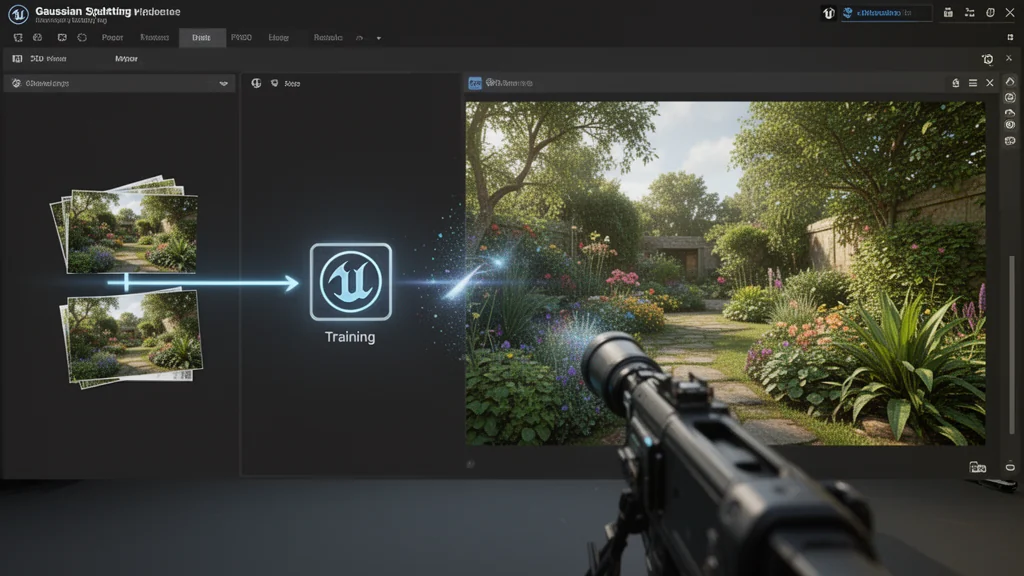
Gaussian Splatting pipeline
From photos to real-time 3D. Train splat models, optimize quality, extract meshes with SuGaR, and deploy photorealistic scenes.
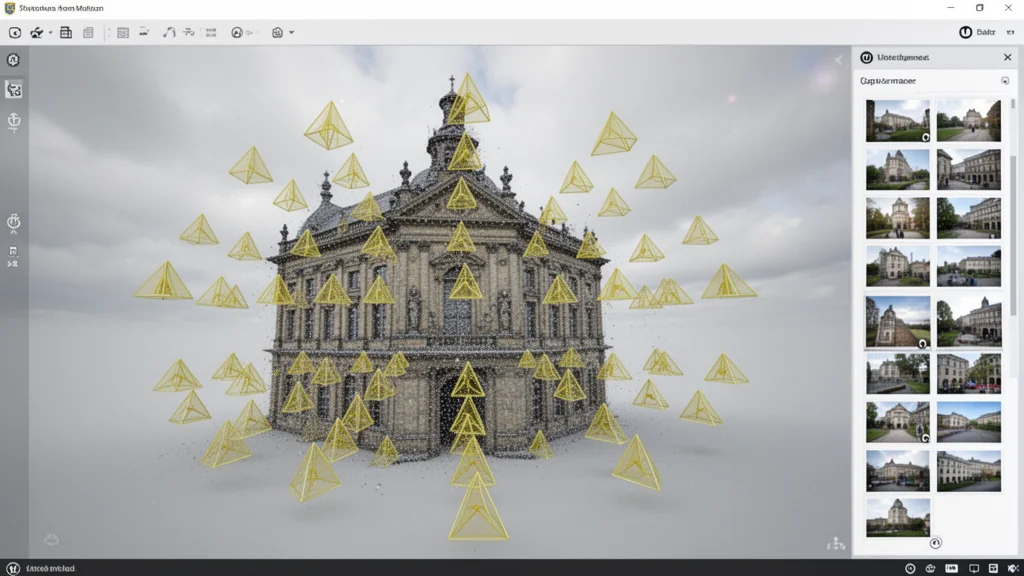
Automated photogrammetry
SfM at scale. Automated image alignment, dense matching, point cloud generation, and metric accuracy validation for professional surveys.
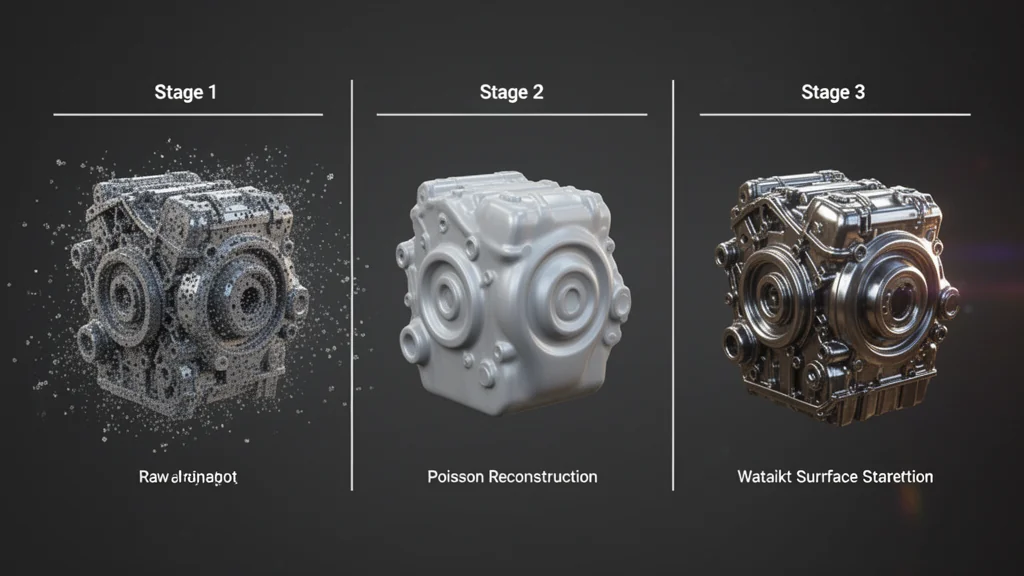
Scan-to-mesh pipelines
From raw scans to clean, watertight meshes. Surface reconstruction, decimation, UV mapping, and texture baking for production-ready 3D models.
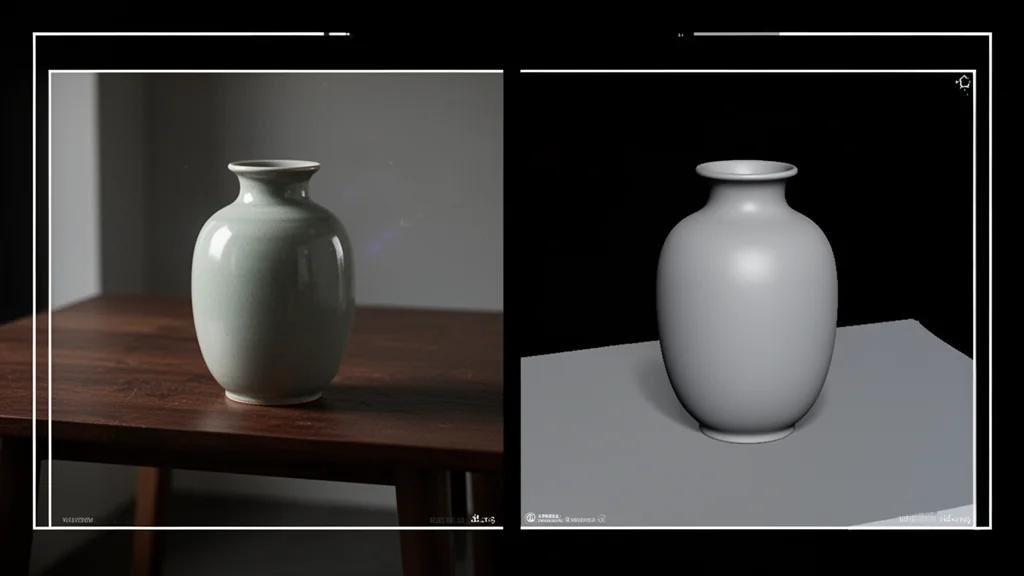
AI-powered 3D vision
Depth estimation, NeRF comparisons, and hybrid neural-classical reconstruction. When to use what and why.
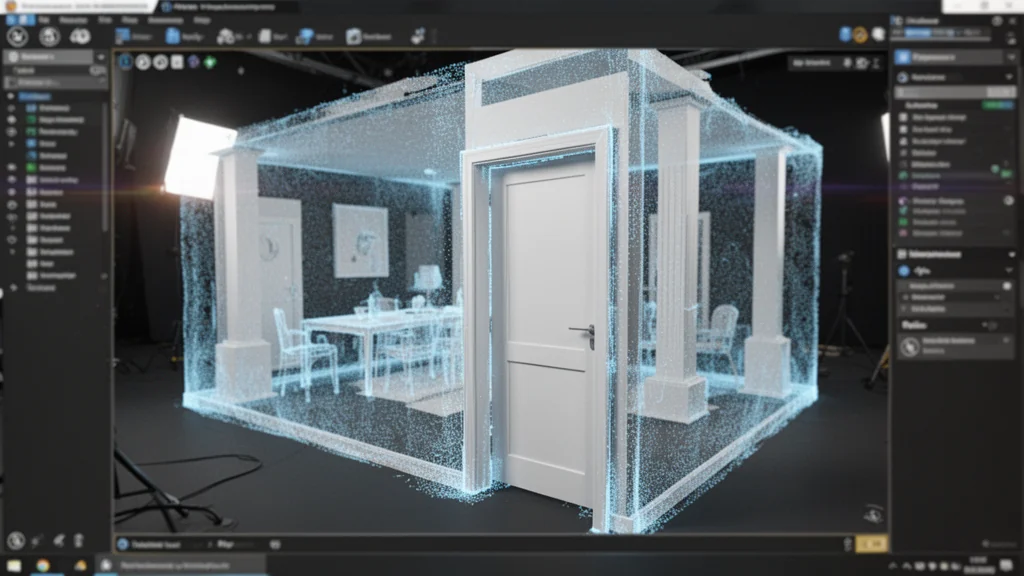
Scan-to-BIM workflows
Bridge the gap between point clouds and BIM. Automated classification, as-built modeling, and IFC export for AEC professionals.
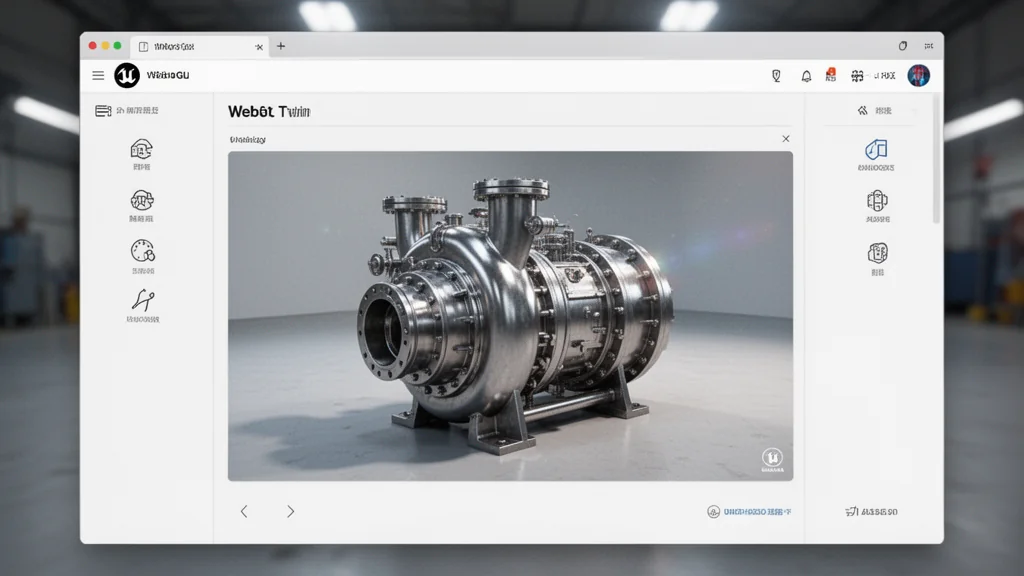
Digital twin deployment
Ship your reconstruction to the browser. WebGL viewers, Three.js streaming, and client-ready 3D delivery for real projects.
I started as a field surveyor measuring buildings with a total station. Then I moved to photogrammetry, then LiDAR, then neural rendering. This course distills every reconstruction decision I have made across hundreds of real projects into a production system you can deploy.
How this course works
Designed for working professionals. Built for the reconstruction era.
100% asynchronous
Access every module 24/7 on the LMS. No live sessions required. Work at your own pace, on your schedule.
Code-along projects
Every module ships with complete Python source code and real datasets. Clone the repo, reconstruct, iterate.
Progress tracking
Built-in progress dashboard. Track your completion across all 5 modules, mark milestones, monitor your learning velocity.
Real capture data
Not synthetic datasets. Every exercise uses photos and scans from real buildings, real sites, real industrial facilities.
Lifetime access
You keep access forever. Every future module, every code update, every new technique I add to the curriculum. If anything ever happens, I’ll send you the full offline version too.
Classical + neural
This is not a Gaussian Splatting tutorial. It is the complete reconstruction stack: classical photogrammetry, mesh processing, neural rendering, and the judgment to pick the right tool.
Two years ago, photogrammetry was the gold standard. Today, Gaussian Splatting produces better visual results in a fraction of the time. But classical methods still win for metric accuracy and mesh export. The engineer who masters both pipelines, and knows when to use each, will dominate this market for the next decade. That is what this course delivers.
The Operating System
5 modules. Each one ships a working reconstruction pipeline. Together, they form the complete stack.
Prerequisites
This course picks up where basic tutorials leave off. You should be comfortable running Python scripts and navigating a command line.
- Python (mid-level): comfortable with classes, file I/O, NumPy, virtual environments
- Basic linear algebra: vectors, matrices, rotation/translation transforms
- Hardware: 16 GB RAM minimum. CUDA GPU strongly recommended for Gaussian Splatting modules
- Camera basics: understanding of focal length, resolution, and image overlap for capture planning
No prior photogrammetry or 3D reconstruction experience required.
Master automated SfM pipelines. From capture planning to dense reconstruction. Metric accuracy validation for professional surveys.
Turn point clouds into clean, production-ready meshes. Surface reconstruction, decimation, UV mapping, and texture baking.
The future of 3D rendering. Train Gaussian Splatting models from photos, optimize quality, and extract meshes with SuGaR.
Depth estimation, monocular reconstruction, and hybrid neural-classical pipelines. When to use AI and when to stick with geometry.
Ship your reconstructions to clients. WebGL viewers, Three.js streaming, scan-to-BIM workflows, and client-ready delivery.
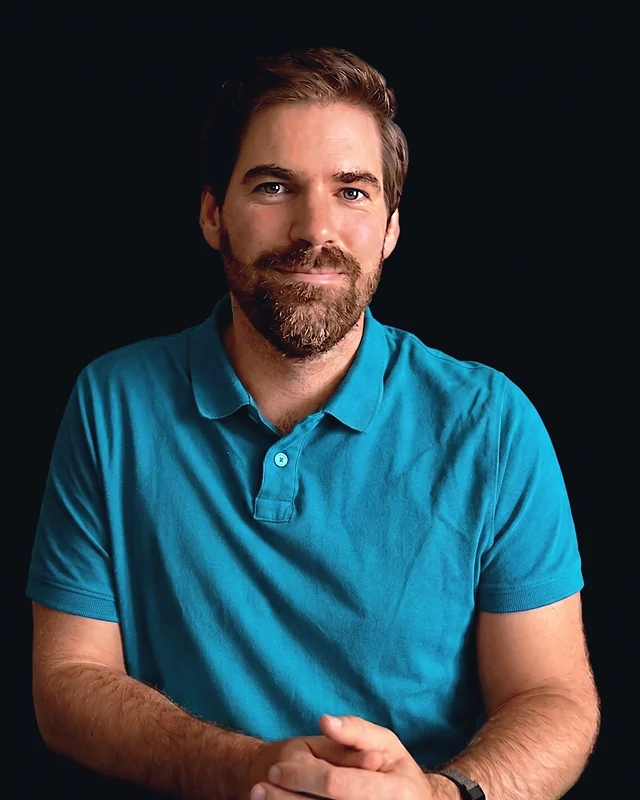
Your instructor
Dr. Florent Poux
I’ve spent 15+ years in 3D geospatial: from field surveys with total stations to building AI systems for Fortune 500 companies. I published the O’Reilly book on 3D Data Science with Python. I’ve advised startups valued at over 15M EUR. I’ve held a professorship, taught at university, and led R&D for some of the largest organizations in the space.
I don’t teach syntax. I teach judgment. Every module is built around real decisions I’ve faced in production. Which neural renderer fits an industrial inspection job. How to architect a semantic pipeline that doesn’t choke on 500M points. When to use algorithmic methods and when to switch to deep learning.
What students say
Engineers, surveyors, and AEC professionals from 80 countries.
“We used the HITL annotation engine to label 50K objects in our BIM dataset. It cut our annotation time by 70%. Real production value from day one.”

“I went from copy-pasting Open3D tutorials to building a full classification pipeline for our digital twin project. The production mindset changes everything.”
“The scan-to-BIM pipeline turned a three-week manual modelling job into a two-day automated workflow. We closed three new heritage contracts the same quarter.”
“The photogrammetry-to-splat pipeline module replaced three tools in our stack. We deliver photorealistic scenes to clients in half the time.”
Get lifetime access
One payment. Every module, every update, every reconstruction pipeline.
3D Reconstructor OS
Full reconstruction curriculum + source code + real datasets + lifetime updates
- 5 production modules (60+ hours)i
- Complete Python source code + datasets
- Automated photogrammetry + scan-to-mesh
- Gaussian Splatting + SuGaR mesh extraction
- AI-powered depth and monocular reconstruction
- Digital twin deployment (WebGL + Three.js)
- Lifetime access + all future updatesi
- 14-day money-back guaranteei
Zero-risk guarantee: Apply the course material. If it is not right for you, write within 14 days of purchase and I refund in full. No forms, no questions.
The complete ecosystem
3D AI Architect Program
The complete spatial AI curriculum, delivered in 3 tiers. Pick the depth that matches where you are: Foundation to get moving, Professional for the full OS stack, Architect for the co-built, one to one route.
- 3D AI Acceleratori: 17 episodes in 6 acts
- 3D Course Libraryi: every standalone course I publish
- All 4 OS courses (Professional and Architect tiers)
- Neurones 3D software access
- Monthly drop-in sessions with Dr. Poux (Architect)
- Spatial AI job and market intel
- Priority support + services access (Architect)
- 300+ hours of content
What you’re getting access to
Everything I’ve built over 15+ years, from land surveying in the field to advising 15M EUR startups, compressed into one curriculum you can start today. Delivered by the first QUALIOPI-certified 3D geospatial academy.
Every pipeline was battle-tested on Fortune 500 projects processing billions of points. You’re getting the real playbook, not theory.
Methods validated by peer-reviewed publications, the ISPRS scientific community, and 1,700+ Google Scholar citations. Not guesswork.
Built by someone who surveyed in the field, defended a PhD, advised funded startups, and shipped products to Fortune 500 clients.
I share more free content than most people put behind a paywall. That’s intentional. I want you to know exactly what you’re getting before you invest. This course is the concentrated, structured version of everything I know. No fluff. No filler. Just the production path.
Find the right path for you
From single courses to the complete ecosystem.
| Feature | Standalone Course | 3D Reconstructor OS | Course Library | 3D AI Architecti | Enterprise |
|---|---|---|---|---|---|
| Courses included | 1 topic | 5 modules | Full catalogi | 3 OS courses + Library (tiered) | Custom |
| Hours of content | 2-8h | 60+ hours | 150+ hours | 300+ hours (tiered) | Custom |
| Production source code | ✓ | ✓ | ✓ | ✓ | ✓ |
| Lifetime access | ✓ | ✓ | – | ✓ | ✓ |
| 3D AI Accelerator Tracki | – | – | – | ✓ | ✓ |
| Neurones 3D softwarei | – | – | – | ✓ | ✓ |
| Spatial AI job & market inteli | – | – | – | ✓ | ✓ |
| Monthly drop-in sessionsi | – | – | – | ✓ | ✓ |
| Priority support + services accessi | – | – | – | ✓ tiered | ✓ |
| Custom onboardingi | – | – | – | – | ✓ |
| Team licensing | – | – | – | – | ✓ |
| Price | €97 – €1,497 | €1,497 | €297 / 3 months | Starts at €1,997 | On request |
Straight answers
Do I need a drone or scanner?
No. All datasets are provided. You will learn capture planning, but you can complete every module with the included data. If you have your own data, even better.
Do I need prior photogrammetry experience?
No. Module 1 starts from capture fundamentals. You need solid Python and basic linear algebra. I build the reconstruction intuition from the ground up.
What hardware do I need?
Minimum 16 GB RAM. For the Gaussian Splatting module, a CUDA GPU with 8+ GB VRAM is strongly recommended. Most other modules run fine on a modern laptop.
How long do I have access?
Lifetime. One payment, permanent access. Every future update included. No subscriptions, no expiration.
What’s the refund policy?
14 days. Apply the material, reconstruct something real. If you don’t see results, email me for a full refund. No questions asked.
Is this the same as the standalone courses?
Reconstructor OS is the complete reconstruction path. The standalone courses (Automated Reality Capture, Gaussian Splatting, Scan-to-Mesh, AI-Powered 3D Vision) are individual modules. If you want the full journey from photos to deployed digital twins, this is it.
How is this different from just using Metashape or Reality Capture?
GUI tools are fine for one-off reconstructions. This course teaches you to build automated pipelines that process hundreds of scans, integrate neural rendering, and deploy to the web. Production scale, not point-and-click.
Why does the price increase?
Every time I add a new module or technique, the value goes up and so does the price. Lock your price now and get every future addition at today’s rate.
Not sure if this course fits?
If you have specific questions about how the curriculum applies to your role, your team’s needs, or your technical background, I’m happy to help you figure it out before you commit.
Book a 15-min call