
Code Your First 3D Python Projects
The entry point into 3D data with Python. NumPy, Open3D, Matplotlib, and 6 hands-on projects. From zero to your first digital twin script.
See what you’ll code
From installing Python to scripting 3D voxel automation, mesh generation, and city modelling projects.
Prior 3D or programming experience assumed. I start at the installation step.
Professionals trained, in 80 countries.
Production experience distilled into structured, repeatable workflows.
You want to code with 3D data. You don’t know where to start.
Every online tutorial assumes you already know Python. Every Python book assumes you already know 3D. You sit between the two, watching YouTube videos that jump into PointNet or Gaussian Splatting while you are still trying to open a file. That is not a knowledge gap. That is a missing staircase.
This course is that staircase. I assume you have never opened a Python IDE. I start at the installation step, walk you through the math you actually need, and finish with 6 real projects you can show on a portfolio. No prerequisites. No ego. No shortcuts.
Every advanced 3D course I teach (Point Cloud Intelligence, Segmentor OS, Spatial OS, Reconstructor OS) assumes you already code in Python. This course is where that assumption comes from. Master this, and every other course opens up. This is where everyone starts.
What you’ll build
Six portfolio projects wired into one foundational Python course.
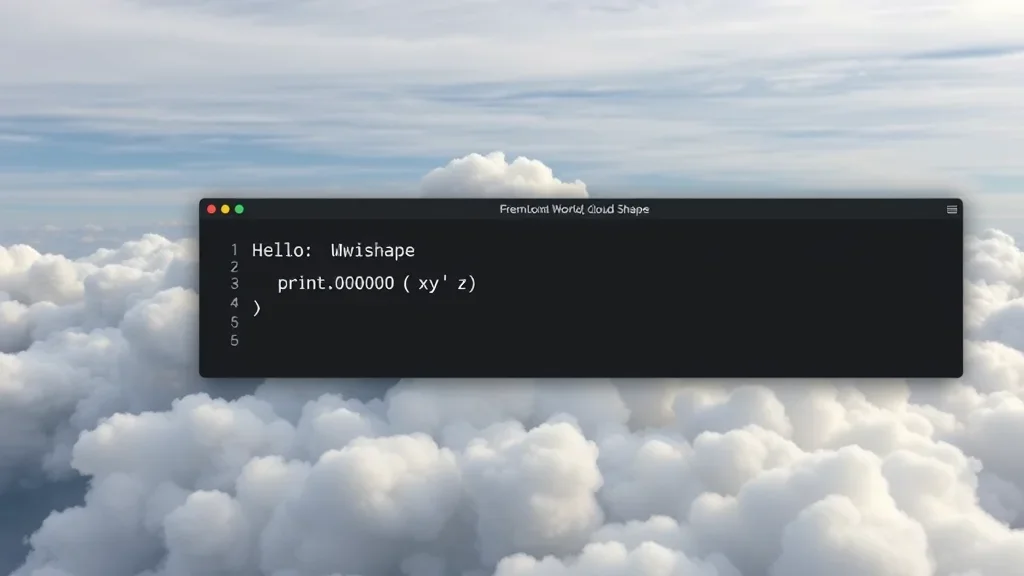
Point cloud basics
Open, visualize, and manipulate LAS, PLY, and XYZ files. Build the first script that touches real 3D data.
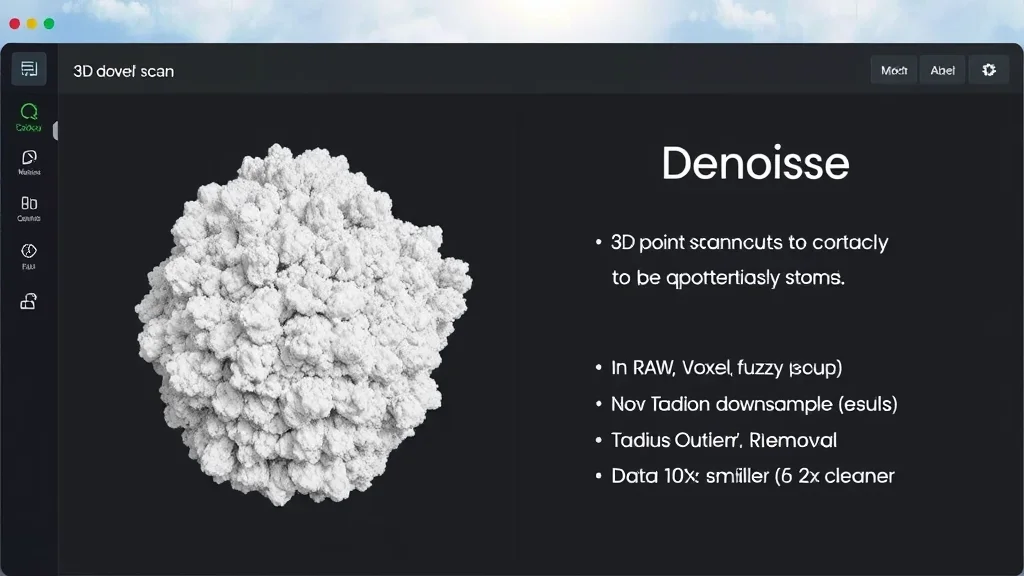
3D pre-processing
Clean, filter, and downsample point clouds. The steps every 3D pipeline starts with.
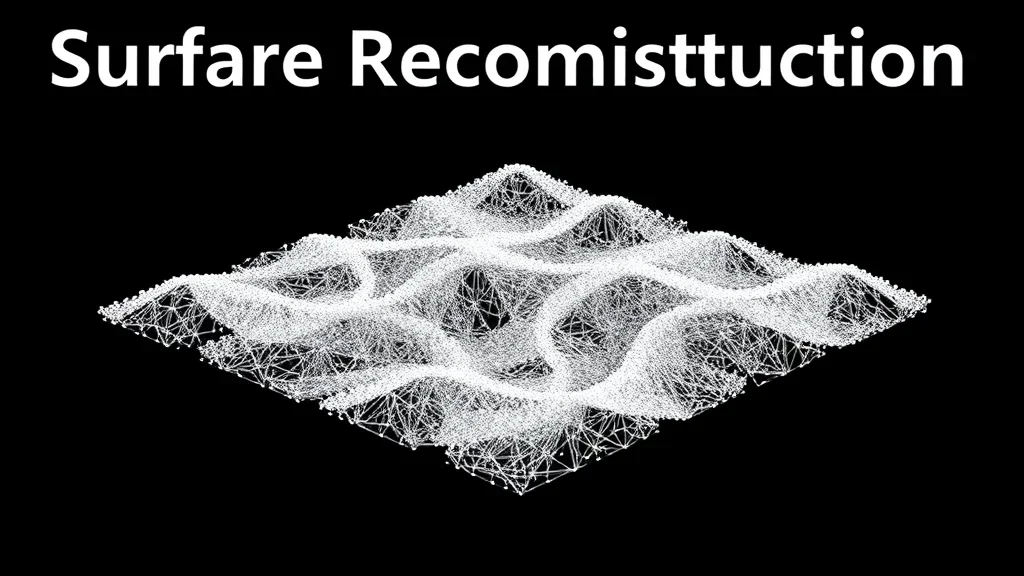
3D mesh generation
Turn point clouds into triangle meshes. Poisson reconstruction, ball pivoting, and export to standard formats.
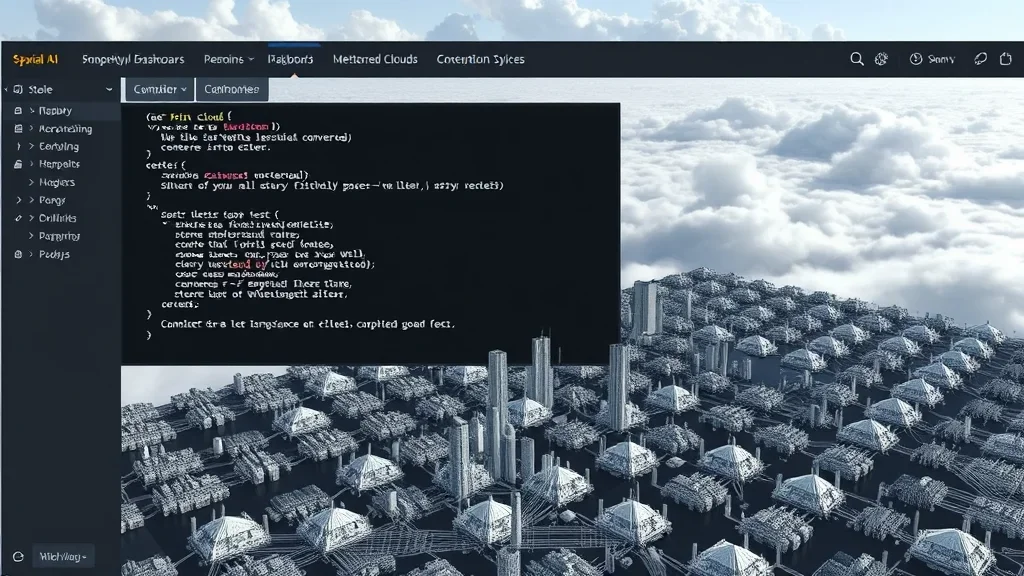
Voxel automation
Convert point clouds into voxel grids. Run automated voxel analysis and even export to Minecraft-style formats.
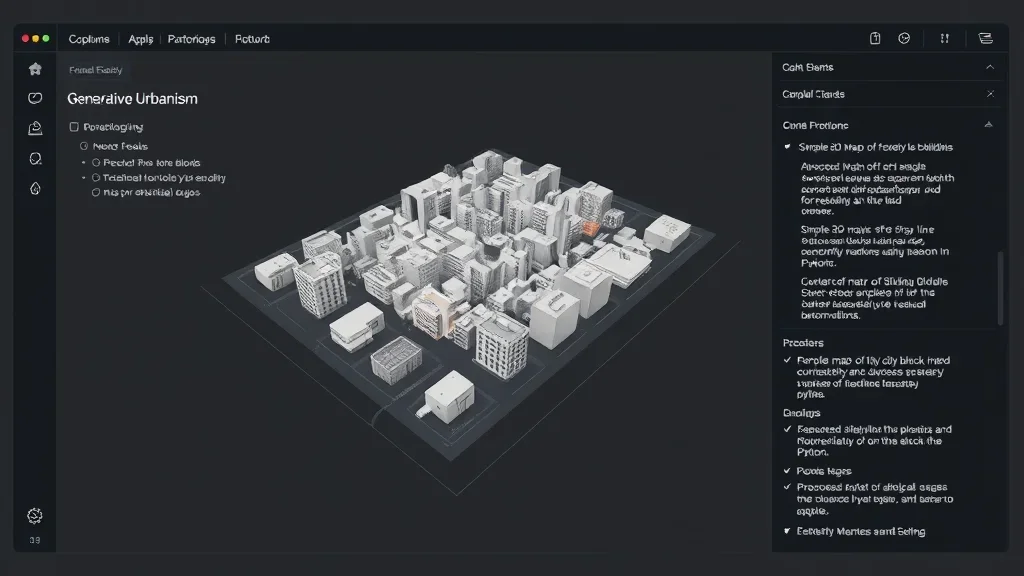
City modelling
Vectorize LiDAR into 2D/3D city models. A concrete project that takes raw points and outputs a building footprint map.
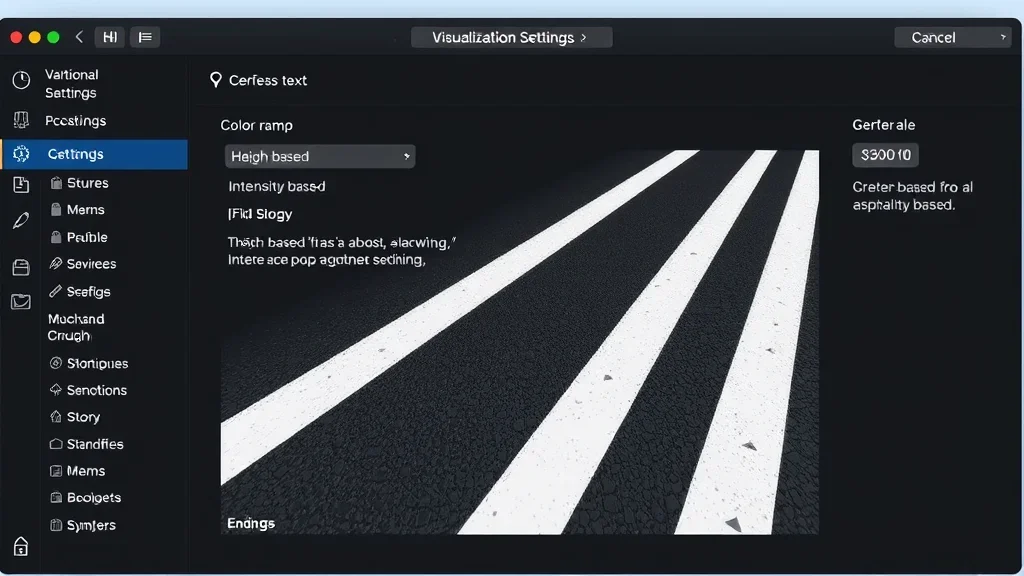
Visualization + featuring
Compute features, color by attribute, export publication-quality renders. The skills you need to show your work to a manager or a client.
I designed this course for myself at 22. Someone who wanted to work with 3D data but only had a land surveying background. Every step in this curriculum is what I wish someone had given me back then. Nothing skipped. Nothing rushed. Just the staircase from zero to first real script.
How this course works
Designed for absolute beginners. Still useful for working engineers.
100% asynchronous
Access everything 24/7 on the LMS. Self-paced. No live sessions required.
Code-along projects
Every lesson ships with the Python script I am writing on screen. Copy it, run it, break it, fix it.
Real datasets
Real LiDAR scans, real buildings, real city data. Not synthetic examples.
Beginner-friendly pacing
I explain everything the first time it appears. Every function call, every parameter, every import.
Lifetime access
One payment, permanent access. Every update included.
Upgrade path
This course is the foundation for Point Cloud Intelligence, Segmentor OS, Spatial OS, and Reconstructor OS.
If you are serious about a career in 3D AI, spatial computing, or reality capture, this is where the path starts. I have watched students walk through this course and then into roles at survey firms, startups, automotive, AEC, and research labs. This is the staircase.
The Curriculum
22 lessons across 5 modules. From install to shipped projects.
Prerequisites
This course is designed for absolute beginners. You do not need any prior 3D or Python experience.
- Computer literacy: comfortable installing software, navigating folders, and using a browser
- Hardware: any modern laptop with 8 GB+ RAM. No GPU required.
- Software: Windows, Linux, or Mac. All tools are free and open-source.
- Curiosity: a willingness to type code, break it, and fix it
No programming experience required. I start at the Python installation step.
Understand the 3D data world before writing any code. Point clouds, meshes, voxels, and the processing steps that connect them.
Install Python, set up a virtual environment, pick an IDE, and install the 3D libraries you will use throughout the course.
The math you actually need (no more). NumPy for array operations. Matplotlib for plotting. Open3D for 3D.
Six end-to-end projects. Each one gives you a working script and something to show in your portfolio.
Introduction to 3D clustering and segmentation. A visual guide to 3D data representations. A fun “point cloud to Minecraft” closer.
Your instructor
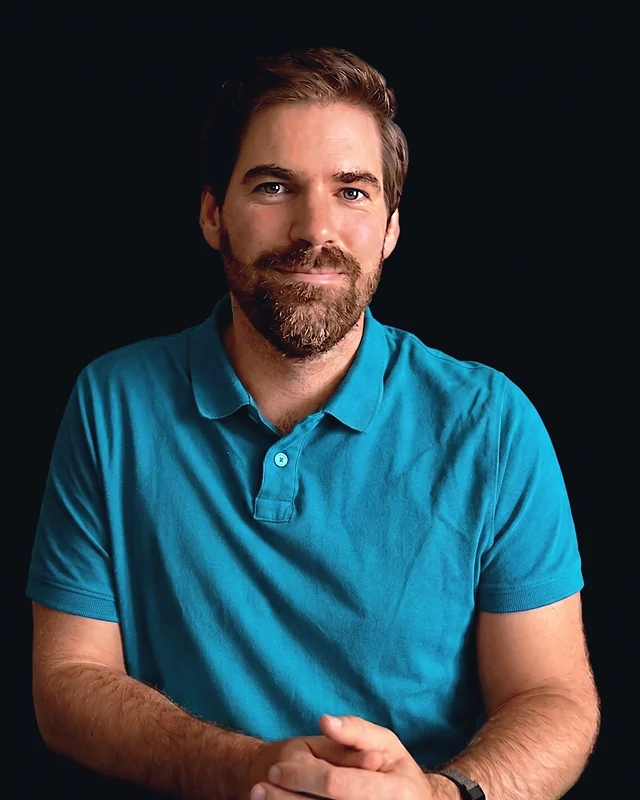
Dr. Florent Poux
I’ve spent 15+ years in 3D geospatial: from field surveys with total stations to building AI systems for Fortune 500 companies. I published the O’Reilly book on 3D Data Science with Python. I’ve advised startups valued at over 15M EUR. I’ve held a professorship, taught at university, and led R&D for some of the largest organizations in the space.
I don’t teach syntax. I teach judgment. Every module is built around real decisions I’ve faced in production. Which neural renderer fits an industrial inspection job. How to architect a semantic pipeline that doesn’t choke on 500M points. When to use algorithmic methods and when to switch to deep learning.
What students say
Beginners, surveyors, and GIS professionals from 80 countries.
“Our team processed 200M points for a highway survey. Before this course, we were stuck at 10M with crashes. The memory management module saved us weeks of work.”

“I’m a surveyor with 20 years of field experience. This gave me the Python and AI skills to modernize our entire workflow. Best investment I’ve made in my career.”
“RANSAC plus DBSCAN on a 120M-point mining dataset, segmented, volumetric change detected, and report ready in one afternoon. That used to take a week.”
“This course is the foundation I wish I had when I started with LiDAR. The feature extraction module alone reshaped how I approach every project.”
Get lifetime access
One payment. Every lesson, every update, every project.
Python and AI Programming for 3D Applications
Complete foundational course + source code + real datasets + lifetime updates
- 22 hands-on lessons (10+ hours)i
- Complete Python source code + datasets
- 6 portfolio-ready projects
- Beginner-friendly pacing
- Lifetime access + all future updatesi
- 14-day money-back guaranteei
Zero-risk guarantee: If it is not right for you, write within 14 days of purchase for a full refund. No questions.
The complete ecosystem
3D AI Architect Program
The complete spatial AI curriculum, delivered in 3 tiers. Pick the depth that matches where you are: Foundation to get moving, Professional for the full OS stack, Architect for the co-built, one to one route.
- 3D AI Acceleratori: 17 episodes in 6 acts
- 3D Course Libraryi: every standalone course I publish
- All 4 OS courses (Professional and Architect tiers)
- Neurones 3D software access
- Monthly drop-in sessions with Dr. Poux (Architect)
- Spatial AI job and market intel
- Priority support + services access (Architect)
- 300+ hours of content
What you’re getting access to
Everything I’ve built over 15+ years, from land surveying in the field to advising 15M EUR startups, compressed into one curriculum you can start today. Delivered by the first QUALIOPI-certified 3D geospatial academy.
Every pipeline was battle-tested on Fortune 500 projects processing billions of points. You’re getting the real playbook, not theory.
Methods validated by peer-reviewed publications, the ISPRS scientific community, and 1,700+ Google Scholar citations. Not guesswork.
Built by someone who surveyed in the field, defended a PhD, advised funded startups, and shipped products to Fortune 500 clients.
I share more free content than most people put behind a paywall. That’s intentional. I want you to know exactly what you’re getting before you invest. This course is the concentrated, structured version of everything I know. No fluff. No filler. Just the production path.
Find the right path for you
From single courses to the complete ecosystem.
| Feature | Standalone Course | Python and AI Programming for 3D Applications | Course Library | 3D AI Architecti | Enterprise |
|---|---|---|---|---|---|
| Courses included | 1 topic | 22 lessons | Full catalogi | 3 OS courses + Library (tiered) | Custom |
| Hours of content | 2-8h | 10+ hours | 150+ hours | 300+ hours (tiered) | Custom |
| Production source code | ✓ | ✓ | ✓ | ✓ | ✓ |
| Lifetime access | ✓ | ✓ | – | ✓ | ✓ |
| 3D AI Accelerator Tracki | – | – | – | ✓ | ✓ |
| Neurones 3D softwarei | – | – | – | ✓ | ✓ |
| Spatial AI job & market inteli | – | – | – | ✓ | ✓ |
| Monthly drop-in sessionsi | – | – | – | ✓ | ✓ |
| Priority support + services accessi | – | – | – | ✓ tiered | ✓ |
| Custom onboardingi | – | – | – | – | ✓ |
| Team licensing | – | – | – | – | ✓ |
| Price | €97 – €1,497 | €97 | €297 / 3 months | Starts at €1,997 | On request |
Straight answers
Do I need prior Python experience?
No. This course assumes zero programming experience. I start at the Python installation step and explain every line of code the first time it appears.
What hardware do I need?
Any modern laptop with 8 GB+ RAM works. No GPU required. Windows, Linux, or Mac all supported.
Is this course enough to get a 3D job?
This course gives you the Python foundation and 6 portfolio projects. For a 3D data engineering role, you will probably want to follow up with Point Cloud Intelligence or the Segmentor OS. But this is the base layer everyone needs.
How long does it take to complete?
Most students finish in 2-4 weekends at a comfortable pace. The 6 projects are where most of the hours go.
Can I upgrade to a larger course later?
Yes. Your purchase here applies as credit toward Point Cloud Intelligence, Segmentor OS, Spatial OS, or Reconstructor OS. Email me when you are ready.
How long do I have access?
Lifetime. One payment, permanent access. Every future update included.
What’s the refund policy?
14 days. Apply the material and build a project. If you are not satisfied, email me for a full refund.
How is this different from free Python tutorials?
Free tutorials teach general Python. This course teaches Python specifically for 3D data, with real datasets, real projects, and a clear path into advanced 3D courses. The bridge nobody builds for free.
Not sure if this course fits?
If you have specific questions about how the curriculum applies to your role, your team’s needs, or your technical background, I’m happy to help you figure it out before you commit.
Book a 15-min call