
Always Early. Always Positioned.
Every month, one curated drop of spatial AI intelligence. Verified open roles with salary bands, the standout papers (each with working code), live funding calls, and one buildable weekend project. Hand-curated by Dr. Florent Poux. Never aggregated.
See a real extract from last month’s drop
This is the actual intel, not a mockup. One open role, one paper with working code, and one live funding call, lifted straight from the June 2026 drop.
Research Engineer / Scientist (SLAM)
World Labs · San Francisco, OnsiteWorld Labs is the spatial intelligence company behind Marble, a model that generates persistent, explorable 3D worlds. This role designs and advances SLAM and multi-sensor state estimation that gives those worlds accurate spatial structure from real sensor data.
If your thesis is that the next foundation models are spatial rather than purely linguistic, World Labs is the cleanest bet on the board, and the founder bench (Fei-Fei Li, Justin Johnson, Ben Mildenhall) is genuinely top of field. This SLAM seat wants someone who has shipped visual-inertial or lidar estimation that survived real noise, not just a tidy benchmark. Lead your application with one system you debugged when the IMU drift broke everything, then say in one line how you would extend it to their world-model pipeline. This maps straight onto the registration and pose-graph work in module 4 of the Architect program. The base band is disclosed at USD 250 to 350k, and the equity is where the real outcome sits.
BlitzGS: City-Scale Gaussian Splatting at Lightning Speed
City-scale 3D Gaussian Splatting usually chokes on the sheer Gaussian count. BlitzGS is a distributed framework that cuts the active workload at three levels: it shards Gaussians across GPUs by index parity instead of spatial blocks, scores and prunes the global population by importance, and culls per-camera Gaussians by distance and importance at render time. The result trains city-scale scenes in tens of minutes with rendering quality on par with prior large-scale methods.
This is the paper I would hand to anyone trying to take 3DGS from a demo scene to a real deliverable. City-scale capture has always been the wall: you nail one building, then the city block runs out of memory and patience. The index-parity sharding is a clever move because it keeps every GPU equally busy instead of starving the one that drew the empty quadrant. If you have drone or street imagery of an area you know well, clone this, train it, and measure wall-clock time against your current large-scene pipeline. That single number is the kind of thing a city planning client actually cares about.
AI Pioneers call, June 9 cohort, three funding phases from feasibility to industrialisation
Bpifrance-operated France 2030 call backing breakthrough AI R&D in industry, energy, cybersecurity, biomedicine, and ecological transition, with a clear pull toward robotics and models that interact with complex environments. Three phases: feasibility (EUR 100k to 200k), demonstrator (EUR 400k to 800k), industrialisation (EUR 3M to 8M). The next submission cut-off is June 9, 2026. French-incorporated entities only.
If you’re French-incorporated and your spatial-AI work has a credible industrial pull, this is still one of the cleanest calls on the calendar, and the June 9 cohort is six days out. Phase 1 feasibility at EUR 100k to 200k is reachable with a tight team and one well-defended use case, and a Phase 1 win lets you walk into Phase 2 demonstrator money without restarting the application. The work programme now leans hard into models that interact with complex environments and AI in robotics, which is exactly where point cloud perception and 3D scene understanding live. Lead the narrative with sovereignty: EU-trained models, EU-hosted data, and tie the project to one of the five priority sectors. Six days is enough only if your technical core already exists and you just need to write the impact section, so do not start this from scratch tonight.
One role, one paper, one funding call shown. The full drop adds the rest of each board plus a buildable project blueprint.
Sections per drop. Jobs, papers, funding, and a buildable project.
Professionals trained, in 80 countries.
Production experience deciding what actually matters and what is noise.
The field moves. You hear about it late.
A paper drops on a Tuesday. By the time it reaches your feed, it has been through three rounds of hot takes, and the working code repo is buried under reposts. A role opens that fits you exactly. You find it after it closed. A funding call with your name written all over it expires while you were heads-down on a deliverable.
That is the real gap. Not talent, not effort. It is timing and signal. The people who compound in this field are not smarter. They are simply earlier, and they know which three things out of three hundred are worth their attention this month.
Newsletters that scrape everything give you volume, not judgment. You drown in links, none of them filtered by someone who has shipped spatial AI in production. In a field this fast, raw volume is a liability. Curated signal is the edge.
What lands in your inbox every month
Not a digest. Not a scrape. Four sections, each one curated and verified by hand.
Jobs Board
Verified, currently-open spatial AI roles with concrete salary bands and exact notes on how to position yourself for each one. Checked live, never recycled.
Tech Brief
The month’s standout papers, every one paired with a working code repo, plus a plain reason why each one matters for your work. The noise is filtered out for you.
Opportunities
Open EU, US, and France funding calls and competitions, deadlines verified. The chances most people miss because nobody put them in one place.
Project Blueprint
One buildable weekend project tied to a current trend, with a 7-day plan and a starter repo. Proof you can ship, not just read.
Curated, never aggregated
Every link is opened, run, and verified before it reaches you. One person decides what is worth your month. That person has spent 15+ years deciding exactly that in production.
Compounding advantage
One month of being early is a nice surprise. Twelve months of it is a reputation. You become the person others ask, “how did you already know about this?”
I read this field every single day, because my own work depends on it. The Monthly Spatial AI Intel is the filtered version of that habit. Each drop is the handful of things I would tell a colleague over coffee: this role is worth your time, this paper actually runs, this call closes in three weeks, build this before everyone else does.
How the membership works
Built for busy professionals who refuse to fall behind.
One drop every month
A new lesson lands every month with all four sections inside. Read it in one sitting, act on it all month.
Annual membership
One yearly payment of EUR 697. It renews automatically each year, and you can cancel anytime. No lock-in, no surprises.
Curated by one person
Every drop is assembled personally by Dr. Florent Poux. Not a team of scrapers, not an algorithm. One practitioner, one point of view, full accountability.
Verified before it ships
Every role is open, every repo runs, every deadline is live at the time of the drop. The verification is the product.
A growing archive
Past drops stay in your account. Over a year you build a private library of roles, papers, calls, and projects you can return to anytime.
Already inside the Architect program
Members of the 3D AI Architect Professional and Architect tiers get this intel included. If the full program is your path, the intel comes with it.
This is for the engineer, researcher, or founder who has decided to stay at the front of spatial AI, not chase it from behind. If you want one trusted source that tells you what matters this month and what to do about it, this is built for you. If you would rather sift three hundred links yourself, it is not.
Inside a single monthly drop
Four sections. Each one is curated, verified, and ready to act on the day it lands.
Prerequisites
There is nothing to prepare and nothing to qualify for. If you work in or near spatial AI, lidar, geomatics, BIM, robotics, or remote sensing, this is for you.
- No prerequisites: every section is written to be useful whether you are early in your career or running a team.
- No software to install: the intel is reading and decisions. The optional weekend project ships with its own starter repo.
- No long commitment: it is an annual membership you can cancel anytime. You stay because it earns its place.
If you can read a job post and clone a repo, you have everything you need.
Verified, currently-open spatial AI roles with concrete salary bands and how to position yourself for each one. Checked live the month they go out.
The month’s standout papers, every one paired with a working code repo, plus a plain reason why each one matters.
Open EU, US, and France funding calls and competitions, deadlines verified. The chances most people miss.
One buildable weekend project tied to a current trend, with a 7-day plan and a starter repo. Proof you can ship.
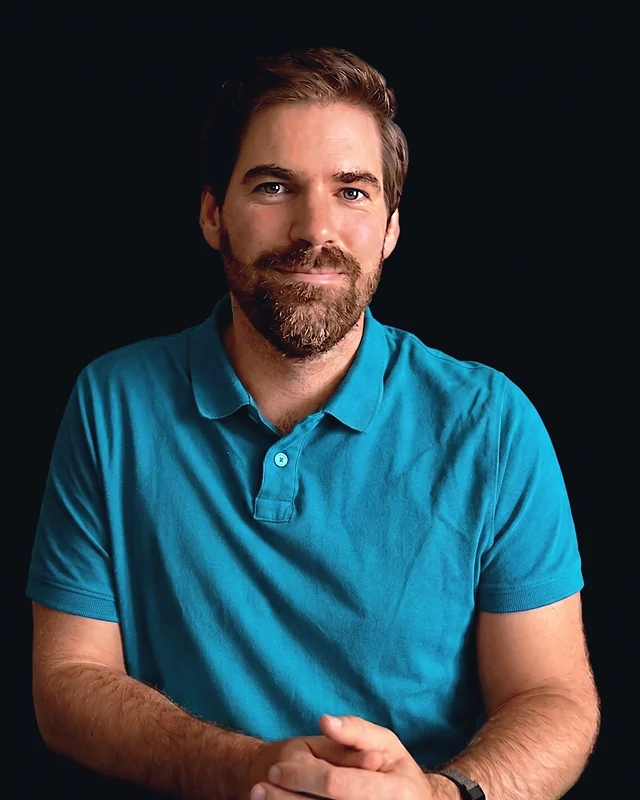
Your instructor
Dr. Florent Poux
I’ve spent 15+ years in 3D geospatial: from field surveys with total stations to building AI systems for Fortune 500 companies. I published the O’Reilly book on 3D Data Science with Python. I’ve advised startups valued at over 15M EUR. I’ve held a professorship, taught at university, and led R&D for some of the largest organizations in the space.
I don’t teach syntax. I teach judgment. Every module is built around real decisions I’ve faced in production. Which neural renderer fits an industrial inspection job. How to architect a semantic pipeline that doesn’t choke on 500M points. When to use algorithmic methods and when to switch to deep learning.
From the people I teach
Engineers, researchers, and professionals across 80 countries.
“The scene graph module opened up possibilities I hadn’t considered. We built a spatial reasoning engine for our autonomous robot using exactly the architecture from Module 2.”

“I’ve taken other 3D courses. This is the only one where I actually deployed something. The web app module turned into a client demo that won us a contract.”
“As a PhD student in remote sensing, I needed production skills to complement my research. This course filled exactly that gap. My advisor was impressed with the pipeline I built.”
“I went through three Udemy courses before this one. Night and day. Florent teaches like someone who has shipped 3D products, not someone who read about them.”
Join the membership
One yearly payment. A curated intel drop every month. Cancel anytime.
Monthly Spatial AI Intel
12 curated drops a year, each with jobs, papers, funding, and a project
- A new curated drop every month (12 a year)i
- Verified open roles with salary bands
- Standout papers, each with a working repo
- Live EU, US, and France funding calls
- One buildable weekend project per dropi
- Hand-curated by Dr. Florent Poux, never aggregated
- Renews yearly, cancel anytimei
Already inside the Architect program: Professional and Architect tier members get this intel included at no extra cost.
The complete ecosystem
3D AI Architect Program
The complete spatial AI curriculum, delivered in 3 tiers. Pick the depth that matches where you are: Foundation to get moving, Professional for the full OS stack, Architect for the co-built, one to one route.
- 3D AI Acceleratori: 17 episodes in 6 acts
- 3D Course Libraryi: every standalone course I publish
- All 4 OS courses (Professional and Architect tiers)
- Neurones 3D software access
- Monthly drop-in sessions with Dr. Poux (Architect)
- Spatial AI job and market intel
- Priority support + services access (Architect)
- 300+ hours of content
What you’re getting access to
Everything I’ve built over 15+ years, from land surveying in the field to advising 15M EUR startups, compressed into one curriculum you can start today. Delivered by the first QUALIOPI-certified 3D geospatial academy.
Every pipeline was battle-tested on Fortune 500 projects processing billions of points. You’re getting the real playbook, not theory.
Methods validated by peer-reviewed publications, the ISPRS scientific community, and 1,700+ Google Scholar citations. Not guesswork.
Built by someone who surveyed in the field, defended a PhD, advised funded startups, and shipped products to Fortune 500 clients.
I share more free content than most people put behind a paywall. That’s intentional. I want you to know exactly what you’re getting before you invest. This course is the concentrated, structured version of everything I know. No fluff. No filler. Just the production path.
Find the right path for you
From single courses to the complete ecosystem.
| Feature | Standalone Course | Monthly Spatial AI Intel | Course Library | 3D AI Architecti | Enterprise |
|---|---|---|---|---|---|
| Courses included | 1 topic | 4 sections monthly | Full catalogi | 3 OS courses + Library (tiered) | Custom |
| Hours of content | 2-8h | 12 drops / year | 150+ hours | 300+ hours (tiered) | Custom |
| Production source code | ✓ | ✓ | ✓ | ✓ | ✓ |
| Lifetime access | ✓ | ✓ | – | ✓ | ✓ |
| 3D AI Accelerator Tracki | – | – | – | ✓ | ✓ |
| Neurones 3D softwarei | – | – | – | ✓ | ✓ |
| Spatial AI job & market inteli | – | – | – | ✓ | ✓ |
| Monthly drop-in sessionsi | – | – | – | ✓ | ✓ |
| Priority support + services accessi | – | – | – | ✓ tiered | ✓ |
| Custom onboardingi | – | – | – | – | ✓ |
| Team licensing | – | – | – | – | ✓ |
| Price | €97 – €1,497 | €697 / year | €297 / 3 months | Starts at €1,997 | On request |
Straight answers
What exactly do I get each month?
One curated drop delivered as a lesson inside your account. Each drop has four sections. A Jobs Board of verified open roles with salary bands, a Tech Brief of standout papers each with a working code repo, an Opportunities section of open EU, US, and France funding calls, and one Project Blueprint with a 7-day plan and a starter repo.
How is this different from a free newsletter?
Free newsletters scrape and aggregate. They give you volume. This gives you judgment. Every role is open, every repo runs, every deadline is live, all checked by hand before it reaches you. You are paying for the filtering, which is exactly the part that takes a practitioner’s time and experience.
How much is it and how does billing work?
It is EUR 697 per year. One yearly payment that renews automatically each year. You can cancel anytime, and you keep access until the end of the period you paid for. No long contract, no hidden fees.
Do I need any specific background or software?
No. If you work in or near spatial AI, lidar, geomatics, BIM, robotics, or remote sensing, you will get value from day one. The intel itself is reading and decisions. Only the optional weekend project involves code, and it ships with its own starter repo.
Is this included in the 3D AI Architect program?
Yes. Members of the 3D AI Architect Professional and Architect tiers get this intel included at no extra cost. If you are heading toward the full program anyway, the monthly intel comes bundled with those tiers.
Can I cancel?
Anytime. The membership renews yearly, and you can turn off renewal whenever you like. You keep access for the period you already paid for. No forms, no friction.
Who curates it?
Dr. Florent Poux, personally. Not a team of scrapers, not an algorithm. One practitioner who reads this field every day for his own work, distilling it into the handful of things worth your month.
What if a link is dead or a role has closed?
Every role, repo, and deadline is verified live at the time of the drop. Fields move fast, so if something does expire during the month, the next drop keeps the standard. The verification is the whole point of the product.
Not sure if this course fits?
If you have specific questions about how the curriculum applies to your role, your team’s needs, or your technical background, I’m happy to help you figure it out before you commit.
Book a 15-min call