
Build AI-Powered 3D Vision Pipelines
From a single image to a 3D model. Depth estimation, monocular reconstruction, generative 3D, and the neural models replacing classical pipelines. 6 lessons of hands-on code you can run today.
See neural reconstruction in action
From a single photo to a 3D model, through the models that are rewriting the field.
Neural models covered: MiDaS, DepthAnything v1 and v2, TRELLIS, and more.
Students trained worldwide across 80 countries.
Production experience distilled into structured, repeatable workflows.
Classical photogrammetry is hitting a ceiling.
You know how to run SfM pipelines. You can align hundreds of images and produce a dense reconstruction. But what happens when the client sends you a single photo and asks for a 3D model? Or two photos with no overlap? Classical photogrammetry cannot help you. The rules of the game have changed.
The answer is not to replace photogrammetry. It is to extend it. Neural depth estimation, monocular reconstruction, and generative 3D models fill the gaps where classical methods fail. The engineers who combine both toolkits will dominate the next decade of reality capture.
Two years ago, reconstructing a 3D model from a single image was research science fiction. Today, models like DepthAnything v2 run on a laptop and give you clean depth maps in seconds. Generative models like Microsoft TRELLIS produce textured meshes from a single prompt. This course teaches you to use them in production.
What you’ll build
Real neural pipelines on real data. No toy demos.
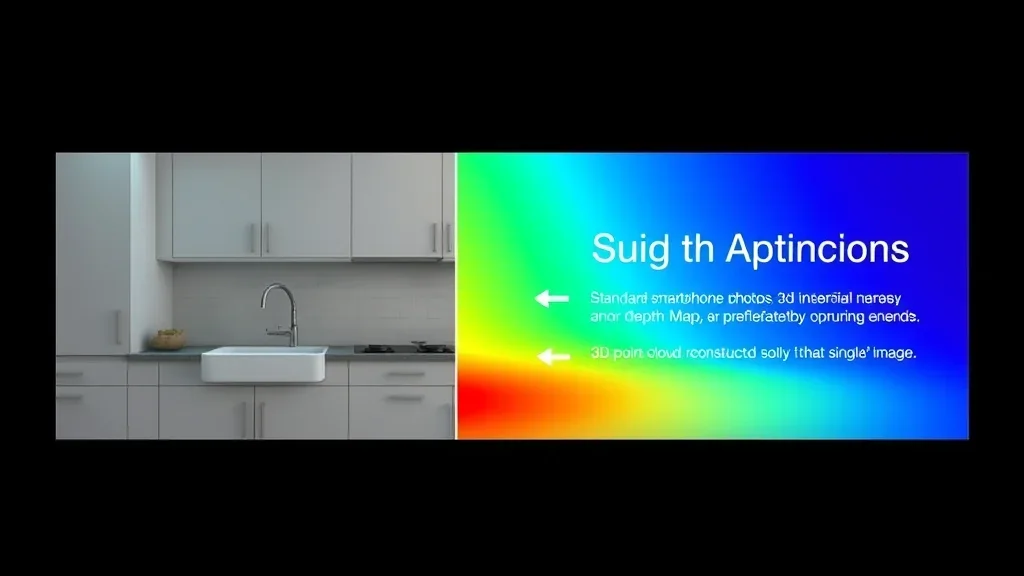
Monocular depth pipeline
From a single image to a dense depth map. Run MiDaS, DepthAnything, and DepthAnything v2 on your own photos. Integrate the depth into a 3D reconstruction.
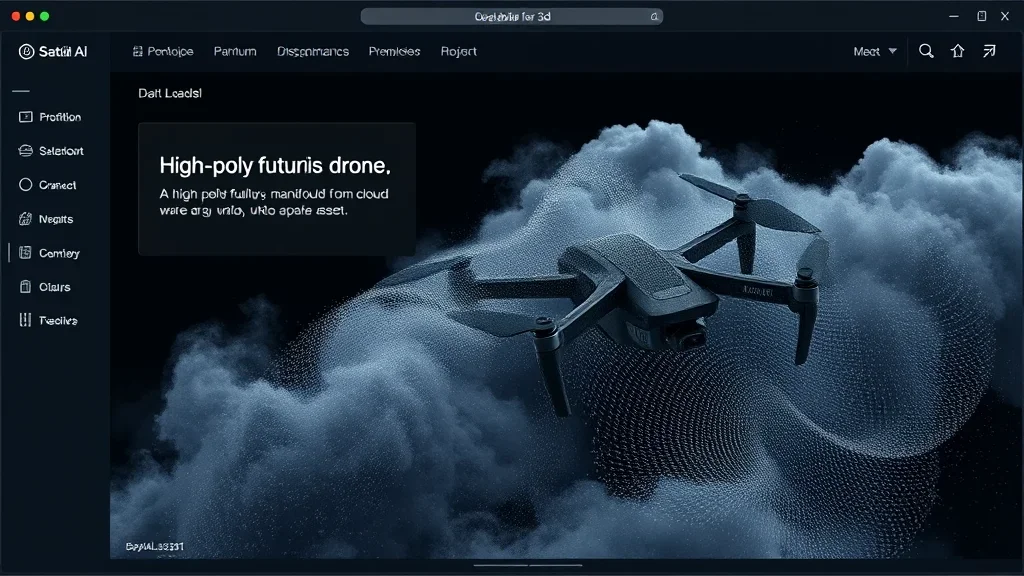
Generative 3D models
Turn prompts and photos into 3D assets. Microsoft TRELLIS, Stable Diffusion for image-to-3D, and the generative 3D stack explained for engineers.
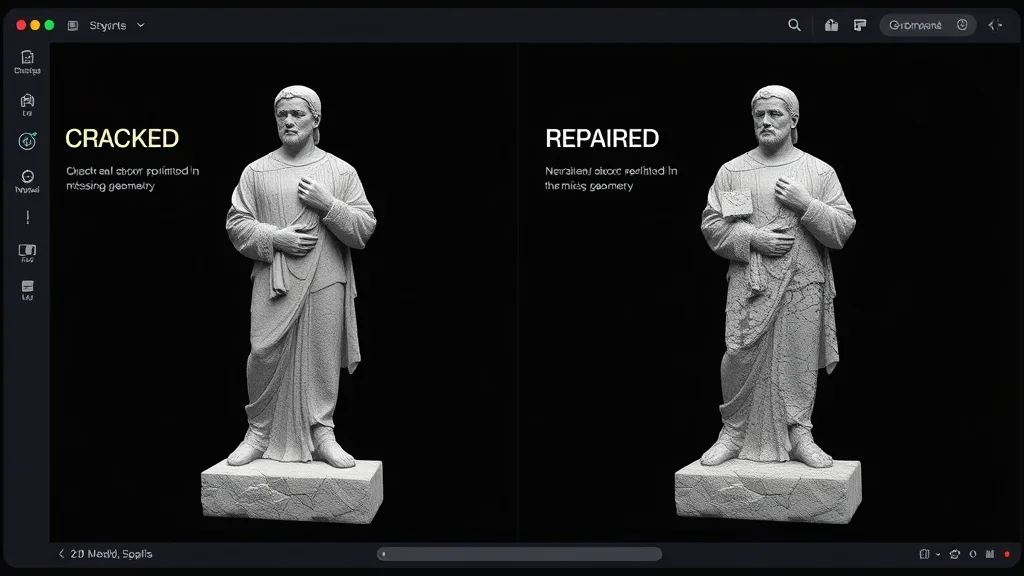
Hybrid reconstruction
When to use neural methods and when to stick with geometry. The decision framework for mixing depth networks with classical photogrammetry for the best of both worlds.
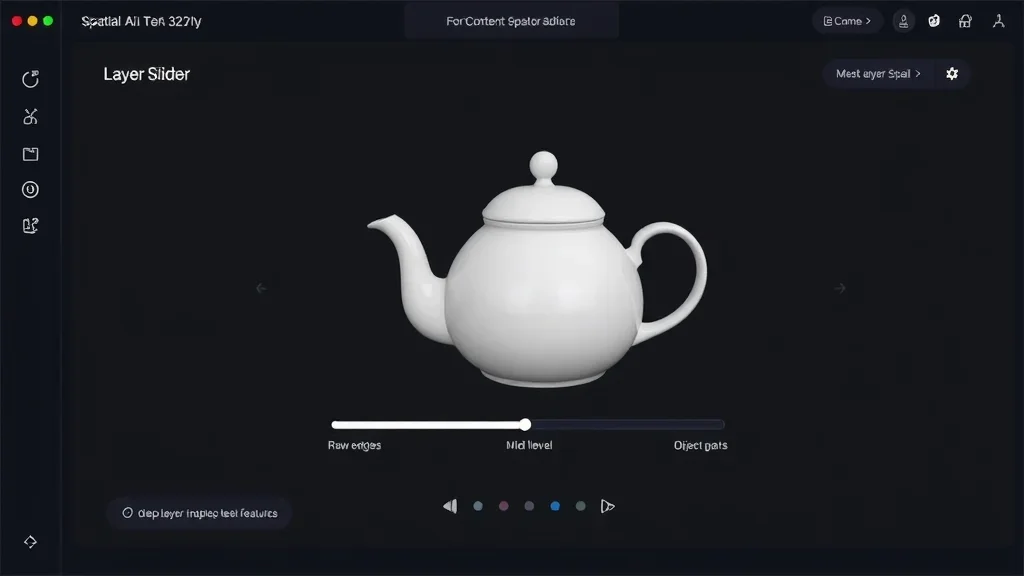
Neural network basics
A working overview of neural networks for 3D vision. Enough theory to read a paper, enough practice to ship code.
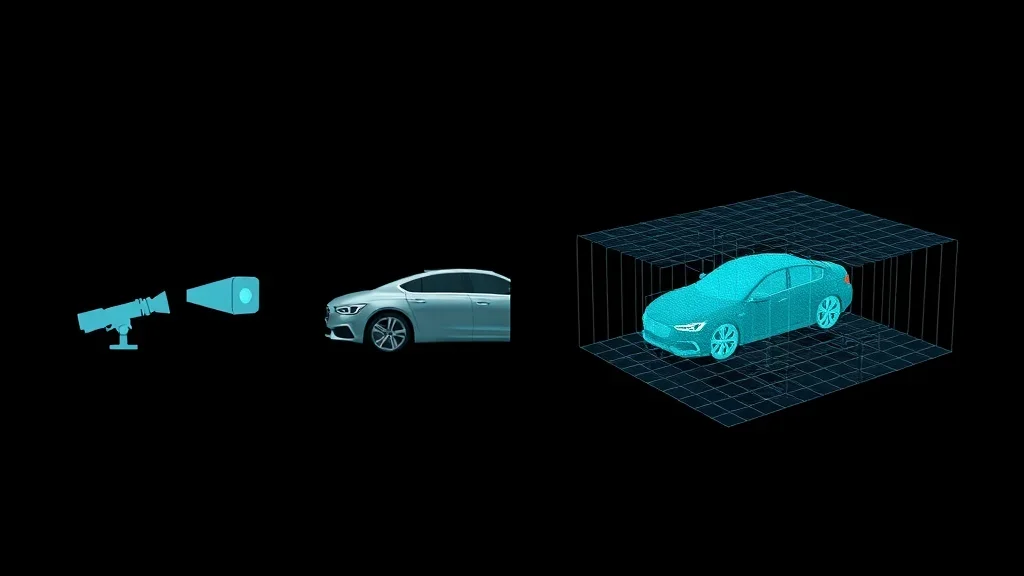
Voxel reconstruction
From monocular images to voxel grids. Neural models that infer volumetric structure from a handful of views.
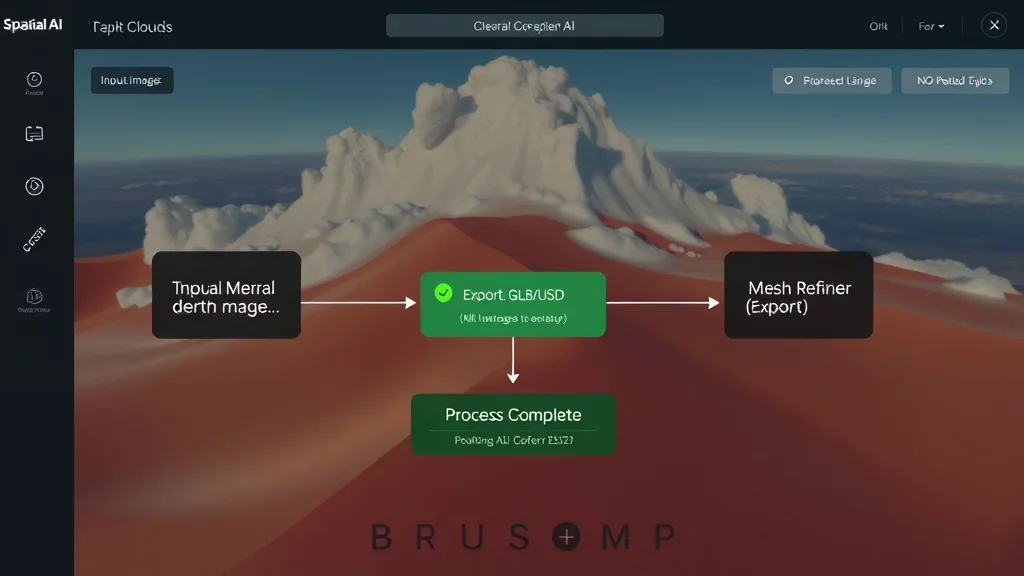
Production integration
How to plug a neural model into an existing pipeline. Preprocessing, inference, postprocessing, and the quality checks that keep it honest.
I spent two years tracking the neural 3D vision literature before I trusted any of it enough to put in a course. This module is the concentrated version of that research, stripped of the hype and focused on what actually works on your data today.
How this course works
Hands-on, code-first, and focused on what ships.
100% asynchronous
Access everything 24/7 on the LMS. Self-paced. No live sessions required.
Code-along projects
Every lesson ships with a Python notebook. Run the inference, swap the input, study the output. No black boxes.
Pre-trained model zoo
All models are open-source and pre-trained. Hugging Face, PapersWithCode, and direct download links included.
GPU-friendly code
Scripts run on a single consumer GPU. You can test everything on a laptop with 8 GB VRAM. No cluster required.
Lifetime access
One payment, permanent access. Every new model I add to the curriculum is included. The neural 3D space moves fast, and so does this course.
Research-to-practice
I read the papers so you don’t have to. Each lesson distills a paper into a working script you can deploy.
Most neural 3D papers publish a GitHub repository that runs once on the author’s laptop and nowhere else. This course does the hard work of reproducing the results on clean code you can actually deploy. I take the pain of dependency hell, broken CUDA builds, and missing weights so you can focus on using the models.
The Curriculum
4 modules. From neural basics to generative 3D assets.
Prerequisites
This course is for engineers and researchers with a working Python background who want to add neural 3D vision to their toolkit.
- Python (intermediate): comfortable with classes, environments, and running GPU-backed scripts
- Basic deep learning: you have seen a PyTorch script before, even if you did not write it yourself
- Hardware: CUDA GPU with 8+ GB VRAM strongly recommended
- 3D basics: understanding of point clouds, meshes, and voxel representations at a conceptual level
No prior neural rendering or generative AI experience required.
The overview. What neural networks can and cannot do for 3D. Where the research is today, where it is heading, and which models are production-ready.
Run MiDaS, DepthAnything, and DepthAnything v2 on your own images. Integrate depth maps into a reconstruction pipeline.
Voxel grids, meshes, and point clouds from a single image. Microsoft TRELLIS, Stable Diffusion 3D extensions, and the generative 3D stack.
Mix neural and classical methods for the best of both. When depth networks help, when SfM still wins, and how to build a pipeline that picks the right tool per job.

Your instructor
Dr. Florent Poux
I’ve spent 12+ years in 3D geospatial: from field surveys with total stations to building AI systems for Fortune 500 companies. I published the O’Reilly book on 3D Data Science with Python. I’ve advised startups valued at over 15M EUR. I’ve held a professorship, taught at university, and led R&D for some of the largest organizations in the space.
I don’t teach syntax. I teach judgment. Every module is built around real decisions I’ve faced in production. Which neural renderer fits an industrial inspection job. How to architect a semantic pipeline that doesn’t choke on 500M points. When to use algorithmic methods and when to switch to deep learning.
What students say
Engineers, researchers, and professionals from 80 countries.
“We used the HITL annotation engine to label 50K objects in our BIM dataset. It cut our annotation time by 70%. Real production value from day one.”

“I went from copy-pasting Open3D tutorials to building a full classification pipeline for our digital twin project. The production mindset changes everything.”
“The scan-to-BIM pipeline turned a three-week manual modelling job into a two-day automated workflow. We closed three new heritage contracts the same quarter.”
“The photogrammetry-to-splat pipeline module replaced three tools in our stack. We deliver photorealistic scenes to clients in half the time.”
“I came in fluent in Python but lost on 3D. After Module 2 I was reading PointNet++ papers like a normal human. The intuition Florent builds is the missing link.”
“We replaced a brittle classical pipeline with a sparse-conv network thanks to this course. Production accuracy jumped from 78 to 94 percent on the same data.”
“The training loop debugging chapter was worth the price by itself. I now know why my models stop learning instead of guessing at hyperparameters.”
Get lifetime access
One payment. Every model, every update, every neural pipeline.
AI-Powered 3D Vision
Complete neural 3D curriculum + source code + pre-trained models + lifetime updates
- 4 modules (8+ hours, 6 lessons)i
- Complete Python source code
- MiDaS, DepthAnything, TRELLIS walkthroughs
- Hybrid reconstruction framework
- Lifetime access + all future updatesi
- 90-day results guaranteei
Zero-risk guarantee: If you don’t see real results within 90 days, I’ll refund you in full. No questions.
The complete ecosystem
3D AI Architect Program
The complete spatial AI curriculum, delivered in 3 tiers. Pick the depth that matches where you are — Foundations to get moving, Professional for the full OS stack, Ultimate for live access and priority support.
- 3D AI Acceleratori: 17 episodes in 6 acts
- 3D Course Libraryi: every standalone course I publish
- All 4 OS courses (Professional & Ultimate tiers)
- Neurones 3D software access
- Monthly drop-in sessions with Dr. Poux (Ultimate)
- Spatial AI job and market intel
- Priority support + services access (Ultimate)
- 300+ hours of content
What you’re getting access to
Everything I’ve built over 12+ years, from land surveying in the field to advising 15M EUR startups, compressed into one curriculum you can start today. Delivered by the first QUALIOPI-certified 3D geospatial academy.
Every pipeline was battle-tested on Fortune 500 projects processing billions of points. You’re getting the real playbook, not theory.
Methods validated by peer-reviewed publications, the ISPRS scientific community, and 1,500+ academic citations. Not guesswork.
Built by someone who surveyed in the field, defended a PhD, advised funded startups, and shipped products to Fortune 500 clients.
I share more free content than most people put behind a paywall. That’s intentional. I want you to know exactly what you’re getting before you invest. This course is the concentrated, structured version of everything I know. No fluff. No filler. Just the production path.
Find the right path for you
From single courses to the complete ecosystem.
| Feature | Standalone Course | AI-Powered 3D Vision | Course Library | 3D AI Architecti | Enterprise |
|---|---|---|---|---|---|
| Courses included | 1 topic | 4 modules | Full catalogi | 3 OS courses + Library (tiered) | Custom |
| Hours of content | 2-8h | 8+ hours | 150+ hours | 300+ hours (tiered) | Custom |
| Production source code | ✓ | ✓ | ✓ | ✓ | ✓ |
| Lifetime access | ✓ | ✓ | – | ✓ | ✓ |
| 3D AI Accelerator Tracki | – | – | – | ✓ | ✓ |
| Neurones 3D softwarei | – | – | – | ✓ | ✓ |
| Spatial AI job & market inteli | – | – | – | ✓ | ✓ |
| Monthly drop-in sessionsi | – | – | – | ✓ | ✓ |
| Priority support + services accessi | – | – | – | ✓ tiered | ✓ |
| Custom onboardingi | – | – | – | – | ✓ |
| Team licensing | – | – | – | – | ✓ |
| Price | €97 – €497 | €197 | €297 / 3 months | Starts at €1,999 | On request |
Straight answers
Do I need a GPU?
Strongly recommended. A CUDA GPU with 8+ GB VRAM runs every model in the course. Without a GPU you can still watch the videos, but you won’t be able to run DepthAnything or TRELLIS locally.
Do I need prior deep learning experience?
Basic familiarity helps. You should know what a neural network is and have seen a PyTorch script before. I explain the 3D-specific parts from scratch, but I do not teach neural network fundamentals here.
How is this different from tutorials on YouTube?
YouTube shows you individual models. This course connects them into a decision framework: when to use depth networks, when to use SfM, when to use generative models, and how to mix them in a production pipeline.
How long do I have access?
Lifetime. One payment, permanent access. Every new model I add is included.
What’s the refund policy?
90 days. Run the pipelines, reconstruct something real. If you don’t see results, email me for a full refund.
Will this content age poorly?
Neural models evolve fast, and I update the course regularly. The decision framework and integration patterns are timeless. The specific models come and go, and when they do, I swap in the new ones.
Can I upgrade to the Reconstructor OS later?
Yes. This course is one of the four standalone modules inside the Reconstructor OS. Contact me for upgrade credit.
Not sure if this course fits?
If you have specific questions about how the curriculum applies to your role, your team’s needs, or your technical background, I’m happy to help you figure it out before you commit.
Book a 15-min call