
Deploy Advanced 3D Architectures
PointNet++, KPConv, GrowSP, and production deployment. 9 lessons. Real aerial LiDAR. The system-design thinking that ships 3D models.
See a full advanced pipeline in action
Aerial LiDAR in, semantic classes out. PointNet++, KPConv, and GrowSP side by side.
Points per scene. Segmented by architectures you’ve deployed yourself: KPConv and PointNet++.
Students trained worldwide across 80 countries.
Production deep learning experience distilled into structured workflows.
You’ve trained a PointNet. Now the dataset gets real.
Your PointNet worked beautifully on ModelNet. You got 89% accuracy on a clean benchmark. Then your team threw you an aerial LiDAR scan with 100 million points, five semantic classes, and heavy class imbalance. PointNet’s vanilla classifier collapses. Your training loss barely moves. The accuracy chart is flat.
That’s where advanced architectures earn their keep. PointNet++ adds multi-scale neighborhood aggregation. KPConv adds a true 3D convolution. GrowSP adds unsupervised pretraining. The tradeoffs are real. The training pipelines are complex. You need to understand what each architecture does before you can pick the right one for your problem.
This course is the step most 3D deep learning students never take. They run a PointNet demo and call it a day. The engineers who ship production 3D segmentation deploy hierarchical networks, understand pretraining strategies, and know when to use a 3D R-CNN vs a pure 3D CNN. This course is that breakthrough.
What you’ll deploy
State-of-the-art 3D architectures, deployed end to end on real aerial LiDAR.
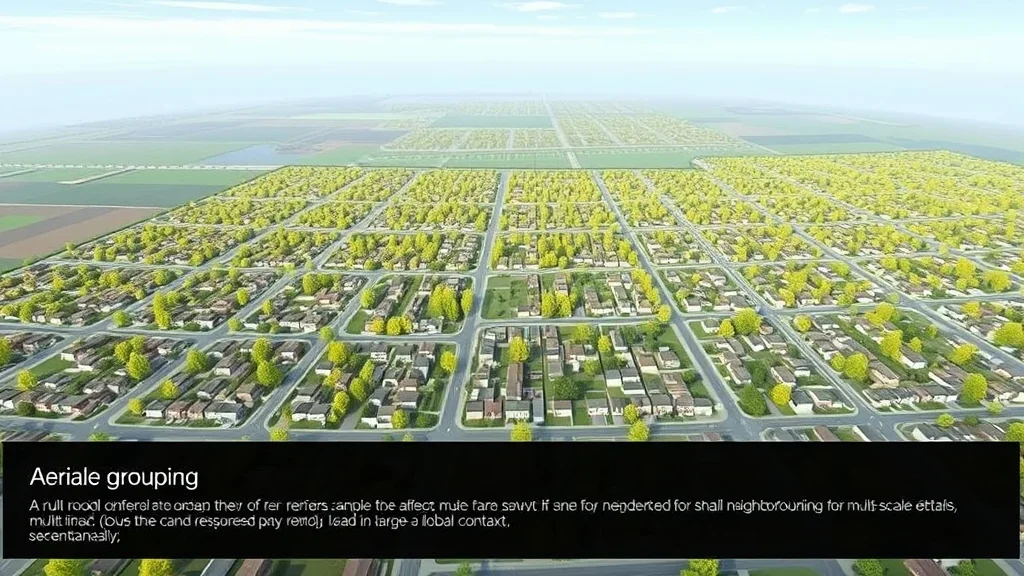
PointNet++ at scale
Deploy PointNet++ on real aerial LiDAR. Hierarchical sampling, ball query grouping, and production-grade training.
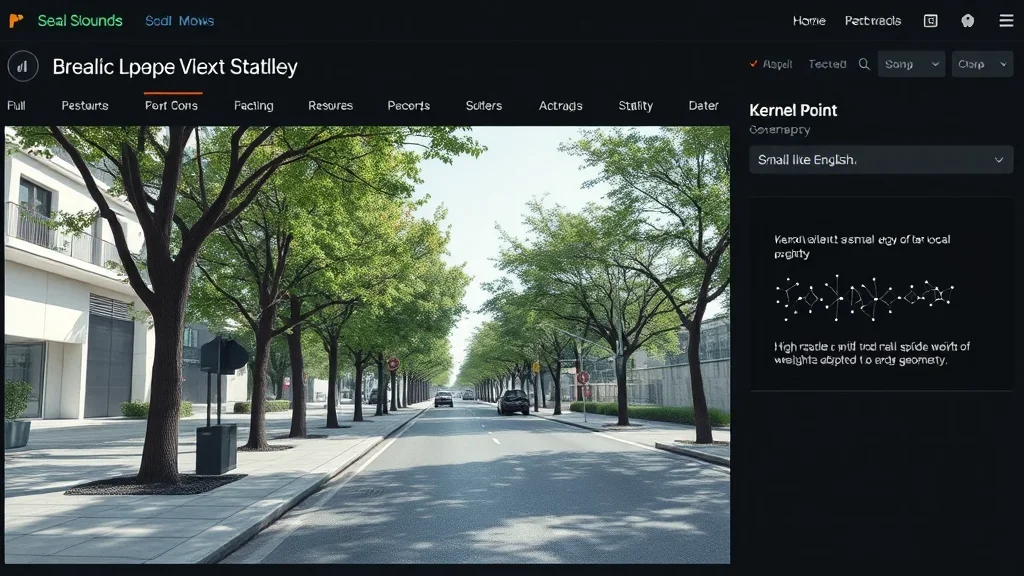
KPConv end to end
Install, configure, train, and infer with KPConv. The sharpest point convolution operator on real outdoor scenes.
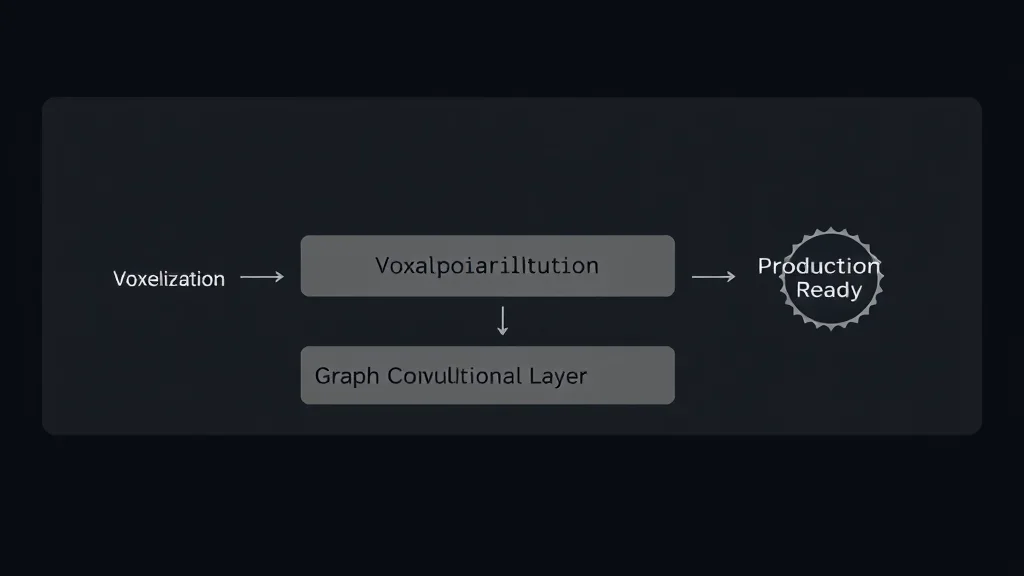
GrowSP pipeline
Bootstrap a segmentor with GrowSP: unsupervised pretraining, supervised fine-tuning, and the debug workflow when training goes sideways.
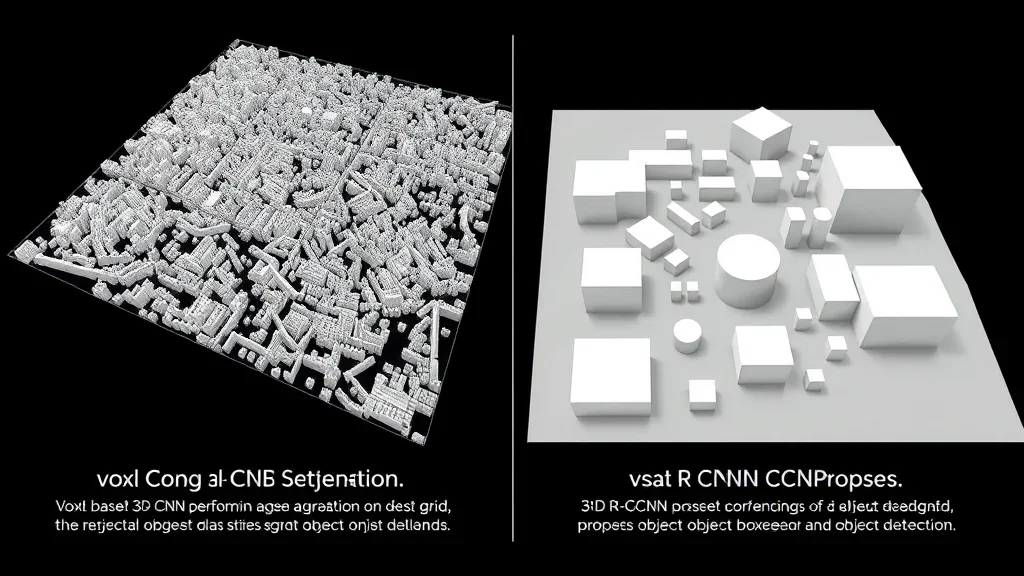
3D CNN and R-CNN
Build a voxel-based 3D CNN for semantic segmentation from scratch. Extend it into a 3D R-CNN.
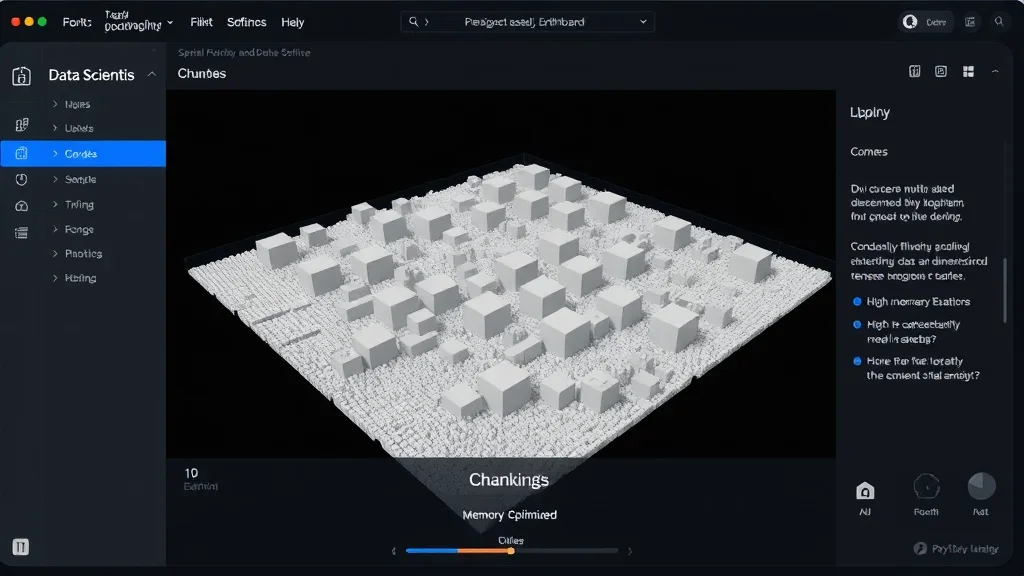
Custom voxel dataset
A PyTorch Dataset class for voxels. Chunking, normalization, and augmentation for large 3D grids.
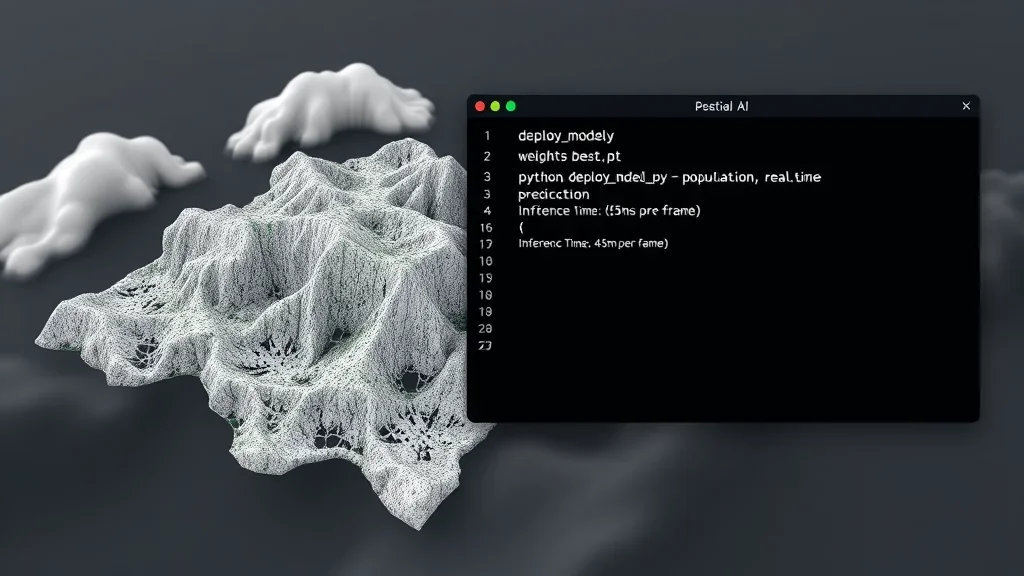
Production Python app
Turn your trained model into a deployable app. Project structure, code structure, training step, inference step, YAML configuration, and conda setup.
After PointNet, most courses stop. Then you hit real data and you’re on your own. I built this course specifically for that moment. Nine lessons that cover the exact architectures I’ve deployed on Fortune 500 projects, with the system-design thinking to pick the right one for your case.
How this course works
Advanced, production-focused, and built for engineers who ship.
100% asynchronous
Every lesson on the LMS, 24/7. Self-paced.
Complete source code
Every architecture. Every training script. Every inference pipeline. Clone the repo and ship.
Real aerial LiDAR
Large outdoor scans with real class imbalance. The kind of data that breaks textbook networks.
System design thinking
Architecture selection, training strategy, debugging heuristics. Not just code. The engineering decisions behind the code.
Lifetime access
One payment, permanent access. Every future architecture added, yours for free.
Upgrade path
Part of the full 3D Deep Learning OS. Your purchase applies as credit on upgrade.
This course is not for beginners. You should already understand PointNet, basic PyTorch training loops, and point cloud formats. If you’re not there yet, start with 3D Deep Learning Foundations and come back. Advanced means advanced.
The Curriculum
9 lessons, 5 modules. From system design to deployed app.
Prerequisites
This course assumes you can already train a PointNet and read PyTorch code.
- Python and PyTorch (intermediate): comfortable with Dataset, DataLoader, training loops
- PointNet knowledge: you’ve trained one and understand shared MLPs and max pooling
- Hardware: CUDA GPU with 8+ GB VRAM required for KPConv and GrowSP
- Software: Python, PyTorch, Open3D, KPConv dependencies. All free and open source
If you’re not at this level yet, take 3D Deep Learning Foundations first. It’s built as the on-ramp.
How to think about a 3D deep learning project from the system level. Architecture selection, data strategy, training budget, evaluation plan. The decisions that determine success before you write a line of code.
Build a voxel-based 3D CNN for semantic segmentation from scratch. Extend it to a 3D R-CNN. Compare with point-based alternatives.
Install, configure, train, and infer with KPConv. The sharpest 3D convolution operator, applied to real outdoor scans.
Deploy PointNet++ on real aerial LiDAR. Functions, architecture implementation, testing, and inference. The hierarchical recipe for large outdoor scenes.
The GrowSP pipeline from setup to results. Then the full production path: project structure, training step, inference step, YAML config, conda setup, and debug routine.

Your instructor
Dr. Florent Poux
I’ve spent 12+ years in 3D geospatial: from field surveys with total stations to building AI systems for Fortune 500 companies. I published the O’Reilly book on 3D Data Science with Python. I’ve advised startups valued at over 15M EUR. I’ve held a professorship, taught at university, and led R&D for some of the largest organizations in the space.
I don’t teach syntax. I teach judgment. Every module is built around real decisions I’ve faced in production. Which neural renderer fits an industrial inspection job. How to architect a semantic pipeline that doesn’t choke on 500M points. When to use algorithmic methods and when to switch to deep learning.
What students say
Engineers deploying 3D deep learning in production, from 80 countries.
“I came in fluent in Python but lost on 3D. After Module 2 I was reading PointNet++ papers like a normal human. The intuition Florent builds is the missing link.”

“We replaced a brittle classical pipeline with a sparse-conv network thanks to this course. Production accuracy jumped from 78 to 94 percent on the same data.”
“The training loop debugging chapter was worth the price by itself. I now know why my models stop learning instead of guessing at hyperparameters.”
“Implementing PointNet from scratch alongside Florent finally made the math feel like code. I caught a tensor-shape bug in our internal model the next day.”
“The PointNet++ to KPConv progression is taught the way I wish someone had taught me five years ago. Each architecture justifies the next, no hand-waving.”
“I needed to choose between sparse convolution backbones for a transit project. The architecture comparison module gave me a defensible recommendation in two days.”
“I was trained as a remote sensing engineer with zero ML background. This course turned that around. I now own the deep learning pipeline at our firm.”
“The geospatial framing is what made the difference. Every example uses real satellite, drone, or LiDAR data, not toy datasets I cannot relate to.”
Get lifetime access
One payment. Every architecture, every pipeline, every update.
Advanced 3D Neural Architectures
Complete advanced curriculum + source code + lifetime updates
- 9 advanced lessons (18+ hours)i
- Complete PyTorch source code
- PointNet++, KPConv, GrowSP
- 3D CNN and R-CNN from scratch
- Lifetime access + all future updatesi
- 90-day results guaranteei
Zero-risk guarantee: If you don’t see real results within 90 days, I’ll refund you in full. No questions.
The complete ecosystem
3D AI Architect Program
The complete spatial AI curriculum, delivered in 3 tiers. Pick the depth that matches where you are — Foundations to get moving, Professional for the full OS stack, Ultimate for live access and priority support.
- 3D AI Acceleratori: 17 episodes in 6 acts
- 3D Course Libraryi: every standalone course I publish
- All 4 OS courses (Professional & Ultimate tiers)
- Neurones 3D software access
- Monthly drop-in sessions with Dr. Poux (Ultimate)
- Spatial AI job and market intel
- Priority support + services access (Ultimate)
- 300+ hours of content
What you’re getting access to
Everything I’ve built over 12+ years, from land surveying in the field to advising 15M EUR startups, compressed into one curriculum you can start today. Delivered by the first QUALIOPI-certified 3D geospatial academy.
Every pipeline was battle-tested on Fortune 500 projects processing billions of points. You’re getting the real playbook, not theory.
Methods validated by peer-reviewed publications, the ISPRS scientific community, and 1,500+ academic citations. Not guesswork.
Built by someone who surveyed in the field, defended a PhD, advised funded startups, and shipped products to Fortune 500 clients.
I share more free content than most people put behind a paywall. That’s intentional. I want you to know exactly what you’re getting before you invest. This course is the concentrated, structured version of everything I know. No fluff. No filler. Just the production path.
Find the right path for you
From single courses to the complete ecosystem.
| Feature | Standalone Course | Advanced 3D Neural Architectures | Course Library | 3D AI Architecti | Enterprise |
|---|---|---|---|---|---|
| Courses included | 1 topic | 5 modules | Full catalogi | 3 OS courses + Library (tiered) | Custom |
| Hours of content | 2-8h | 18+ hours | 150+ hours | 300+ hours (tiered) | Custom |
| Production source code | ✓ | ✓ | ✓ | ✓ | ✓ |
| Lifetime access | ✓ | ✓ | – | ✓ | ✓ |
| 3D AI Accelerator Tracki | – | – | – | ✓ | ✓ |
| Neurones 3D softwarei | – | – | – | ✓ | ✓ |
| Spatial AI job & market inteli | – | – | – | ✓ | ✓ |
| Monthly drop-in sessionsi | – | – | – | ✓ | ✓ |
| Priority support + services accessi | – | – | – | ✓ tiered | ✓ |
| Custom onboardingi | – | – | – | – | ✓ |
| Team licensing | – | – | – | – | ✓ |
| Price | €97 – €497 | €397 | €297 / 3 months | Starts at €1,999 | On request |
Straight answers
Do I need to have taken 3D Deep Learning Foundations first?
Strongly recommended. If you already understand PointNet, know PyTorch training loops, and can write a custom Dataset class, you can skip it. If not, start with Foundations first.
What hardware do I need?
CUDA GPU with 8+ GB VRAM minimum. The KPConv and PointNet++ modules benefit from 12 GB or more. 32 GB of system RAM recommended for the GrowSP pipeline.
Can I run this on Colab?
Partially. The smaller experiments run fine. The full KPConv and GrowSP pipelines need persistent storage and longer runtimes than the free Colab tier allows. A local GPU workstation or cloud GPU rental is recommended for the full run.
How long do I have access?
Lifetime. One payment, permanent access. Every future update included.
What’s the refund policy?
90 days. Deploy one of the advanced architectures on your data. If you don’t see results, email me for a full refund.
Is this the same as the 3D Deep Learning OS?
No. This course is a focused slice of the OS covering advanced architectures and deployment. The 3D Deep Learning OS is the complete 50-lesson program covering fundamentals, PointNet, advanced architectures, generative models, and a full client-server AI app.
Can I upgrade to the 3D Deep Learning OS later?
Yes. Your purchase applies as credit toward the OS. Contact me at howto@learngeodata.eu.
Do you cover Transformers for 3D?
Briefly, in the context of hybrid systems. Deep transformer coverage lives in the full OS and in future dedicated modules. This course focuses on the three battle-tested architectures I deploy most: KPConv, PointNet++, and GrowSP.
Not sure if this course fits?
If you have specific questions about how the curriculum applies to your role, your team’s needs, or your technical background, I’m happy to help you figure it out before you commit.
Book a 15-min call