
Build Your First 3D Neural Network
Code PointNet from scratch in PyTorch. Train it on real point clouds. Understand every line. 13 lessons. The foundation of modern 3D AI.
See 3D deep learning in action
A trained PointNet classifier running on real LiDAR. Data in, predictions out.
Points per scene. Classified by a PointNet you coded yourself.
Students trained worldwide across 80 countries.
Research experience distilled into repeatable workflows.
You can run a PointNet demo. You can’t explain it.
You have cloned the original PointNet repo. You ran the training script on the ModelNet sample. You got a decent accuracy. But when your teammate asks why it uses a T-Net, or what the symmetric function actually does, you freeze. You’ve run the code. You haven’t built the intuition.
That’s the beginner gap. Copying a repo teaches you nothing about architecture decisions. Papers assume you already know what they’re building on. Tutorials either handwave the math or bury you in it. What you need is a middle path: code every component, understand why, run it on real point cloud data, and see the effect of every decision.
PointNet is the foundation. It’s simple enough to understand end-to-end in a weekend. It’s deep enough to teach you the patterns every 3D network uses: shared MLPs, symmetric aggregation, permutation invariance. Once you understand PointNet, you can read any 3D deep learning paper. You stop being a user and become a builder. That’s what this course gives you.
What you’ll build
A full PointNet pipeline, end to end, on real 3D data.
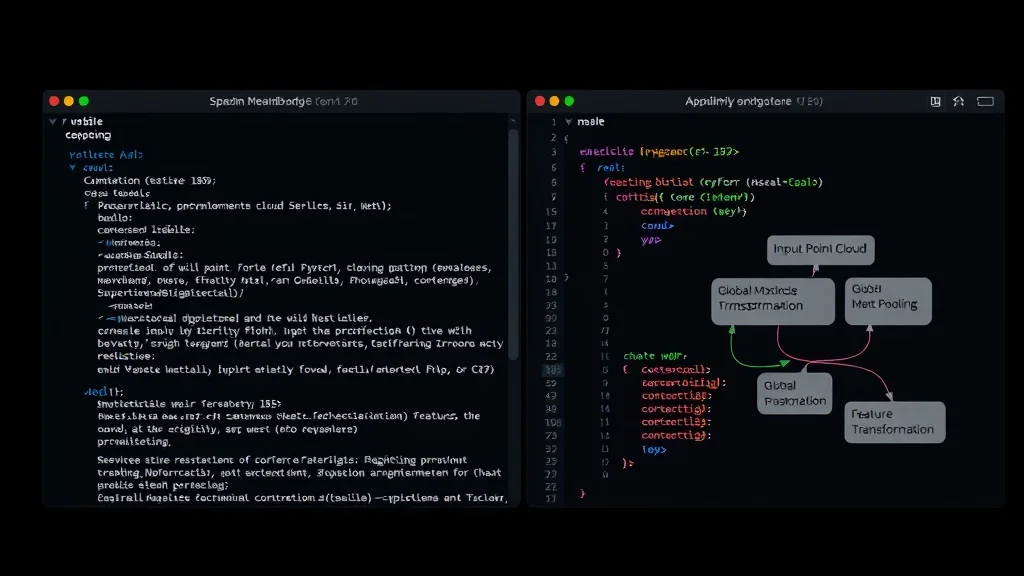
PointNet from scratch
Code the full PointNet architecture in PyTorch. T-Net, shared MLPs, max pooling. Every component, hand-built.
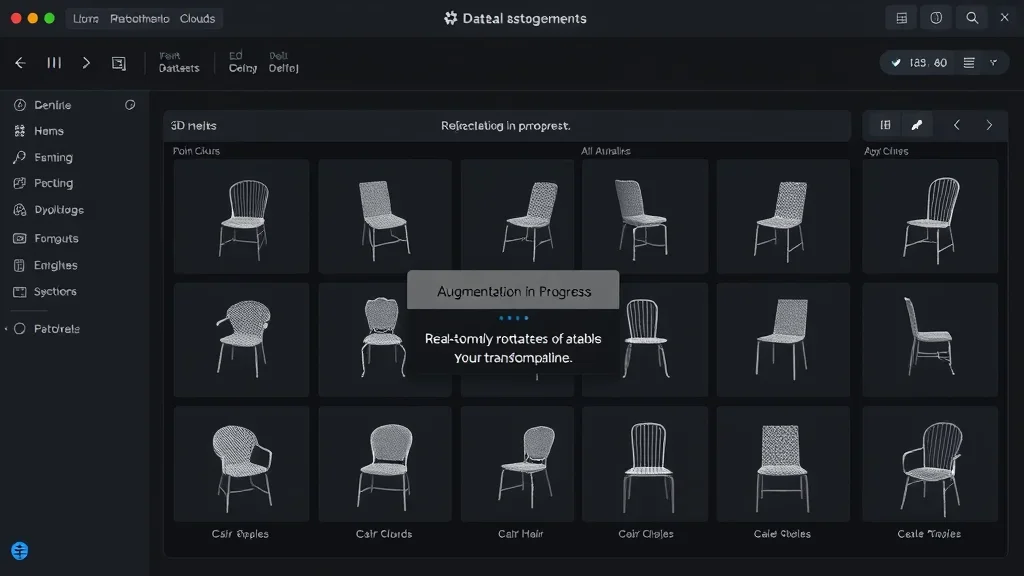
3D data pipeline
Build a custom Dataset class for point clouds. Preprocessing, augmentation, sampling, normalization. The dataset engineering that makes or breaks training.
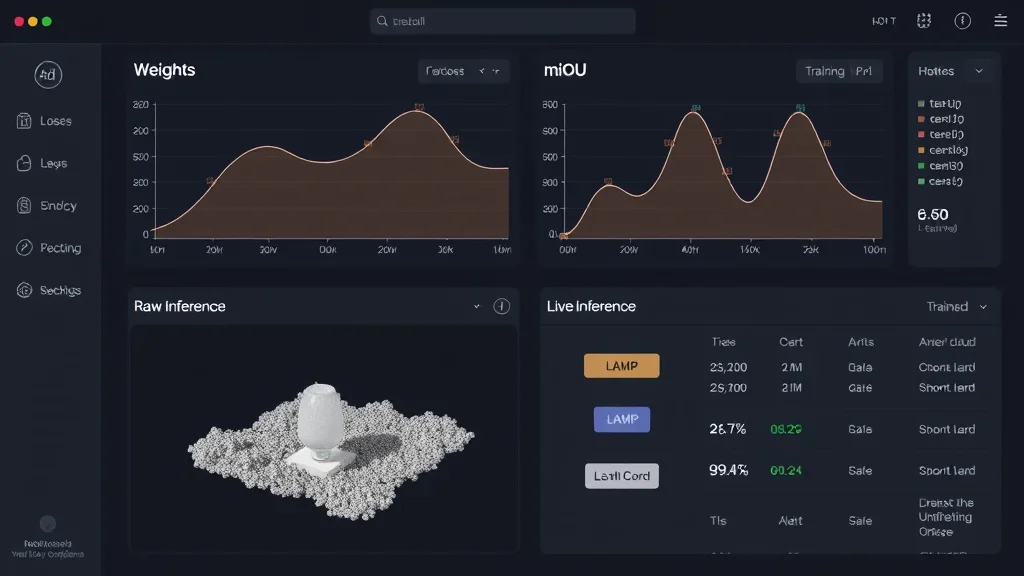
Training and inference
A full training loop with checkpoints, metrics, and validation. Inference script that runs on new point clouds. Evaluation with production metrics.
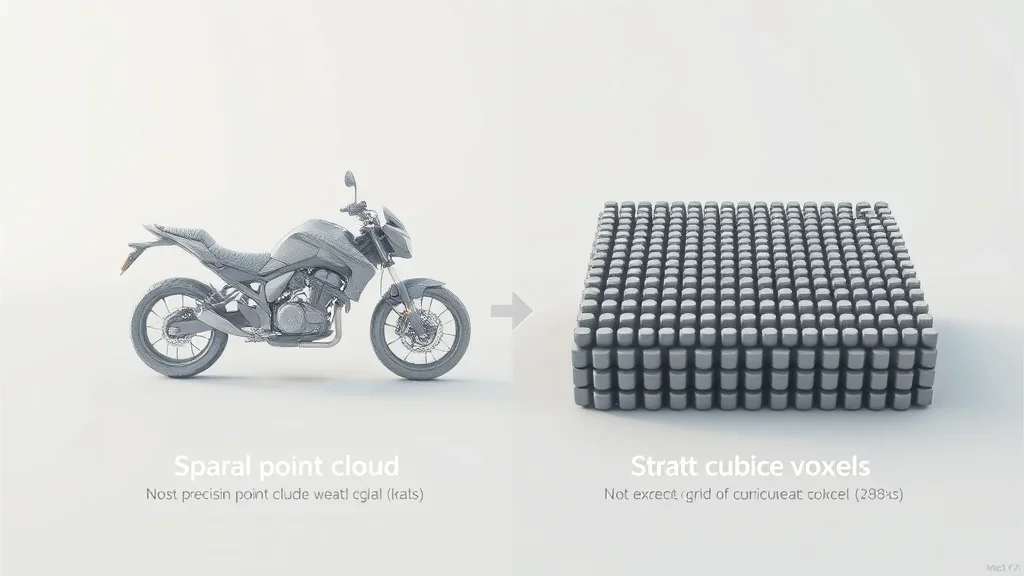
Voxel and point duality
When voxels beat points and when points beat voxels. Code a voxel-based alternative and compare directly.
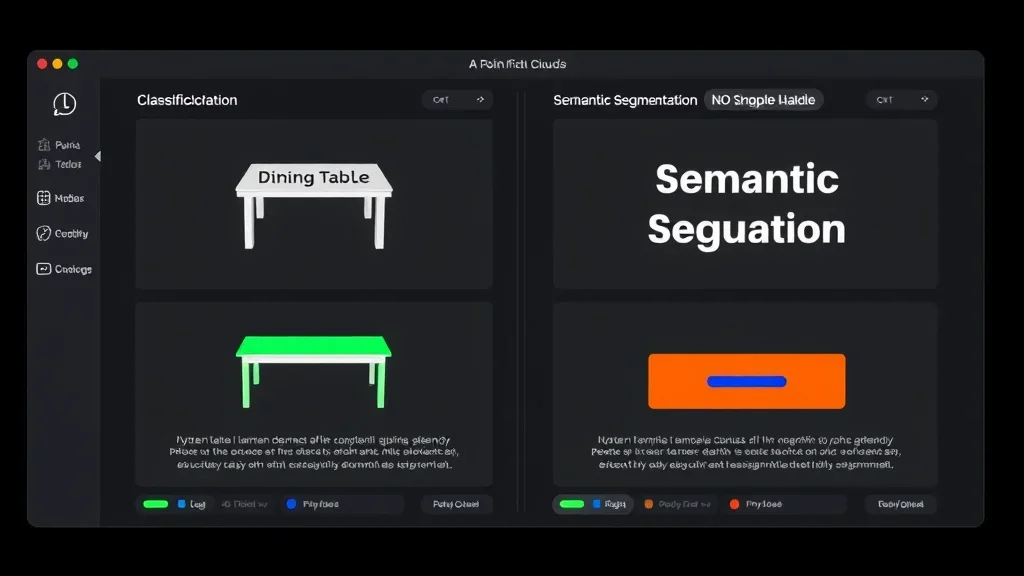
Classification vs segmentation
The two main 3D deep learning tasks. When to use each, how the network head differs, and how to adapt PointNet for both.
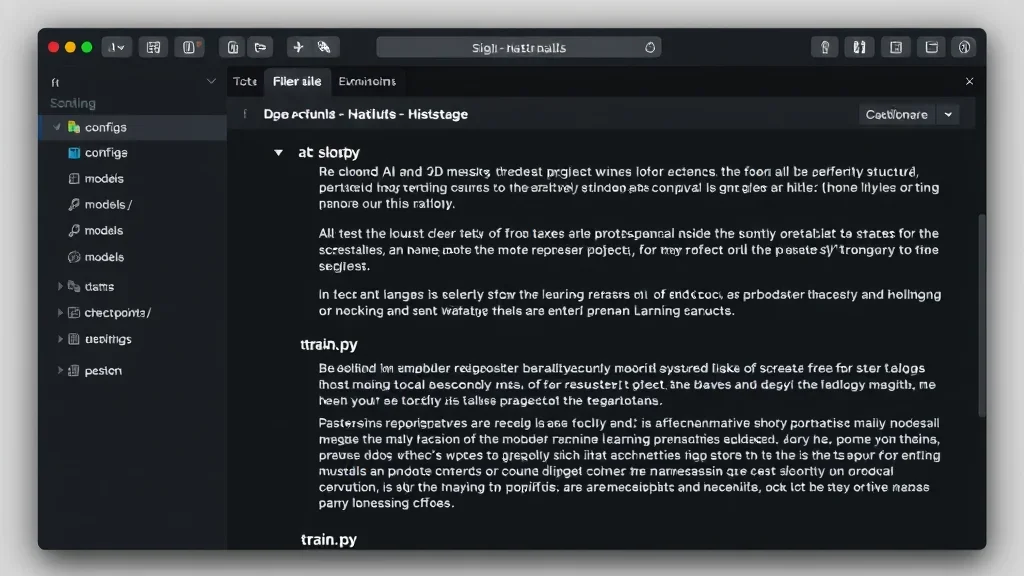
Production scaffolding
Advanced Python setup, config files, reproducible training, and the project structure that scales beyond a notebook.
I wrote this course for the version of me who spent a weekend reading the PointNet paper and still couldn’t explain the max pooling trick. If you’ve been there, this is the course that would have saved you that weekend and the twenty that came after.
How this course works
Beginner-friendly, code-first, and grounded in real point clouds.
100% asynchronous
Access every lesson 24/7 on the LMS. Self-paced. Start today.
Code-along projects
Complete PyTorch source code. Clone the repo, run it, modify it. No copy-pasting from videos.
Real point cloud data
ModelNet, ShapeNet, and real LiDAR samples. You train on datasets that matter, not on synthetic toys.
Beginner-first pacing
Every concept introduced when it’s needed. Math explained when the code demands it. No prereqs piled up front.
Lifetime access
One payment, permanent access. Every future update included.
Upgrade path
This course is the gateway to Advanced 3D Neural Architectures and the full 3D Deep Learning OS. Your payment applies as credit on upgrade.
You know Python. You’ve heard about neural networks. You work with or want to work with 3D data. You don’t need to be a PyTorch expert to start this course. You’ll become one by the end.
The Curriculum
4 modules. From first PointNet run to a production inference script.
Prerequisites
This course is designed for Python developers who want to enter 3D deep learning.
- Python (mid-level): comfortable with classes, file I/O, and NumPy
- Basic neural network awareness: you know what a layer and a loss function are, even vaguely
- Hardware: CUDA GPU with 6+ GB VRAM recommended. CPU works for smaller experiments
- Software: Python, PyTorch, NumPy, Open3D. All free and open source
If neural networks are brand new to you, start with Engineering Neural Networks for Geospatial Analysts.
The structured map of 3D deep learning. Classification, segmentation, detection. Point-based vs voxel-based approaches. Where PointNet fits and why it matters.
Understand PointNet at the block level. T-Net, shared MLPs, max pooling, and why permutation invariance is the whole game.
Build the data layer. A custom Dataset class for point clouds. Preprocessing, normalization, and augmentation.
The full engineering loop. Model creation, training, inference, evaluation. Advanced Python setup for reproducible deep learning. A working model you can deploy.

Your instructor
Dr. Florent Poux
I’ve spent 12+ years in 3D geospatial: from field surveys with total stations to building AI systems for Fortune 500 companies. I published the O’Reilly book on 3D Data Science with Python. I’ve advised startups valued at over 15M EUR. I’ve held a professorship, taught at university, and led R&D for some of the largest organizations in the space.
I don’t teach syntax. I teach judgment. Every module is built around real decisions I’ve faced in production. Which neural renderer fits an industrial inspection job. How to architect a semantic pipeline that doesn’t choke on 500M points. When to use algorithmic methods and when to switch to deep learning.
What students say
Engineers, researchers, and 3D data practitioners from 80 countries.
“I came in fluent in Python but lost on 3D. After Module 2 I was reading PointNet++ papers like a normal human. The intuition Florent builds is the missing link.”

“We replaced a brittle classical pipeline with a sparse-conv network thanks to this course. Production accuracy jumped from 78 to 94 percent on the same data.”
“The training loop debugging chapter was worth the price by itself. I now know why my models stop learning instead of guessing at hyperparameters.”
“Implementing PointNet from scratch alongside Florent finally made the math feel like code. I caught a tensor-shape bug in our internal model the next day.”
“The PointNet++ to KPConv progression is taught the way I wish someone had taught me five years ago. Each architecture justifies the next, no hand-waving.”
“I needed to choose between sparse convolution backbones for a transit project. The architecture comparison module gave me a defensible recommendation in two days.”
Get lifetime access
One payment. Every lesson, every code file, every update.
3D Deep Learning Foundations
Complete PointNet curriculum + PyTorch source code + lifetime updates
- 13 hands-on lessons (12+ hours)i
- Complete PyTorch source code
- PointNet built from scratch
- Real point cloud datasets
- Lifetime access + all future updatesi
- 90-day results guaranteei
Zero-risk guarantee: If you don’t see real results within 90 days, I’ll refund you in full. No questions.
The complete ecosystem
3D AI Architect Program
The complete spatial AI curriculum, delivered in 3 tiers. Pick the depth that matches where you are — Foundations to get moving, Professional for the full OS stack, Ultimate for live access and priority support.
- 3D AI Acceleratori: 17 episodes in 6 acts
- 3D Course Libraryi: every standalone course I publish
- All 4 OS courses (Professional & Ultimate tiers)
- Neurones 3D software access
- Monthly drop-in sessions with Dr. Poux (Ultimate)
- Spatial AI job and market intel
- Priority support + services access (Ultimate)
- 300+ hours of content
What you’re getting access to
Everything I’ve built over 12+ years, from land surveying in the field to advising 15M EUR startups, compressed into one curriculum you can start today. Delivered by the first QUALIOPI-certified 3D geospatial academy.
Every pipeline was battle-tested on Fortune 500 projects processing billions of points. You’re getting the real playbook, not theory.
Methods validated by peer-reviewed publications, the ISPRS scientific community, and 1,500+ academic citations. Not guesswork.
Built by someone who surveyed in the field, defended a PhD, advised funded startups, and shipped products to Fortune 500 clients.
I share more free content than most people put behind a paywall. That’s intentional. I want you to know exactly what you’re getting before you invest. This course is the concentrated, structured version of everything I know. No fluff. No filler. Just the production path.
Find the right path for you
From single courses to the complete ecosystem.
| Feature | Standalone Course | 3D Deep Learning Foundations | Course Library | 3D AI Architecti | Enterprise |
|---|---|---|---|---|---|
| Courses included | 1 topic | 4 modules | Full catalogi | 3 OS courses + Library (tiered) | Custom |
| Hours of content | 2-8h | 12+ hours | 150+ hours | 300+ hours (tiered) | Custom |
| Production source code | ✓ | ✓ | ✓ | ✓ | ✓ |
| Lifetime access | ✓ | ✓ | – | ✓ | ✓ |
| 3D AI Accelerator Tracki | – | – | – | ✓ | ✓ |
| Neurones 3D softwarei | – | – | – | ✓ | ✓ |
| Spatial AI job & market inteli | – | – | – | ✓ | ✓ |
| Monthly drop-in sessionsi | – | – | – | ✓ | ✓ |
| Priority support + services accessi | – | – | – | ✓ tiered | ✓ |
| Custom onboardingi | – | – | – | – | ✓ |
| Team licensing | – | – | – | – | ✓ |
| Price | €97 – €497 | €297 | €297 / 3 months | Starts at €1,999 | On request |
Straight answers
Do I need prior deep learning experience?
A little helps, but it’s not required. If the word “neural network” doesn’t scare you, you’re fine. If you want a full primer first, check Engineering Neural Networks for Geospatial Analysts.
Do I need prior point cloud experience?
No. I explain the data format, the tooling, and the processing basics as we go. If you want deeper point cloud skills, pair this with Point Cloud Intelligence.
What hardware do I need?
A CUDA GPU with 6+ GB VRAM for smooth training. CPU works for smaller experiments. Free Google Colab GPUs also work.
How long do I have access?
Lifetime. One payment, permanent access. Every future update included.
What’s the refund policy?
90 days. Train a PointNet on real data. If you don’t see results, email me for a full refund.
How is this different from the free PointNet repo?
The repo gives you a trained model. This course gives you the understanding to adapt it. You’ll be able to read any 3D deep learning paper and reimplement it, not just run someone else’s code.
What about PointNet++, KPConv, Transformers?
Those live in Advanced 3D Neural Architectures. This course is the foundation you need first.
Can I upgrade to the 3D Deep Learning OS later?
Yes. Your purchase applies as credit toward the OS. Contact me at howto@learngeodata.eu when you’re ready.
Not sure if this course fits?
If you have specific questions about how the curriculum applies to your role, your team’s needs, or your technical background, I’m happy to help you figure it out before you commit.
Book a 15-min call